Centurion® Crabapple
Malus x 'Centzan'
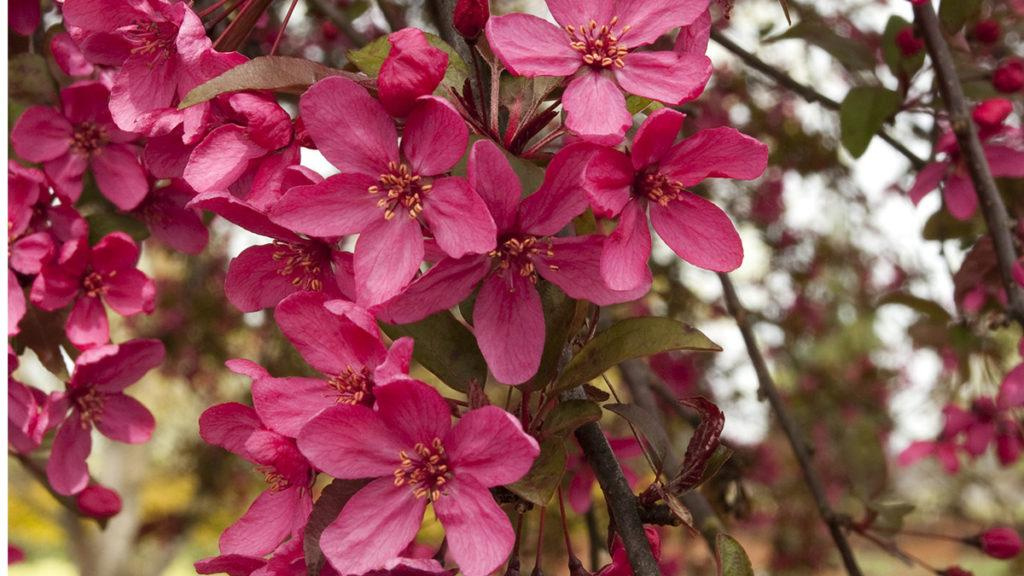
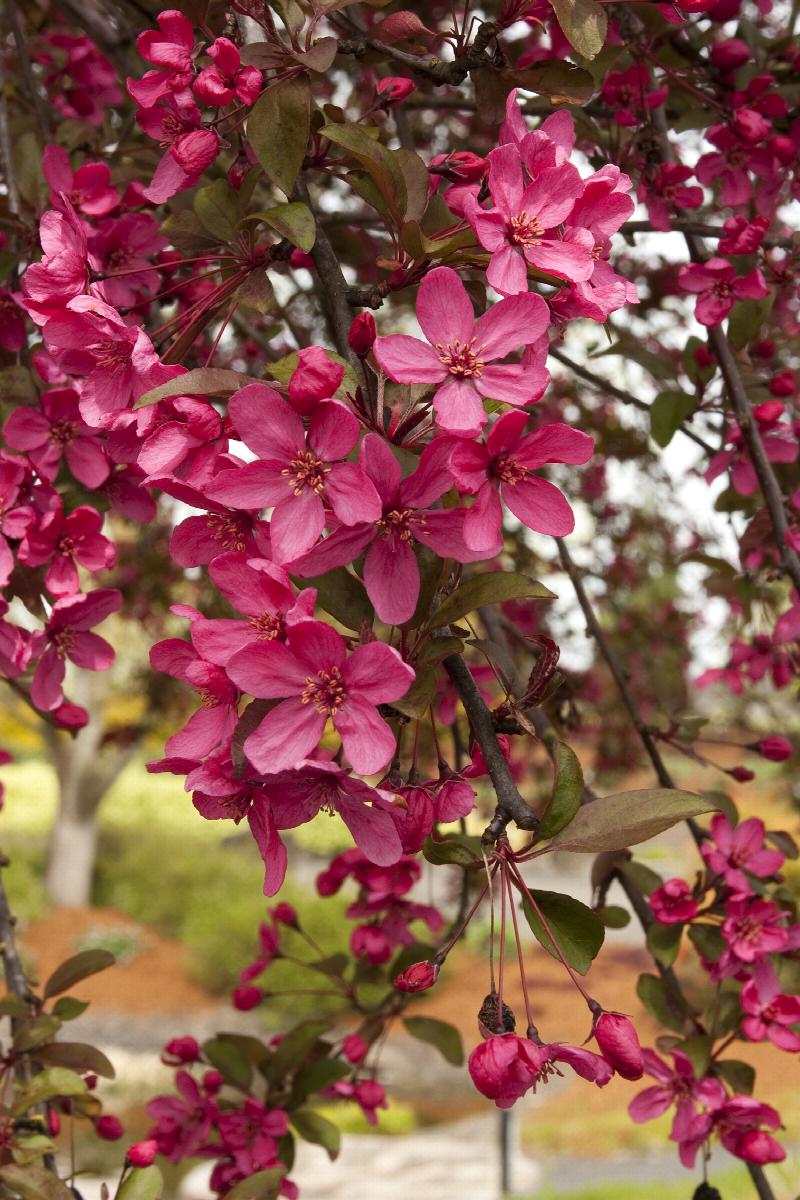
Very cold hardy flower buds burst open in early spring to masses of rose red blossoms that mature to cherry red fruit in fall. The disease resistant foliage emerges reddish green and matures to a bronze green. Deciduous.
| Botanical Pronunciation: | ro-ZAY-see-ee MAY-lus |
| Key feature: | Improved Disease Resistance |
| Plant type: | Tree |
| Garden style: | Asian/Zen |
| Deciduous/evergreen: | Deciduous |
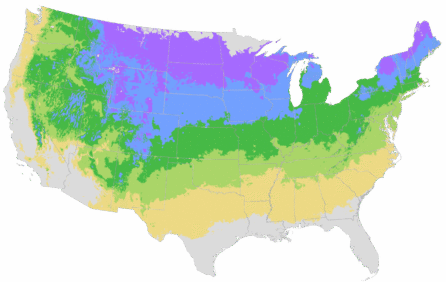
| Cold hardiness zones: | 4 - 8 |
| Light needs: | Full sun |
| Water Needs: | Needs regular watering - weekly, or more often in extreme heat. |
| Average landscape size: | Upright form when young, spreading as it matures. Moderate growing 25 ft. tall, 15 to 20 ft. wide. |
| Growth rate: | Moderate |
| Growth habit: | Round |
| Flower attribute: | Showy Flowers |
| Special features: | Attracts Birds, Attracts Butterflies, Improved Pest and Disease Resistance, Pollenizer, Showy Fruit |
| Landscape uses: | Espalier, Mass Planting, Specimen |
| Flower color: | Red |
| Blooms: | Early spring |
| Foliage color: | Green |
| Item no.: | 3057 |
| Retailers for this plant: |
Care Information
Follow a regular watering schedule during the first growing season to establish a deep, extensive root system. Watering can be reduced after establishment. Prune for shape and structure after flowering. Pruning time: spring after flowering.
Design Ideas
This trees small stature make it perfect for the home landscape. Use it as a specimen or plant several as a backdrop to the formal garden in low lying, moist areas. Add color to mixed beds with this tree, but plant clear of structures and walkways. This tree will spread somewhat at maturity and drop fruit. Can be easily trained as a fruit bearing espalier.
Companion Plants
For a burst of color, combine with big blooming, flowering shrubs like Lilac, Spiraea, Butterfly Bush, and Weigela. Cotoneaster and Bunchberry provide you with fall berries, and the colored foliage and bark of Barberry and Dogwood help you achieve year round interest in the garden. Don't forget colorful perennials like Daylily and Carpet Bugle for contrasting color.
History
Malus is native to the temperate zones in the Northern Hemisphere including North America, Europe and Asia. Crabapples, while used for their flowers, where highly susceptible to a variety of diseases. Bob Simpson of Simpson Nursery Company in Indiana began a breeding program to create disease resistant varieties. Centurion came from this venture and was introduced in 1978. While Crabapples are not typically a food crop, the juice is used in jellies and added to other Apple varieties in cider. Crabapples are great pollenizers for apple orchards due to their abundance of blooms. The wood is popular for smoking and they are quite frequently used in bonsai.
Very cold hardy flower buds burst open in early spring to masses of rose red blossoms that mature to cherry red fruit in fall. The disease resistant foliage emerges reddish green and matures to a bronze green. Deciduous.
Care Information
Follow a regular watering schedule during the first growing season to establish a deep, extensive root system. Watering can be reduced after establishment. Prune for shape and structure after flowering. Pruning time: spring after flowering.
Design Ideas
This trees small stature make it perfect for the home landscape. Use it as a specimen or plant several as a backdrop to the formal garden in low lying, moist areas. Add color to mixed beds with this tree, but plant clear of structures and walkways. This tree will spread somewhat at maturity and drop fruit. Can be easily trained as a fruit bearing espalier.
Companion Plants
For a burst of color, combine with big blooming, flowering shrubs like Lilac, Spiraea, Butterfly Bush, and Weigela. Cotoneaster and Bunchberry provide you with fall berries, and the colored foliage and bark of Barberry and Dogwood help you achieve year round interest in the garden. Don't forget colorful perennials like Daylily and Carpet Bugle for contrasting color.
History
Malus is native to the temperate zones in the Northern Hemisphere including North America, Europe and Asia. Crabapples, while used for their flowers, where highly susceptible to a variety of diseases. Bob Simpson of Simpson Nursery Company in Indiana began a breeding program to create disease resistant varieties. Centurion came from this venture and was introduced in 1978. While Crabapples are not typically a food crop, the juice is used in jellies and added to other Apple varieties in cider. Crabapples are great pollenizers for apple orchards due to their abundance of blooms. The wood is popular for smoking and they are quite frequently used in bonsai.
| Botanical Pronunciation: | ro-ZAY-see-ee MAY-lus |
| Key feature: | Improved Disease Resistance |
| Plant type: | Tree |
| Garden style: | Asian/Zen |
| Deciduous/evergreen: | Deciduous |
| Cold hardiness zones: | 4 - 8 |
| Light needs: | Full sun |
| Water Needs: | Needs regular watering - weekly, or more often in extreme heat. |
| Average landscape size: | Upright form when young, spreading as it matures. Moderate growing 25 ft. tall, 15 to 20 ft. wide. |
| Growth rate: | Moderate |
| Growth habit: | Round |
| Flower attribute: | Showy Flowers |
| Special features: | Attracts Birds, Attracts Butterflies, Improved Pest and Disease Resistance, Pollenizer, Showy Fruit |
| Landscape uses: | Espalier, Mass Planting, Specimen |
| Flower color: | Red |
| Blooms: | Early spring |
| Foliage color: | Green |
| Item no.: | 3057 |