Indian Summer Raspberry
Rubus idaeus 'Indian Summer'
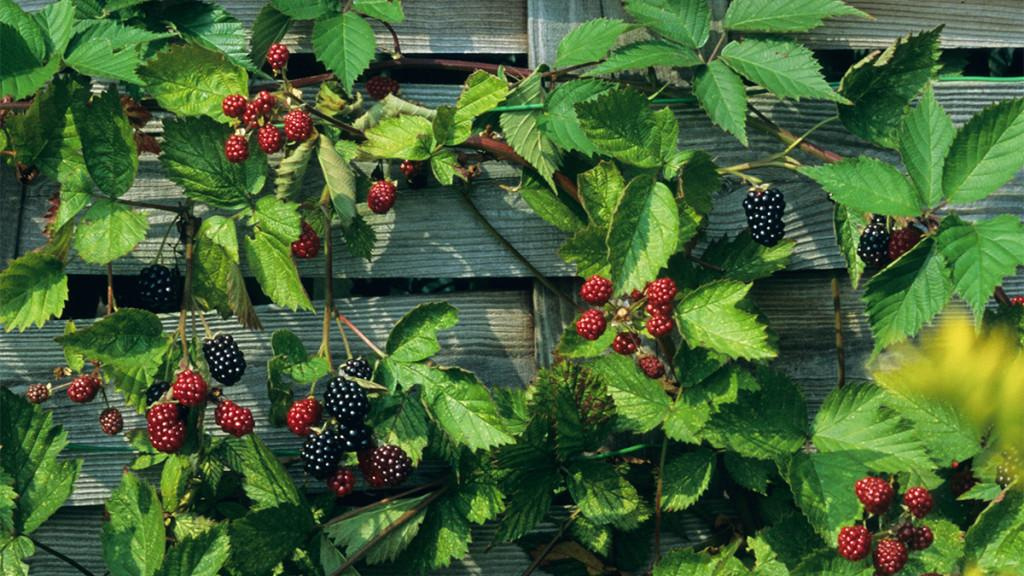
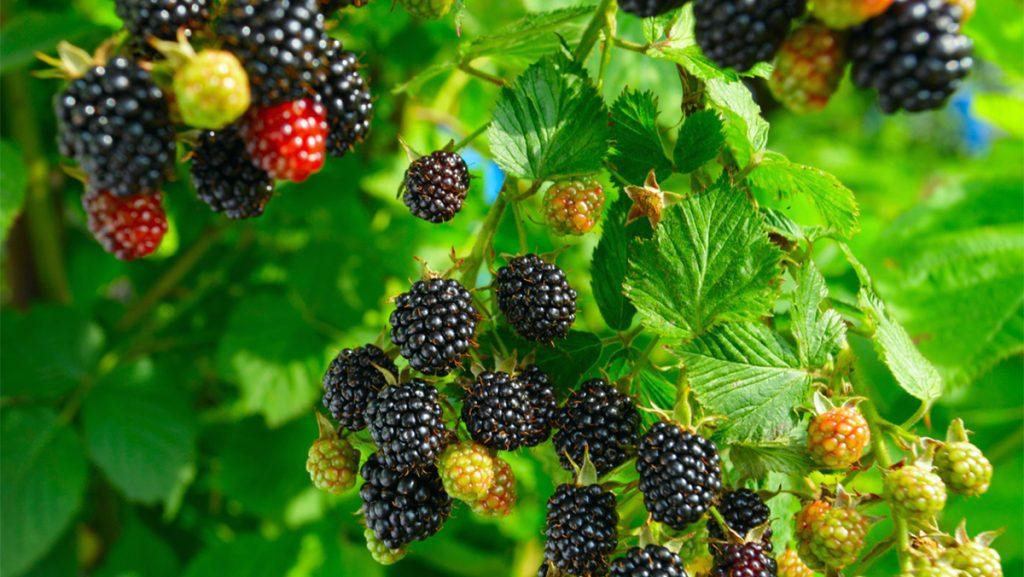
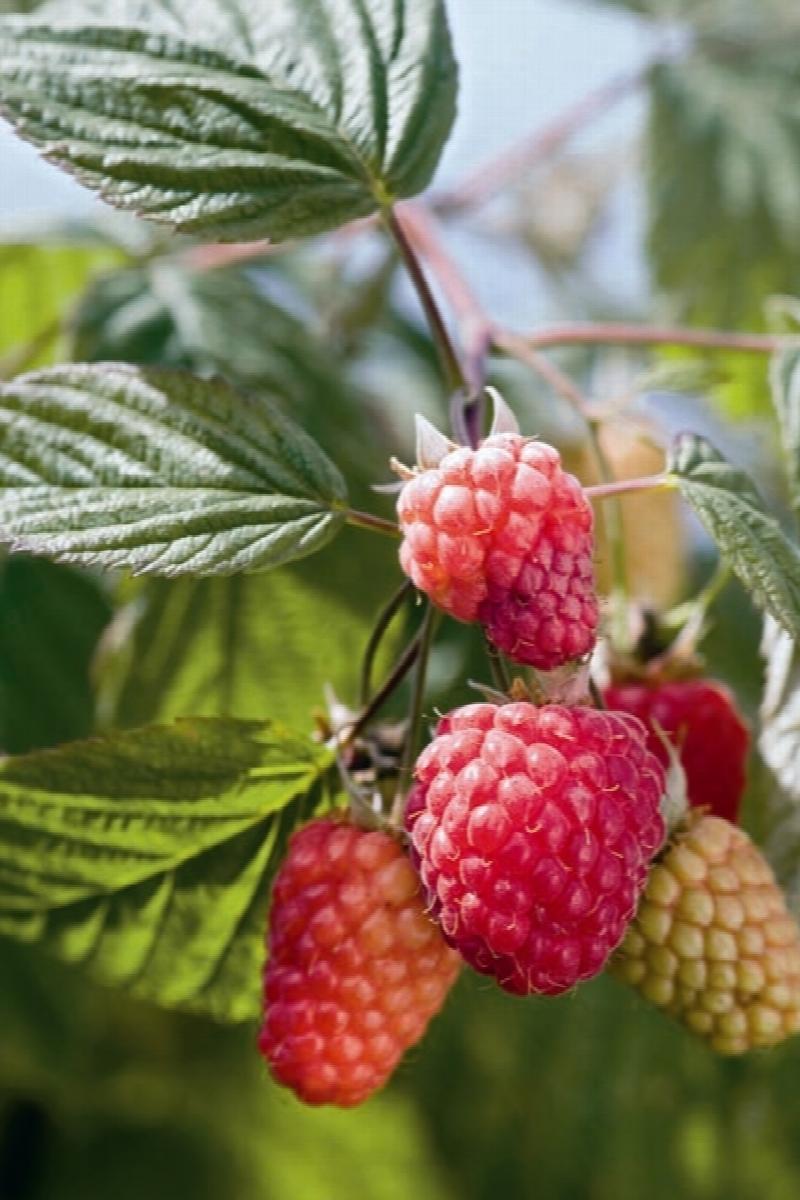
This ever-bearing variety produces a small crop in late Spring and a larger crop in Fall. Canes grow to about five feet and are vigorous, erect and sturdy. The fruit is red, medium-large sized with great raspberry flavor, excellent for fresh eating or cooking. Use as an edible security barreir along fence lines and in strips too narrow for fruit trees.
| Key feature: | Edible Fruit |
| Plant type: | Vine - Requires Support |
| Garden style: | Cottage |
| Deciduous/evergreen: | Deciduous |
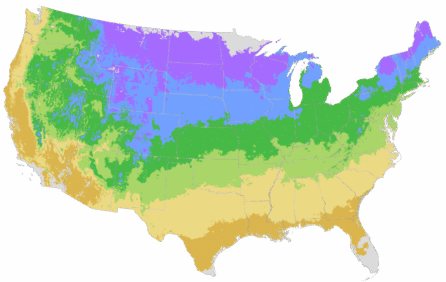
| Cold hardiness zones: | 4 - 9 |
| Light needs: | Full sun |
| Water Needs: | Needs regular watering - weekly, or more often in extreme heat. |
| Average landscape size: | Rapid-growing canes to 5 to 6 ft. long. |
| Growth rate: | Fast |
| Special features: | Attracts Birds, Attracts Hummingbirds, Edible, Showy Fruit |
| Landscape uses: | Border, Mass Planting, Seacoast Exposure, Woodland Garden |
| Flower color: | White |
| Blooms: | Spring |
| Foliage color: | Green |
| Item no.: | 7006 |
| Retailers for this plant: |
Care Information
Follow a regular watering schedule during the first growing season to establish a deep, extensive root system. Feed with a commercial fertilizer before new growth begins in spring. Train one-year-old canes on trellis, prune canes that have fruited.
Companion Plants
Group Indian Summer with other edibles such as Black Satin Blackberry, (Rubus ursinus 'Black Satin'), Thornless Boysenberry, (Rubus ursinus 'Thornless Boysen'), Brigitta Midseason Blueberry, (Vaccinium corymbosum 'Brigitta') and Top Hat Blueberry, (Vaccinium x 'Top Hat').
History
The genus Rubus includes many different plants collectively known as "brambles" as they share rampant viney growth and viscous thorns. It falls into the Rosaceae family and may resemble some of the bramble roses. This group contains most of the berry fruits that are botanically speaking not true berries but drupe fruit. Linnaeus named it from the classical name for raspberries, ruber, meaning red. He chose the species name from the Roman physician Pliny's description of the plants on Mount Ida in Greece. It is a huge genus with over 400 species in North America alone, which causes treat taxonomic confusion, as well as many others scattered throughout the Northern Hemisphere. This cultivar is noted as a productive thornless variety.
This ever-bearing variety produces a small crop in late Spring and a larger crop in Fall. Canes grow to about five feet and are vigorous, erect and sturdy. The fruit is red, medium-large sized with great raspberry flavor, excellent for fresh eating or cooking. Use as an edible security barreir along fence lines and in strips too narrow for fruit trees.
Care Information
Follow a regular watering schedule during the first growing season to establish a deep, extensive root system. Feed with a commercial fertilizer before new growth begins in spring. Train one-year-old canes on trellis, prune canes that have fruited.
Companion Plants
Group Indian Summer with other edibles such as Black Satin Blackberry, (Rubus ursinus 'Black Satin'), Thornless Boysenberry, (Rubus ursinus 'Thornless Boysen'), Brigitta Midseason Blueberry, (Vaccinium corymbosum 'Brigitta') and Top Hat Blueberry, (Vaccinium x 'Top Hat').
History
The genus Rubus includes many different plants collectively known as "brambles" as they share rampant viney growth and viscous thorns. It falls into the Rosaceae family and may resemble some of the bramble roses. This group contains most of the berry fruits that are botanically speaking not true berries but drupe fruit. Linnaeus named it from the classical name for raspberries, ruber, meaning red. He chose the species name from the Roman physician Pliny's description of the plants on Mount Ida in Greece. It is a huge genus with over 400 species in North America alone, which causes treat taxonomic confusion, as well as many others scattered throughout the Northern Hemisphere. This cultivar is noted as a productive thornless variety.
| Key feature: | Edible Fruit |
| Plant type: | Vine - Requires Support |
| Garden style: | Cottage |
| Deciduous/evergreen: | Deciduous |
| Cold hardiness zones: | 4 - 9 |
| Light needs: | Full sun |
| Water Needs: | Needs regular watering - weekly, or more often in extreme heat. |
| Average landscape size: | Rapid-growing canes to 5 to 6 ft. long. |
| Growth rate: | Fast |
| Special features: | Attracts Birds, Attracts Hummingbirds, Edible, Showy Fruit |
| Landscape uses: | Border, Mass Planting, Seacoast Exposure, Woodland Garden |
| Flower color: | White |
| Blooms: | Spring |
| Foliage color: | Green |
| Item no.: | 7006 |