Roundleaf Laurustinus
Viburnum tinus 'Robustum'
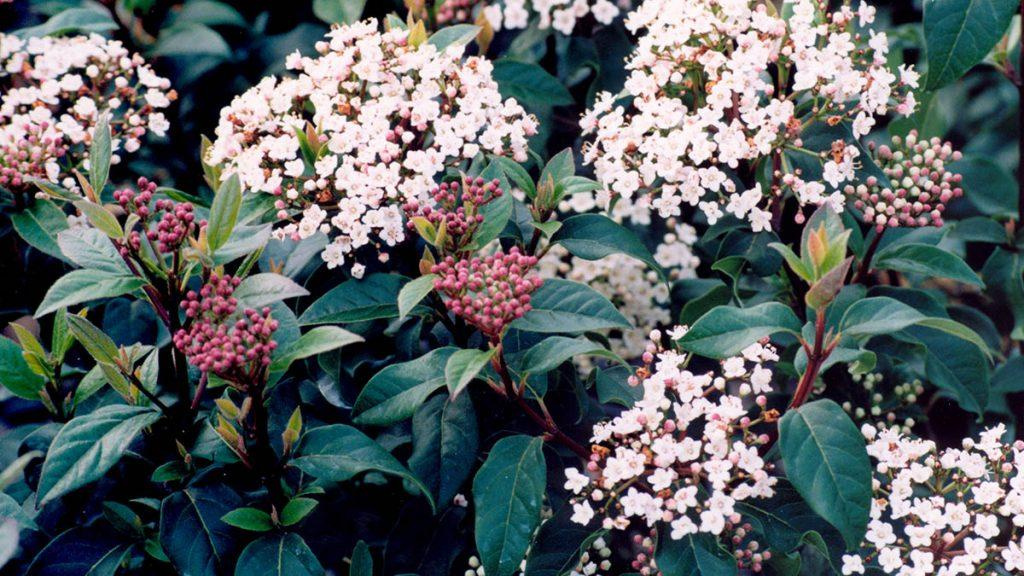
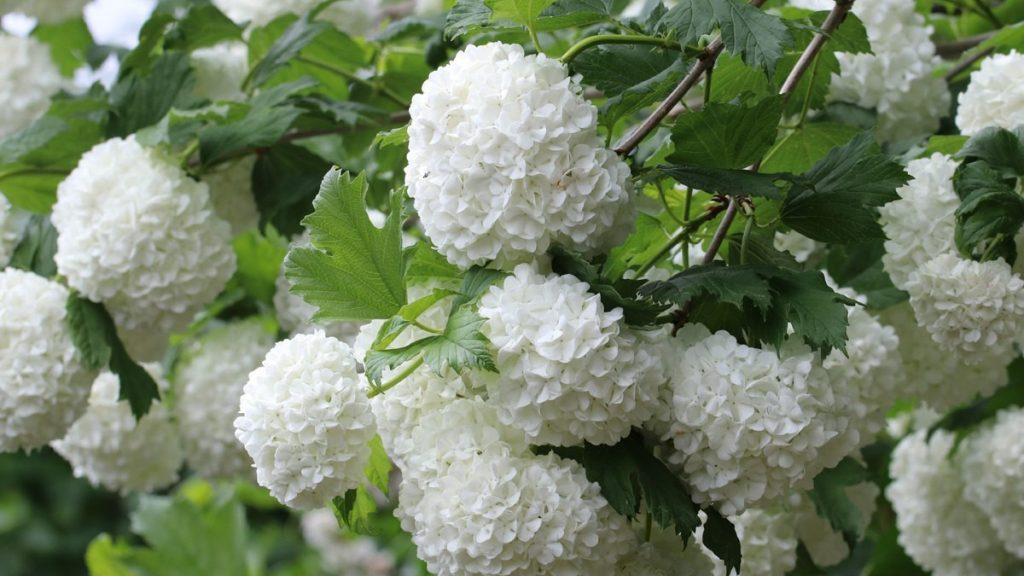
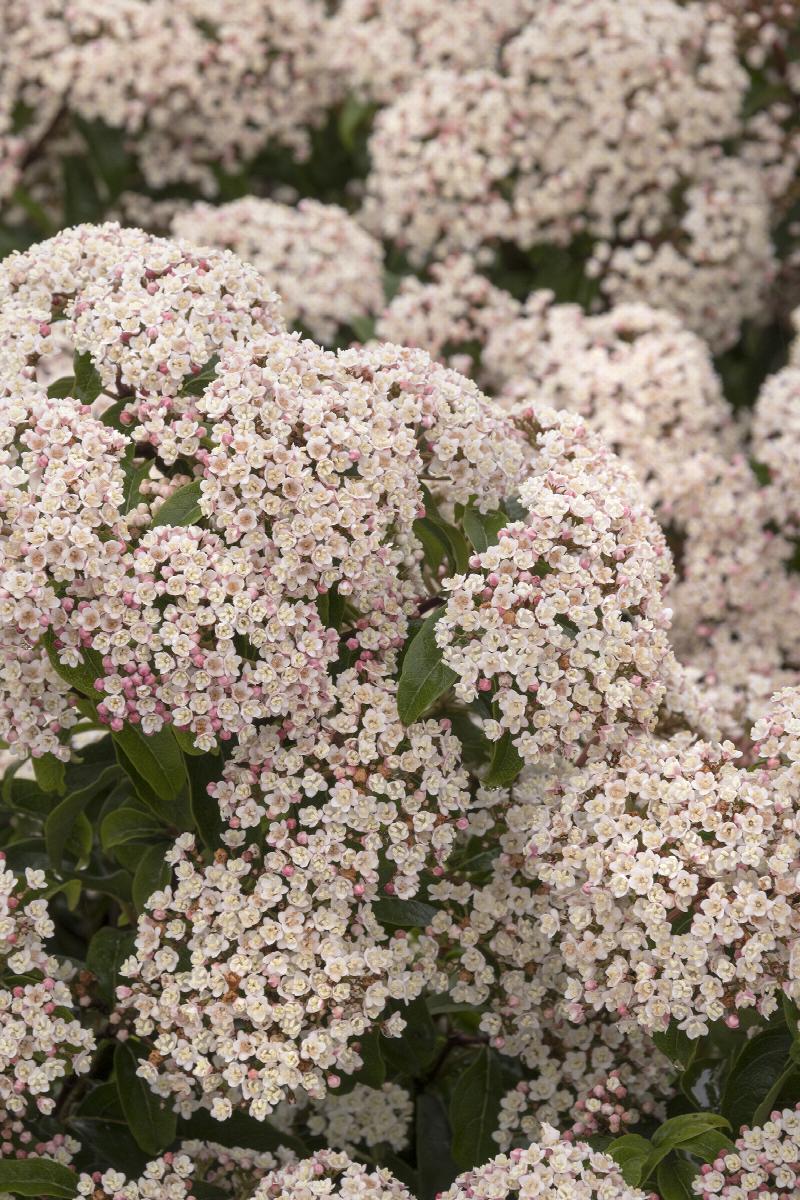
Excellent hedge or screen with dense, erect habit. Beautiful, fragrant white flowers blushed with pink. Can be trained into small patio or garden tree. Dark green foliage is highly prized. Evergreen.
| Botanical Pronunciation: | vy-BER-num TY-nus |
| Key feature: | Hedge Plant |
| Plant type: | Shrub |
| Garden style: | Mediterranean |
| Deciduous/evergreen: | Evergreen |
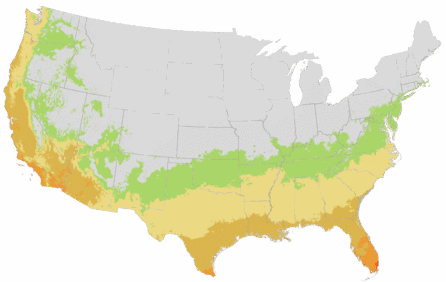
| Cold hardiness zones: | 7 - 11 |
| Light needs: | Partial to full sun |
| Water Needs: | Needs regular watering - weekly, or more often in extreme heat. |
| Average landscape size: | Moderate grower to 6 to 12 ft. tall, 3 to 6 ft. wide. |
| Growth rate: | Moderate |
| Flower attributes: | Fragrant, Showy Flowers |
| Special features: | Attracts Birds, Attracts Hummingbirds, Deer Resistant, Ornamental Berries, Waterwise, Year-round Interest |
| Landscape uses: | Border, Privacy Screen, Windbreak, Woodland Garden |
| Flower color: | White |
| Blooms: | Early spring |
| Foliage color: | Green |
| Item no.: | 7610 |
| Retailers for this plant: |
Care Information
Follow a regular watering schedule during the first growing season to establish a deep, extensive root system. Feed with a general purpose fertilizer before new growth begins in spring. For a tidy, neat appearance, shear annually to shape. Pruning time: late winter or early spring.
Design Ideas
The upright form of this large shrub makes it an excellent candidate to plant in a patio container as a small tree, with lower limbs pruned. Or include it in a smaller border planting, where it willstand out with its fragrant flowers.
Companion Plants
Plant the base of this small tree with perennials such as Johnson's Blue Cranesbill (Geranium x 'Johnson's Blue'), Georgenberg Chilean Avens (Geum x heldreichii 'Georgenberg') and Moonbeam ThreadleafCoreopsis (Coreopsis verticillata 'Moonbeam').
History
This species is commonly known as laurustinus in its homeland around the Mediterranean Sea. It is far more frost tender than the other 250 species of mostly cold hardy Viburnum. It was brought into cultivation around 1600, valued for its unique evergreen foliage. It has remained quite similar to its original species because V. tinus does not readily cross with the deciduous species.
Lore
This genus was derived from the Latin word viburna, which means "to tie". It was so named because long flexible whips of European viburnum species were used to tie up firewood sticks gathered in the wild.
Excellent hedge or screen with dense, erect habit. Beautiful, fragrant white flowers blushed with pink. Can be trained into small patio or garden tree. Dark green foliage is highly prized. Evergreen.
Care Information
Follow a regular watering schedule during the first growing season to establish a deep, extensive root system. Feed with a general purpose fertilizer before new growth begins in spring. For a tidy, neat appearance, shear annually to shape. Pruning time: late winter or early spring.
Design Ideas
The upright form of this large shrub makes it an excellent candidate to plant in a patio container as a small tree, with lower limbs pruned. Or include it in a smaller border planting, where it willstand out with its fragrant flowers.
Companion Plants
Plant the base of this small tree with perennials such as Johnson's Blue Cranesbill (Geranium x 'Johnson's Blue'), Georgenberg Chilean Avens (Geum x heldreichii 'Georgenberg') and Moonbeam ThreadleafCoreopsis (Coreopsis verticillata 'Moonbeam').
History
This species is commonly known as laurustinus in its homeland around the Mediterranean Sea. It is far more frost tender than the other 250 species of mostly cold hardy Viburnum. It was brought into cultivation around 1600, valued for its unique evergreen foliage. It has remained quite similar to its original species because V. tinus does not readily cross with the deciduous species.
Lore
This genus was derived from the Latin word viburna, which means "to tie". It was so named because long flexible whips of European viburnum species were used to tie up firewood sticks gathered in the wild.
| Botanical Pronunciation: | vy-BER-num TY-nus |
| Key feature: | Hedge Plant |
| Plant type: | Shrub |
| Garden style: | Mediterranean |
| Deciduous/evergreen: | Evergreen |
| Cold hardiness zones: | 7 - 11 |
| Light needs: | Partial to full sun |
| Water Needs: | Needs regular watering - weekly, or more often in extreme heat. |
| Average landscape size: | Moderate grower to 6 to 12 ft. tall, 3 to 6 ft. wide. |
| Growth rate: | Moderate |
| Flower attributes: | Fragrant, Showy Flowers |
| Special features: | Attracts Birds, Attracts Hummingbirds, Deer Resistant, Ornamental Berries, Waterwise, Year-round Interest |
| Landscape uses: | Border, Privacy Screen, Windbreak, Woodland Garden |
| Flower color: | White |
| Blooms: | Early spring |
| Foliage color: | Green |
| Item no.: | 7610 |