
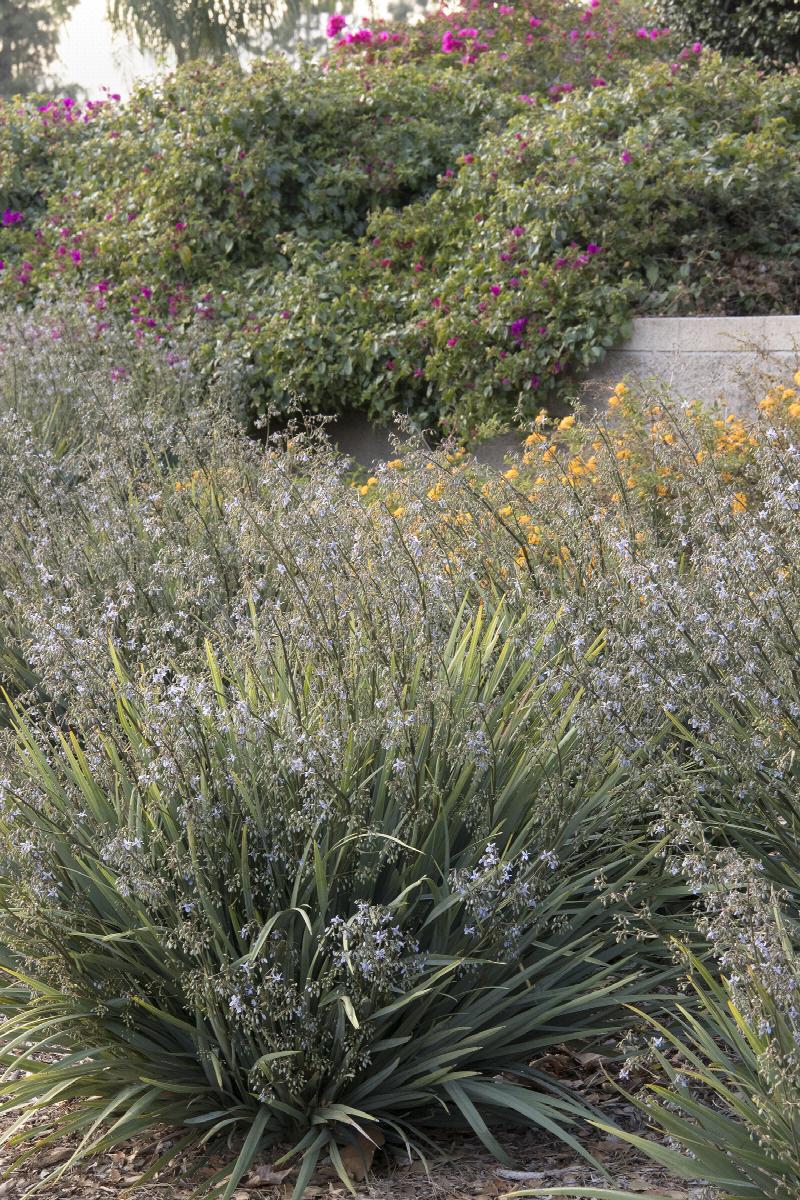
Cassa Blue™ Flax Lily
Dianella caerulea 'DBB03' PP #17,998
Pronunciation: di-NEL-la see-ROO-lee-uh
SKU #09830
| Description | An extremely versatile and easy care dwarf selection with lush blue-green foliage and small violet flower clusters followed by attractive purple berries. Slow growing and clump-forming; doesn't spread widely by rhizomes. An excellent mass planting or border in front of shrubs. Hardy and adaptable, tolerates salt spray and drought. Evergreen. |
|---|---|
| Light | Full sun, Partial sun |
| Watering | Once established water during dry spells. |
| Blooms | Spring |
| Mature Size | Foliage clumps reach 18 to 24 in. tall, slowly spreading as wide. |
| Deciduous/Evergreen | Evergreen |
|---|---|
| Special Features | Dramatic Foliage Color, Easy Care, Ornamental Berries, Waterwise, Compact Form |
| Problems/Solutions | Coastal Exposure, Drought Tolerant |
| Growth Rate | Slow |
| Flower Attributes | Showy Flowers |
| Patent Act | Asexual reproduction of plants protected by the Plant Patent Act is prohibited during the life of the patent. |
| Landscape Use | Border, Container |
|---|---|
| Design Ideas | The blue foliage is accentuated by a heavy wax layer on the leaf's surface making it attractive, hardy and drought tolerant! Very floriferous, with small violet flower clusters borne on stems sitting just above the foliage in spring. |
| Flower Color | Blue |
| Foliage Color | Blue-green |
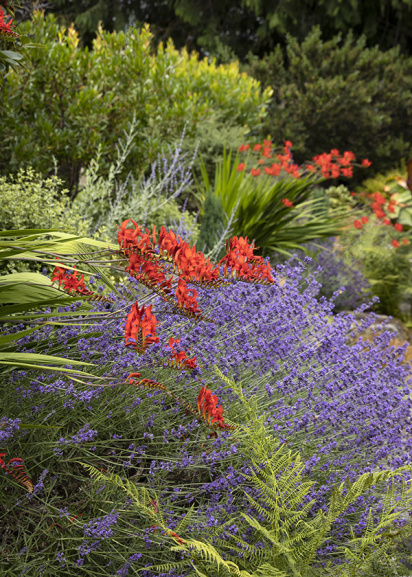
| Companion Plants | Phormium (Phormium); Loropetalum (Loropetalum); Mexican Heather (Cuphea); Lilyturf (Liriope); Montbretia (Crocosmia) |
| Care | Thrives in average, well-drained soils; tolerates clay, provided a slope or berm for good drainage. Water deeply, regularly during first growing season to establish an extensive root system; reduce frequency once established. For a neat appearance, prune old foliage and flower stalks. Divide clumps every 2 to 3 years in early spring. |
|---|
This Plant's Growing Zones: 7-11
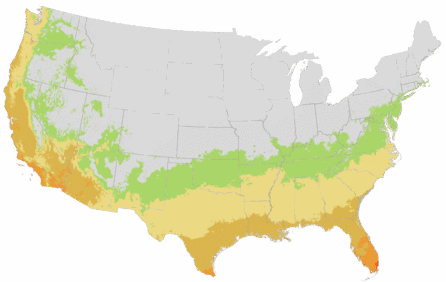
Your USDA Cold Hardiness Zone:
Your climate may be too cold for this plant
Buy Online
We cannot currently ship this product to your zip code.
Buy Locally
No Retailers found within 50 miles of your zipcode
About Us
We have been pioneers and craftsmen in the art of growing plants for nearly
100 years. Since our founding in Southern California by Harry E. Rosedale, Sr.
in 1926, we have been absolutely dedicated and obsessed with quality.
We have been pioneers and craftsmen in the art of growing plants for nearly 100 years. Since our founding in Southern California by Harry E. Rosedale, Sr. in 1926, we have been absolutely dedicated and obsessed with quality.