Hardiness Zones
USDA Hardiness zones explained
There are very few rules in gardening, but perhaps the most important one is choosing plants that grow and thrive in your particular climate. There are many factors that need to be considered; cold, heat, humidity, and rainfall all play a role in a plant’s ability to thrive. The USDA Plant Hardiness Zone Map is a helpful tool for determining a plant’s survivability regarding one of these factors: winter cold temperatures.
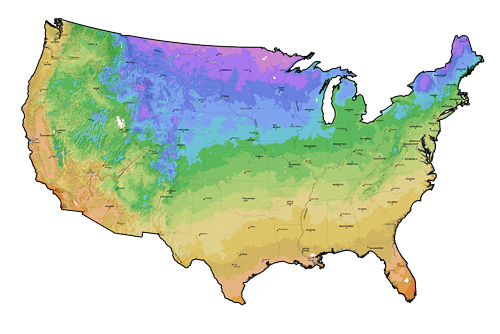
USDA Cold Hardiness Zone Map
First published in 1960 and updated in 1990, 2012, and 2023, the map is based on the average annual minimum winter temperature, divided into 10°F zones. The map is available as an interactive GIS-based map. Users may also simply type in a ZIP Code and find the hardiness zone for that area. By using the map to find the zone in which you live, you can determine which plants will withstand these average minimum temperatures.
The zone finder tool on every plant detail page and My Plantfinder matches you to your USDA Zone. These zones are based on USDA Plant Hardiness Zone Map which has become the standard by which gardeners and growers determine which plants are most likely to survive their area's winter temperature. The most recent revision was prepared by the PRISM Climate Group at Oregon State University, and was released by USDA in 2023. Based on the average annual minimum winter temperature over a 30-year period, the map divides the country into zones representing a spread of 10°F (zones 1-13), with each zone also split into half zones (a and b) representing a spread of 5°F.
The 2023 update includes the most data yet, using a total of 13,625 weather stations across the United States, including Puerto Rico. The inclusion of more extensive data lead to some zone changes throughout the country.
Canada has developed its own plant hardiness zone map, which can be accessed here http://planthardiness.gc.ca/
Zones, Annuals and Perennials
USDA Hardiness Zones play a role in the categorization of annual and perennial plants. An annual is a plant meant to add quick color, structure, or texture to your garden or containers for just one season. Sometimes you'll find these marked as "seasonal" at garden centers. A perennial, however, is a plant that will come back year after year when grown in the appropriate USDA Hardiness Zone and conditions.
If a plant is sold as an annual, it is frost sensitive and will only last until your first frost. There are some frost-hardy annuals, but these are generally still sensitive to freezing temperatures and will be damaged after your first freeze.
Most annuals can be grown as perennials in warmer climates (Zones 10-13), just be sure to check the USDA Zone on the plant tag or webpage to be sure.
Limitations
Since the USDA zones are based on average temperatures, it is still possible to have extreme weather events that are too cold for a plant to survive, even if it is hardy in your zone. Timing of an extreme event, either earlier or later than your typical extremes, can also affect how much damage a plant receives, as well as factors such as wind and moisture.
The USDA zones do not take summer high temperatures into consideration. Zones maximums listed on plants are not based on USDA data and are a general guideline based on a plant’s tolerance of higher temperatures.
Since there are many factors that the USDA zones do not account for, it is just one element to consider when choosing a plant for your garden. Your local garden center is the best way to find plants that are also adapted to your local climate’s humidity, high temperatures, and other weather patterns.