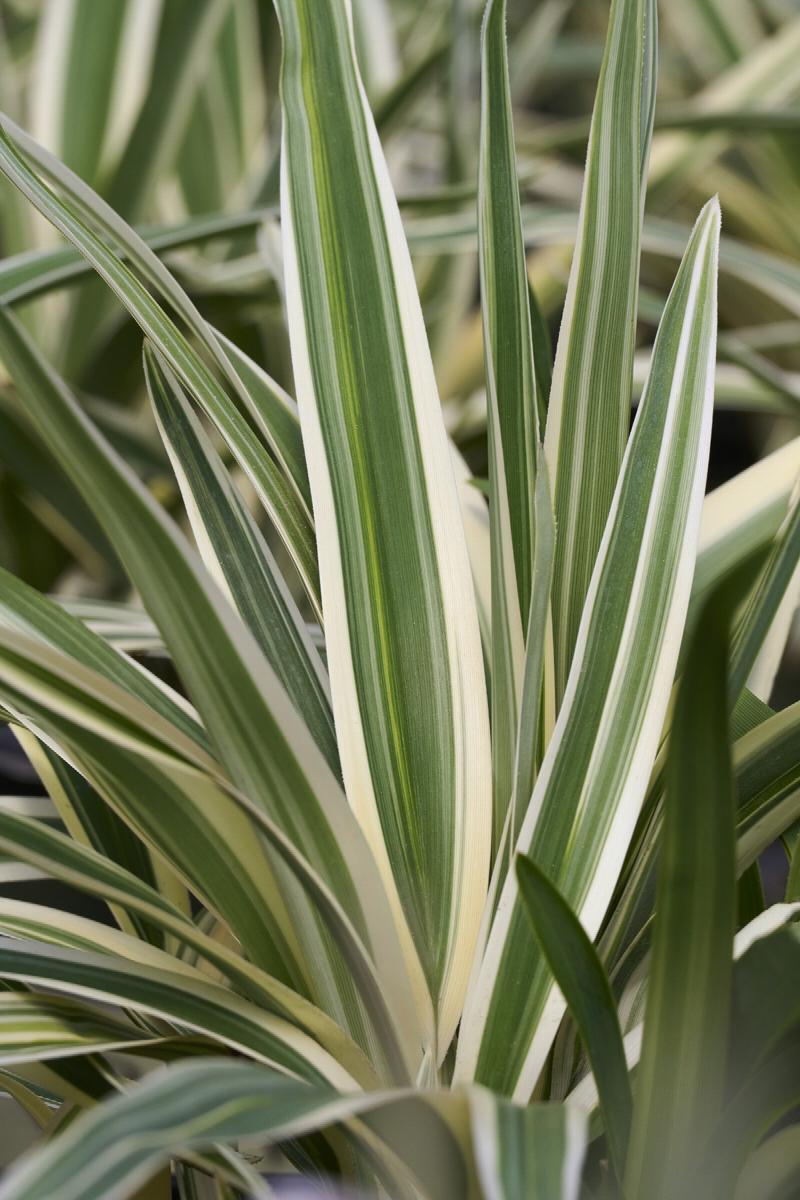
Variegated Flax Lily
Dianella tasmanica 'Variegata'
Handsome strappy green leaves with contrasting yellow stripes will brighten up the garden year-round. Stalks of shiny turquoise blue berries lasting from fall into winter create a colorful accent in the garden. Neat clumping habit is ideal for mass planting near pools, in garden beds and borders.
| Botanical Pronunciation: | di-NEL-la tas-MAN-i-ca |
| Key feature: | Shade Loving |
| Plant type: | Perennial |
| Garden style: | Tropical |
| Deciduous/evergreen: | Evergreen |
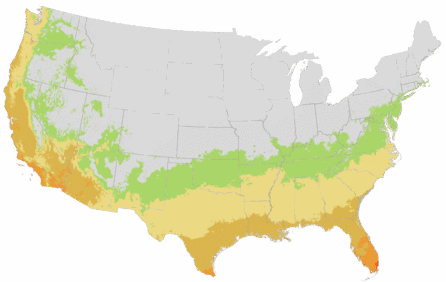
| Cold hardiness zones: | 8 - 10 |
| Light needs: | Full to partial shade |
| Water Needs: | Needs wet or constantly moist soil. |
| Average landscape size: | Moderate growing, grass-like foliage to 3 1/2 ft. tall and 12 in. wide. |
| Growth rate: | Moderate |
| Special features: | Year-round Interest |
| Landscape uses: | Seacoast Exposure, Water Garden |
| Flower color: | Blue |
| Blooms: | Summer |
| Foliage color: | Variegated |
| Item no.: | 3134 |
| Retailers for this plant: |
Care Information
Follow a regular watering schedule during the first growing season to establish a deep, extensive root system. For a neat appearance, remove old foliage before new leaves emerge. Divide clumps every 2 to 3 years in early spring.
Design Ideas
With its narrow, reed-like foliage and a bonus of variegation, this plant is dramatic in natural gardens, with Asian themes or as a stark vertical texture in the spare, modern landscape. Highlighted stripes suggest sun dappling. Contrasts well against very large-leafed, shade-loving shrubs and bronzy-colored plants.
Companion Plants
A welcome grass-like, shade-garden plant combining perfectly with the fronds of Tasmanian Tree Fern (Dicksonia antarctica) and Yesterday, Today And Tomorrow (Brunfelsia pauciflora 'Floribunda'). Complements Crimson Queen Japanese Maple (Acer palmatum 'Crimson Queen'), Merritt's Beauty Hydrangea (Hydrangea macrophylla 'Merritt's Beauty'), with its showy carmine-red flower clusters, and the white and yellow Dawn Chorus Exbury Hybrid Azalea (Azalea 'Dawn Chorus' Exbury Hybrid).
History
This plant is grouped into the immense family of lilies, Liliaceae. This little known genus, Dianella contains about 25 species of herbaceous plants native from east tropical Africa and Madagascar to China, Australia and the South Pacific. It was named and classified by the French botanist, Jean Baptist Lamarck, 1744-1829 probably from plants obtained through French Polynesia. This species is attributed to Sir Joseph Dalton Hooker, 1817-1911, the English explorer and plant collector for the botanic gardens at Kew, and would later become director here. Hooker likely collected the plant from Tasmania which inspired the species name.
Lore
As a medicine for colds, the Ngarrindjeri, an aboriginal tribe of Tasmania chewed the root of Dianella.
Handsome strappy green leaves with contrasting yellow stripes will brighten up the garden year-round. Stalks of shiny turquoise blue berries lasting from fall into winter create a colorful accent in the garden. Neat clumping habit is ideal for mass planting near pools, in garden beds and borders.
Care Information
Follow a regular watering schedule during the first growing season to establish a deep, extensive root system. For a neat appearance, remove old foliage before new leaves emerge. Divide clumps every 2 to 3 years in early spring.
Design Ideas
With its narrow, reed-like foliage and a bonus of variegation, this plant is dramatic in natural gardens, with Asian themes or as a stark vertical texture in the spare, modern landscape. Highlighted stripes suggest sun dappling. Contrasts well against very large-leafed, shade-loving shrubs and bronzy-colored plants.
Companion Plants
A welcome grass-like, shade-garden plant combining perfectly with the fronds of Tasmanian Tree Fern (Dicksonia antarctica) and Yesterday, Today And Tomorrow (Brunfelsia pauciflora 'Floribunda'). Complements Crimson Queen Japanese Maple (Acer palmatum 'Crimson Queen'), Merritt's Beauty Hydrangea (Hydrangea macrophylla 'Merritt's Beauty'), with its showy carmine-red flower clusters, and the white and yellow Dawn Chorus Exbury Hybrid Azalea (Azalea 'Dawn Chorus' Exbury Hybrid).
History
This plant is grouped into the immense family of lilies, Liliaceae. This little known genus, Dianella contains about 25 species of herbaceous plants native from east tropical Africa and Madagascar to China, Australia and the South Pacific. It was named and classified by the French botanist, Jean Baptist Lamarck, 1744-1829 probably from plants obtained through French Polynesia. This species is attributed to Sir Joseph Dalton Hooker, 1817-1911, the English explorer and plant collector for the botanic gardens at Kew, and would later become director here. Hooker likely collected the plant from Tasmania which inspired the species name.
Lore
As a medicine for colds, the Ngarrindjeri, an aboriginal tribe of Tasmania chewed the root of Dianella.
| Botanical Pronunciation: | di-NEL-la tas-MAN-i-ca |
| Key feature: | Shade Loving |
| Plant type: | Perennial |
| Garden style: | Tropical |
| Deciduous/evergreen: | Evergreen |
| Cold hardiness zones: | 8 - 10 |
| Light needs: | Full to partial shade |
| Water Needs: | Needs wet or constantly moist soil. |
| Average landscape size: | Moderate growing, grass-like foliage to 3 1/2 ft. tall and 12 in. wide. |
| Growth rate: | Moderate |
| Special features: | Year-round Interest |
| Landscape uses: | Seacoast Exposure, Water Garden |
| Flower color: | Blue |
| Blooms: | Summer |
| Foliage color: | Variegated |
| Item no.: | 3134 |