
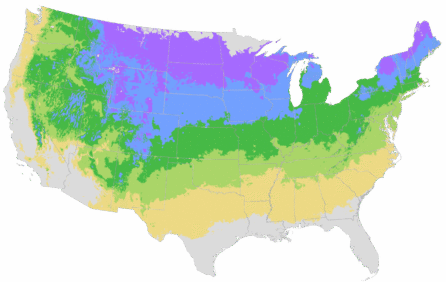
You're growing in this Zip Code:
Change LocationDiscover Plants for Your Area
Cherry Bomb® Japanese Barberry
Berberis thunbergii 'Monomb' CPBR #3488
Pronunciation: BUR-bur-is thun-BER-jee-eye
SKU #01201
LIGHT:
Full sun
WATER:
Water when top 3 inches of soil is dry.
SIZE:
Slowly reaches 3 to 4 ft. tall and wide.

Retailers Near You

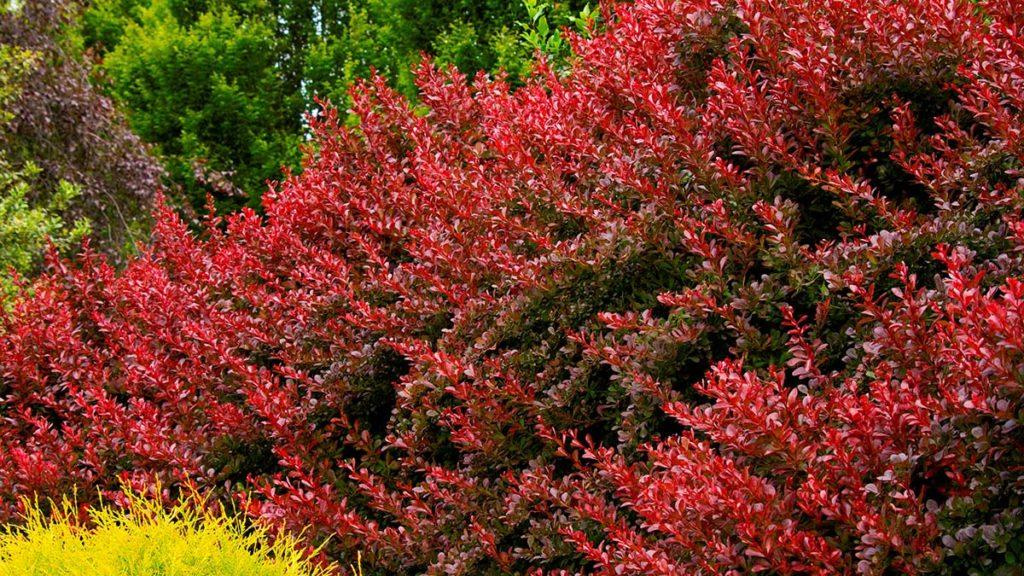

| Description | A wonderful low hedge, barrier planting, or single shrub accent, with compact branches and deep crimson color to the dense foliage. Enhanced with bright red berries in fall and winter that attract winter songbirds to the garden. Deciduous. |
|---|---|
| Bloom Time | Spring |
| Deciduous/Evergreen | Deciduous |
| Special Features | Dramatic Foliage Color, Ornamental Berries, Benefits Birds |
| Problems/Solutions | Deer Resistant, Drought Tolerant, Tolerates Urban Pollution, Road Salt Tolerant |
| Growth Rate | Slow |
| Growth Habit | Rounded |
| Patent Act | Asexual reproduction of plants protected by the Plant Patent Act is prohibited during the life of the patent. |
| Landscape Use | Barrier, Border, Hedge |
| Design Ideas | An outstanding colored foliage to add interest to foundation planting and short enough to fit under most window sills. Spot into overly-green shrub borders as singles or groups for a larger mass of vibrant color. Use as an informal low hedge, edging or frame in a linear composition. Excellent background plant for perennial borders. Great small stature filler for sideyards and small city yards that need versatile plants with interest in every season. Berries make this plant a beautiful addition to bird and wildlife friendly habitat gardens. |
| Flower Color | Yellow |
| Foliage Color | Red |
| Foliage Fall Color | Red |
| Companion Plants | Boxwood (Buxus); False Cypress (Chamaecyparis); Potentilla (Potentilla); Spirea (Spiraea); Weigela (Weigela) |
| Care Instructions | Thrives in average, well-drained soil; avoid poorly drained, wet sites. Water deeply, regularly during the first growing season to establish an extensive root system. Once established reduce frequency; tolerates moderate drought. Apply fertilizer before new growth begins in spring. Prune annually in late winter to shape. |
| History | Barberries are named for the wickedly sharp "barbs" or thorns that line their branches, and for the berries that follow the flowers. The first botanist to identify this Asian barberry in Japan was the Swede, Thunberg in 1784, for whom the species was named. The purple barberry did not leave Asia for Europe until a century later when it appeared in the Royal Botanical Garden at Kew. The first record of this, the most powerfully purple-red variety, Atropurpureais newer yet and not recorded until the 20th century by French nurseryman, M. Renault, around the time of World War I. Cherry Bomb is a registered cultivar developed by Monrovia. |
| Lore | In English folklore it was considered bad luck to allow a barberry bush to grow close to the wheat crop. This turned out to be true through modern science when a particular type of fungus, or rust that infects barberries also infects wheat. Barberries acted as carriers and thus the farmers nearly wiped out all the native English barberries many centuries ago. Today barberries are quarantined or restricted due to risk of transporting the fungus. |
Details
| Description | A wonderful low hedge, barrier planting, or single shrub accent, with compact branches and deep crimson color to the dense foliage. Enhanced with bright red berries in fall and winter that attract winter songbirds to the garden. Deciduous. |
|---|---|
| Bloom Time | Spring |
| Deciduous/Evergreen | Deciduous |
| Special Features | Dramatic Foliage Color, Ornamental Berries, Benefits Birds |
| Problems/Solutions | Deer Resistant, Drought Tolerant, Tolerates Urban Pollution, Road Salt Tolerant |
| Growth Rate | Slow |
| Growth Habit | Rounded |
| Patent Act | Asexual reproduction of plants protected by the Plant Patent Act is prohibited during the life of the patent. |
Style
| Landscape Use | Barrier, Border, Hedge |
|---|---|
| Design Ideas | An outstanding colored foliage to add interest to foundation planting and short enough to fit under most window sills. Spot into overly-green shrub borders as singles or groups for a larger mass of vibrant color. Use as an informal low hedge, edging or frame in a linear composition. Excellent background plant for perennial borders. Great small stature filler for sideyards and small city yards that need versatile plants with interest in every season. Berries make this plant a beautiful addition to bird and wildlife friendly habitat gardens. |
| Flower Color | Yellow |
| Foliage Color | Red |
| Foliage Fall Color | Red |
| Companion Plants | Boxwood (Buxus); False Cypress (Chamaecyparis); Potentilla (Potentilla); Spirea (Spiraea); Weigela (Weigela) |
Care
| Care Instructions | Thrives in average, well-drained soil; avoid poorly drained, wet sites. Water deeply, regularly during the first growing season to establish an extensive root system. Once established reduce frequency; tolerates moderate drought. Apply fertilizer before new growth begins in spring. Prune annually in late winter to shape. |
|---|
History
| History | Barberries are named for the wickedly sharp "barbs" or thorns that line their branches, and for the berries that follow the flowers. The first botanist to identify this Asian barberry in Japan was the Swede, Thunberg in 1784, for whom the species was named. The purple barberry did not leave Asia for Europe until a century later when it appeared in the Royal Botanical Garden at Kew. The first record of this, the most powerfully purple-red variety, Atropurpureais newer yet and not recorded until the 20th century by French nurseryman, M. Renault, around the time of World War I. Cherry Bomb is a registered cultivar developed by Monrovia. |
|---|---|
| Lore | In English folklore it was considered bad luck to allow a barberry bush to grow close to the wheat crop. This turned out to be true through modern science when a particular type of fungus, or rust that infects barberries also infects wheat. Barberries acted as carriers and thus the farmers nearly wiped out all the native English barberries many centuries ago. Today barberries are quarantined or restricted due to risk of transporting the fungus. |
Retailers Near You
About Us
We have been pioneers and craftsmen in the art of growing plants for 100 years. Since our founding in Southern California by Harry E. Rosedale, Sr. in 1926, we have been absolutely dedicated and obsessed with quality.
We have been pioneers and craftsmen in the art of growing plants for nearly 100 years. Since our founding in Southern California by Harry E. Rosedale, Sr. in 1926, we have been absolutely dedicated and obsessed with quality.