
You're growing in this Zip Code:
Change LocationDiscover Plants for Your Area
Blue Bird Rose of Sharon
Hibiscus syriacus 'Blue Bird' (Grafted)
Pronunciation: hi-BIS-kus si-ri-A-kus
SKU #08399
LIGHT:
Full sun, Partial sun
WATER:
Water when top 2 inches of soil is dry.
SIZE:
Moderate growing; reaches 6 to 8 ft. tall, 6 ft. wide.

Retailers Near You
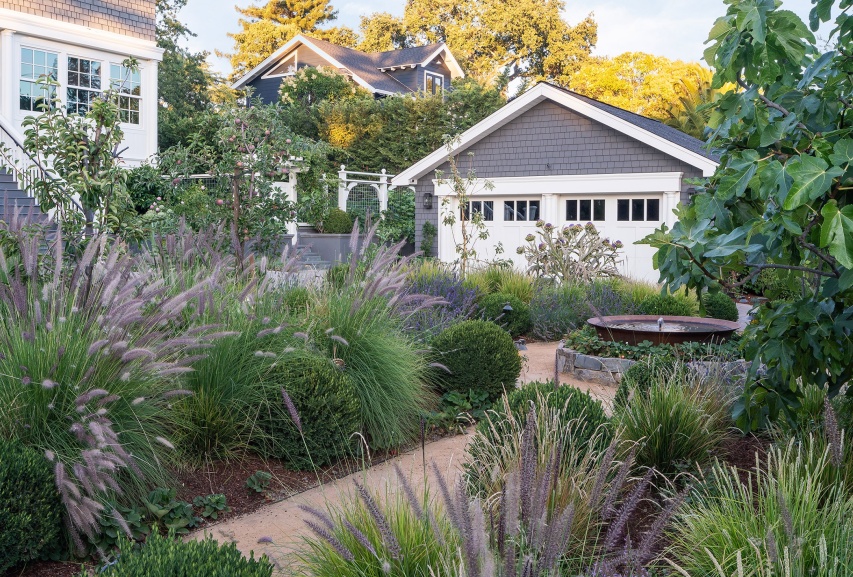
| Description | Considered the best blue-flowered variety, this grafted selection has improved vigor over own-root plants. The abundant, showy violet-blue single blossoms each have a dramatic, dark eye. The upright, vase-shape with handsome foliage makes an ideal shrub for use as a hedge, foundation plant, or specimen plant, providing reliable summer color. Deciduous. |
|---|---|
| Bloom Time | Summer |
| Deciduous/Evergreen | Deciduous |
| Special Features | Attracts Butterflies, Attracts Hummingbirds, Easy Care, Waterwise, Non-toxic to Cats and Dogs, Attracts Pollinators |
| Problems/Solutions | Coastal Exposure, Drought Tolerant, Tolerates Urban Pollution, Black Walnut Tolerant |
| Growth Rate | Moderate |
| Growth Habit | Upright |
| Flower Attributes | Flowers for Cutting, Long Bloom Season, Showy Flowers |
| Landscape Use | Border, Container, Hedge, Privacy Screen |
| Design Ideas | A beautiful large flowering shrub that makes an outstanding background for beds and mixed borders. Spreads out generously along fence lines and fills in foundation planting along large barren walls. A natural for shrub borders and island planting. Perfect candidate for English cottage gardens or American country and colonial style landscapes. |
| Flower Color | Blue |
| Foliage Color | Green |
| Companion Plants | Viburnum (Viburnum); Lilac (Syringa); Potentilla (Potentilla); Lavender (Lavandula); Phlox (Phlox) |
| Care Instructions | Adaptable to most well-drained soils except very wet or dry. Water deeply, regularly in first growing season to establish extensive root system. Once established reduce frequency; tolerates brief periods of drought. Fertilize before new growth begins in spring. Prune after flowering to shape or promote vigorous new growth. |
| History | This plant is known as the Syrian mallow because it was introduced into Europe before the 16th century by Arab traders who originally collected it from Eastern Asia. It is well noted in ancient Chinese literature as well as that of Vietnam and Korea. It is included into the mallow family containing over 200 species from around the world. The purple coloring or blue has been contributed by early breeding with H. s. amplissimus, a common ancestor to all but the original white strains. |
| Lore | The species name, syriacus indicates the belief that the Arabian plant originated in Syria, but is in fact an Asian plant. |
Details
| Description | Considered the best blue-flowered variety, this grafted selection has improved vigor over own-root plants. The abundant, showy violet-blue single blossoms each have a dramatic, dark eye. The upright, vase-shape with handsome foliage makes an ideal shrub for use as a hedge, foundation plant, or specimen plant, providing reliable summer color. Deciduous. |
|---|---|
| Bloom Time | Summer |
| Deciduous/Evergreen | Deciduous |
| Special Features | Attracts Butterflies, Attracts Hummingbirds, Easy Care, Waterwise, Non-toxic to Cats and Dogs, Attracts Pollinators |
| Problems/Solutions | Coastal Exposure, Drought Tolerant, Tolerates Urban Pollution, Black Walnut Tolerant |
| Growth Rate | Moderate |
| Growth Habit | Upright |
| Flower Attributes | Flowers for Cutting, Long Bloom Season, Showy Flowers |
Style
| Landscape Use | Border, Container, Hedge, Privacy Screen |
|---|---|
| Design Ideas | A beautiful large flowering shrub that makes an outstanding background for beds and mixed borders. Spreads out generously along fence lines and fills in foundation planting along large barren walls. A natural for shrub borders and island planting. Perfect candidate for English cottage gardens or American country and colonial style landscapes. |
| Flower Color | Blue |
| Foliage Color | Green |
| Companion Plants | Viburnum (Viburnum); Lilac (Syringa); Potentilla (Potentilla); Lavender (Lavandula); Phlox (Phlox) |
Care
| Care Instructions | Adaptable to most well-drained soils except very wet or dry. Water deeply, regularly in first growing season to establish extensive root system. Once established reduce frequency; tolerates brief periods of drought. Fertilize before new growth begins in spring. Prune after flowering to shape or promote vigorous new growth. |
|---|
History
| History | This plant is known as the Syrian mallow because it was introduced into Europe before the 16th century by Arab traders who originally collected it from Eastern Asia. It is well noted in ancient Chinese literature as well as that of Vietnam and Korea. It is included into the mallow family containing over 200 species from around the world. The purple coloring or blue has been contributed by early breeding with H. s. amplissimus, a common ancestor to all but the original white strains. |
|---|---|
| Lore | The species name, syriacus indicates the belief that the Arabian plant originated in Syria, but is in fact an Asian plant. |
Retailers Near You
About Us
We have been pioneers and craftsmen in the art of growing plants for nearly
100 years. Since our founding in Southern California by Harry E. Rosedale, Sr.
in 1926, we have been absolutely dedicated and obsessed with quality.
We have been pioneers and craftsmen in the art of growing plants for nearly 100 years. Since our founding in Southern California by Harry E. Rosedale, Sr. in 1926, we have been absolutely dedicated and obsessed with quality.