
You're growing in this Zip Code:
Change LocationDiscover Plants for Your Area
Deutschland Astilbe
Astilbe x arendsii 'Deutshland'
Pronunciation: a-STIL-bee ar-END-see-eye
SKU #00351
LIGHT:
Full shade, Partial shade
WATER:
Keep soil consistently moist.
SIZE:
Mounding foliage reaches 1 ft. tall, 3 ft. wide; flowers reach 2 ft. tall.

Retailers Near You
| Description | Graceful, airy mounds with plumes of snow white, feathery flowers. Works well in pots and tubs. Creates a very showy landscape accent in moist areas, such as around pools and water features, in a shaded to dappled shade setting. An herbaceous perennial. |
|---|---|
| Bloom Time | Summer |
| Deciduous/Evergreen | Herbaceous |
| Special Features | Easy Care, Attracts Pollinators |
| Problems/Solutions | Deer Resistant, Erosion Control, Rabbit Resistant, Very Wet Areas, Black Walnut Tolerant |
| Growth Rate | Moderate |
| Flower Attributes | Flowers for Cutting, Showy Flowers |
| Landscape Use | Border, Container |
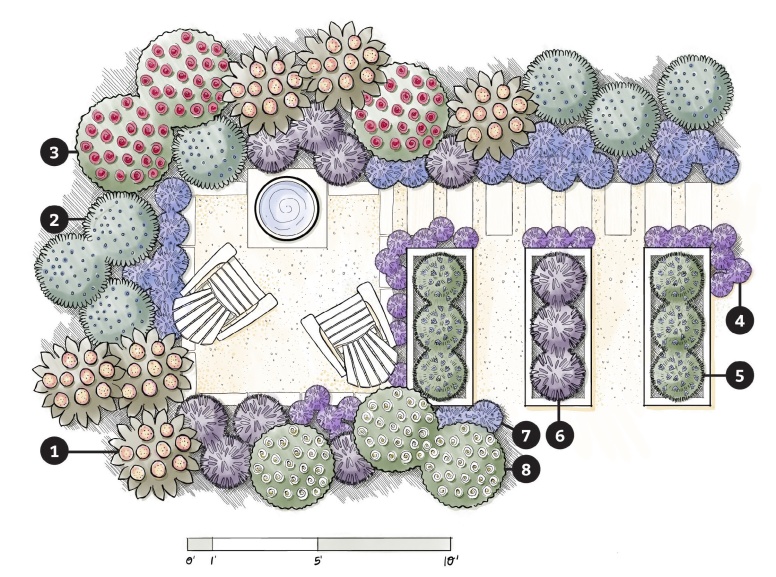
| Design Ideas | With its white, feathery flowers and gentle mounding form, this species of Astilbe adds particular softness to the garden. Though happy in containers, it needs colorful perennials for added dimension. For a naturalized look around a backyard pool, try a sweeping curve of Deutschland Astilbe amongst a large rock or two and some spreading or climbing groundcover. |
| Flower Color | White |
| Foliage Color | Green |
| Companion Plants | Azalea (Azalea); Columbine (Aquilegia); Hosta (Hosta); Bleeding Heart (Dicentra); Brunnera (Brunnera) |
| Care Instructions | Thrives in organically rich, evenly moist, acidic, well-drained soil, sited in bright shade or filtered sun; does not tolerate dry conditions. Mulch to keep roots cool and moist, avoiding the crown. Clip spent blooms for a tidy appearance. Remove old foliage and stems in early spring. Feed in early spring, and again after bloom. |
| History | Astilbes are grouped into the Saxifragaceae, named from the Greek for non-shining to describe the foliage. Of the 14 species, most are from Asia and North America. A. x arendsii hybrids were developed by H. A. Arends, a contemporary 20th century German nurseryman and breeder. They are primarily derived from A. chinensis var. Davidii, which is native to a huge range spanning both China and Mongolia. Other species involved include A. simplicifolia, A. japonica, A. thunbergii and A. astilboides. |
| Lore | Astilbes were originally grown for the cut flower industry in both Europe and Asia. |
Details
| Description | Graceful, airy mounds with plumes of snow white, feathery flowers. Works well in pots and tubs. Creates a very showy landscape accent in moist areas, such as around pools and water features, in a shaded to dappled shade setting. An herbaceous perennial. |
|---|---|
| Bloom Time | Summer |
| Deciduous/Evergreen | Herbaceous |
| Special Features | Easy Care, Attracts Pollinators |
| Problems/Solutions | Deer Resistant, Erosion Control, Rabbit Resistant, Very Wet Areas, Black Walnut Tolerant |
| Growth Rate | Moderate |
| Flower Attributes | Flowers for Cutting, Showy Flowers |
Style
| Landscape Use | Border, Container |
|---|---|
| Design Ideas | With its white, feathery flowers and gentle mounding form, this species of Astilbe adds particular softness to the garden. Though happy in containers, it needs colorful perennials for added dimension. For a naturalized look around a backyard pool, try a sweeping curve of Deutschland Astilbe amongst a large rock or two and some spreading or climbing groundcover. |
| Flower Color | White |
| Foliage Color | Green |
| Companion Plants | Azalea (Azalea); Columbine (Aquilegia); Hosta (Hosta); Bleeding Heart (Dicentra); Brunnera (Brunnera) |
Care
| Care Instructions | Thrives in organically rich, evenly moist, acidic, well-drained soil, sited in bright shade or filtered sun; does not tolerate dry conditions. Mulch to keep roots cool and moist, avoiding the crown. Clip spent blooms for a tidy appearance. Remove old foliage and stems in early spring. Feed in early spring, and again after bloom. |
|---|
History
| History | Astilbes are grouped into the Saxifragaceae, named from the Greek for non-shining to describe the foliage. Of the 14 species, most are from Asia and North America. A. x arendsii hybrids were developed by H. A. Arends, a contemporary 20th century German nurseryman and breeder. They are primarily derived from A. chinensis var. Davidii, which is native to a huge range spanning both China and Mongolia. Other species involved include A. simplicifolia, A. japonica, A. thunbergii and A. astilboides. |
|---|---|
| Lore | Astilbes were originally grown for the cut flower industry in both Europe and Asia. |
Retailers Near You
About Us
We have been pioneers and craftsmen in the art of growing plants for 100 years. Since our founding in Southern California by Harry E. Rosedale, Sr. in 1926, we have been absolutely dedicated and obsessed with quality.
We have been pioneers and craftsmen in the art of growing plants for nearly 100 years. Since our founding in Southern California by Harry E. Rosedale, Sr. in 1926, we have been absolutely dedicated and obsessed with quality.