
You're growing in this Zip Code:
Change LocationDiscover Plants for Your Area
Diamond Heights Variegated Carmel Creeper
Ceanothus griseus var. horizontalis 'Diamond Heights'
Pronunciation: see-an-OH-thus GREE-see-us hor-i-zon-TA-lis
SKU #03617
LIGHT:
Full sun, Partial sun
WATER:
Once established, water occasionally.
SIZE:
Reaches 1 to 2 ft. tall, spreading 4 to 6 ft. wide.

Retailers Near You
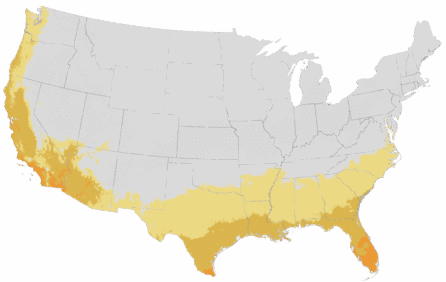
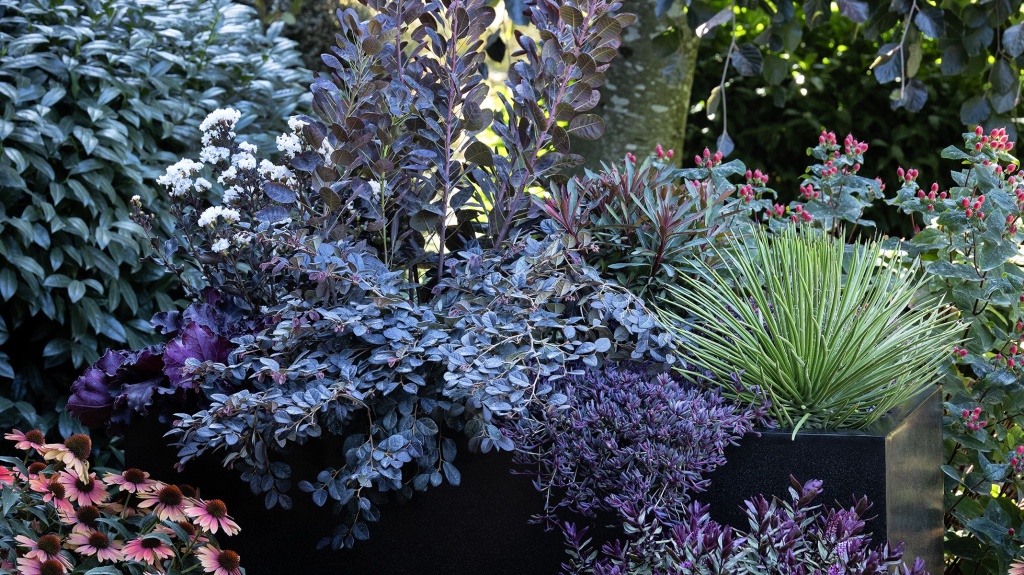
| Description | A brightly colored, low-growing evergreen with exceptional chartreuse and dark green variegation, accented by clusters of pale blue spring flowers. The yellow tones dominate in warm weather, while the green dominates in cooler weather or shade. Takes cool coastal sunlight; site in bright shade in hot, inland regions. Stunning in containers. |
|---|---|
| Bloom Time | Spring |
| Deciduous/Evergreen | Evergreen |
| Special Features | Dramatic Foliage Color, Easy Care, Waterwise, Attracts Pollinators |
| Problems/Solutions | Coastal Exposure, Erosion Control |
| Growth Rate | Moderate |
| Growth Habit | Spreading |
| Flower Attributes | Showy Flowers |
| Landscape Use | Border, Container, Ground Cover |
| Flower Color | Blue |
| Foliage Color | Variegated |
| Companion Plants | Smoke Tree (Cotinus); Broom (Cytisus); Juniper (Juniperus); Lavender (Lavandula); Sumac (Rhus) |
| Care Instructions | Adapts to most soils, provided well-drained; intolerant of soggy soils. Water regularly during first growing season to establish an extensive root system; reduce frequency once established. Takes cool coastal sunlight; site in bright shade in hot, inland regions. Tolerates mild drought, but best with occasional supplemental water, particularly in hot inland areas. Feed before new growth begins in spring. |
| History | This plant originated from Northern California, where it was discovered as a sport from a group of cultivated Carmel Creeper (Ceanothus griseus var. horizontalis) in an area known as Diamond Heights, atop a high hill in the heart of San Fransisco. It was selected by Barry Lehrman in 1985. Ceanothus griseus var. horizontalis is now considered to be a variety of Ceanothus thyrsiflorus, therefore the correct botanical name is Ceanothus thyrsiflorus var. griseus 'Diamond Heights', though it is still widely known by its original name Ceanothus griseus horizontalis 'Diamond Heights'. |
Details
| Description | A brightly colored, low-growing evergreen with exceptional chartreuse and dark green variegation, accented by clusters of pale blue spring flowers. The yellow tones dominate in warm weather, while the green dominates in cooler weather or shade. Takes cool coastal sunlight; site in bright shade in hot, inland regions. Stunning in containers. |
|---|---|
| Bloom Time | Spring |
| Deciduous/Evergreen | Evergreen |
| Special Features | Dramatic Foliage Color, Easy Care, Waterwise, Attracts Pollinators |
| Problems/Solutions | Coastal Exposure, Erosion Control |
| Growth Rate | Moderate |
| Growth Habit | Spreading |
| Flower Attributes | Showy Flowers |
Style
| Landscape Use | Border, Container, Ground Cover |
|---|---|
| Flower Color | Blue |
| Foliage Color | Variegated |
| Companion Plants | Smoke Tree (Cotinus); Broom (Cytisus); Juniper (Juniperus); Lavender (Lavandula); Sumac (Rhus) |
Care
| Care Instructions | Adapts to most soils, provided well-drained; intolerant of soggy soils. Water regularly during first growing season to establish an extensive root system; reduce frequency once established. Takes cool coastal sunlight; site in bright shade in hot, inland regions. Tolerates mild drought, but best with occasional supplemental water, particularly in hot inland areas. Feed before new growth begins in spring. |
|---|
History
| History | This plant originated from Northern California, where it was discovered as a sport from a group of cultivated Carmel Creeper (Ceanothus griseus var. horizontalis) in an area known as Diamond Heights, atop a high hill in the heart of San Fransisco. It was selected by Barry Lehrman in 1985. Ceanothus griseus var. horizontalis is now considered to be a variety of Ceanothus thyrsiflorus, therefore the correct botanical name is Ceanothus thyrsiflorus var. griseus 'Diamond Heights', though it is still widely known by its original name Ceanothus griseus horizontalis 'Diamond Heights'. |
|---|
Retailers Near You
About Us
We have been pioneers and craftsmen in the art of growing plants for 100 years. Since our founding in Southern California by Harry E. Rosedale, Sr. in 1926, we have been absolutely dedicated and obsessed with quality.
We have been pioneers and craftsmen in the art of growing plants for nearly 100 years. Since our founding in Southern California by Harry E. Rosedale, Sr. in 1926, we have been absolutely dedicated and obsessed with quality.