
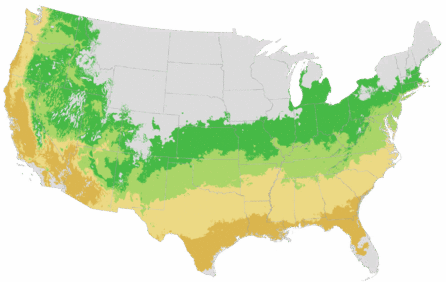
You're growing in this Zip Code:
Change LocationDiscover Plants for Your Area
Grace Ward Lithodora
Lithodora diffusa 'Grace Ward'
Pronunciation: lith-OH-dor-uh dif-FEW-sa
SKU #05894
LIGHT:
Full sun, Partial sun
WATER:
Water when top 2 inches of soil is dry.
SIZE:
Reaches 1 ft. tall or less, slowly spreading 3 to 4 ft. wide.

Retailers Near You
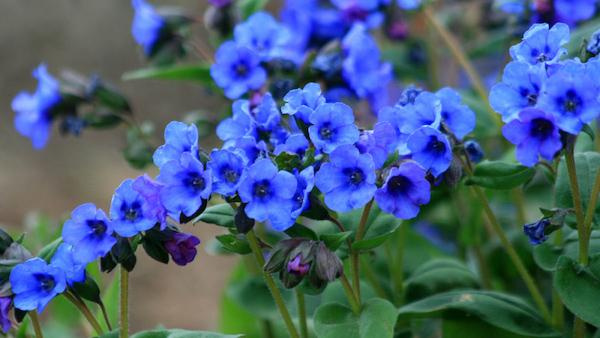

| Description | Beautiful deep blue flowers cover this wonderful sprawling groundcover. The slightly mounded form adds softness and color to the top of retaining walls. Works well as a rock garden accent, softly flowing between boulders. Performs best with some shade in extremely hot areas. Evergreen. |
|---|---|
| Bloom Time | Summer |
| Deciduous/Evergreen | Evergreen |
| Special Features | Easy Care |
| Problems/Solutions | Deer Resistant, Erosion Control |
| Growth Rate | Slow |
| Growth Habit | Spreading |
| Flower Attributes | Showy Flowers |
| Landscape Use | Border, Container, Poolside, Ground Cover |
| Design Ideas | This blue mat-like perennial looks gorgeous around rocks and landscape boulders. Use at the top of retaining walls or to soften unsightly curbs. Like a groundcover, it spreads over a very large area. Great on slopes, berms and banks to offer both color and erosion control. Though it's ideal for the traditional rock garden, it's also a natural in the Mediterranean landscape. |
| Flower Color | Blue |
| Foliage Color | Green |
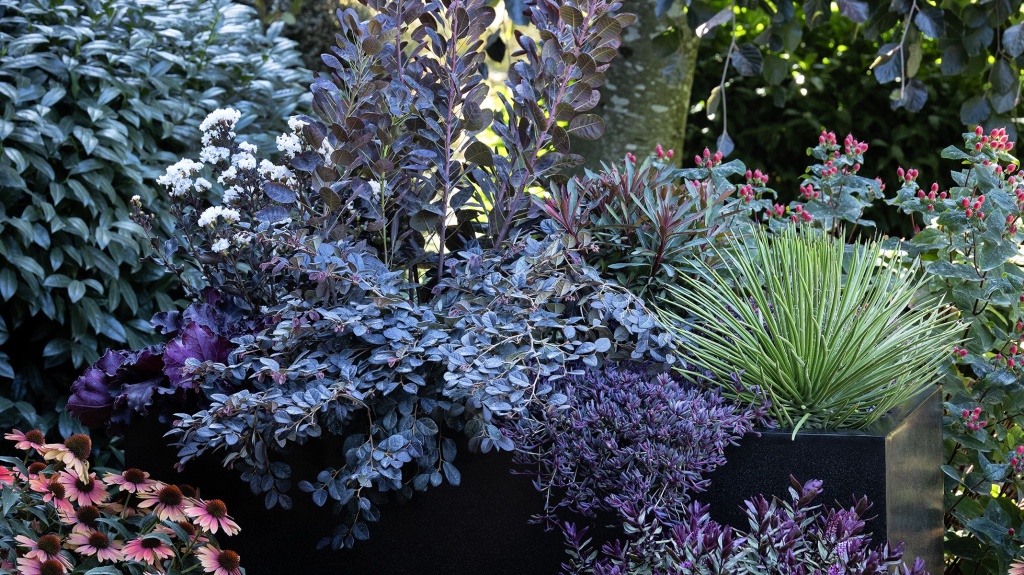
| Companion Plants | Coral Bells (Heuchera); Japanese Forest Grass (Hakonechloa); Hosta (Hosta); Ligularia (Ligularia); Painted Fern (Athyrium) |
| Care Instructions | Thrives in well-drained, slightly acidic soil. Water deeply, regularly during the first growing season to establish an extensive root system; once established, reduce frequency. Space 2 to 3 ft. apart as groundcover; closer for faster coverage. Control weeds with mulch until plants fill in. |
| History | This group of shrubs is classified in the borage family, Boraginaceae. It was named by German botanist, August Grisebach, 1814-1879, who is most noted as author of Flora of the British West Indian Islands. This genus contains just seven species of low hairy shrubs from Europe, North Africa, and Asia Minor. This species is found in southern Europe and Morocco. It was formerly known as Lithospermum diffusum by Mariano Lagasca y Segura, 1776-1839 of Spain, and many contemporary references still consider this a synonym for L. diffusa. This and other plants were separated from that genus and reclassified in a whole new genus created for them by botanist Ivan Murray Johnston of the Arnold Arboretum at Harvard University, Massachusetts. |
Details
| Description | Beautiful deep blue flowers cover this wonderful sprawling groundcover. The slightly mounded form adds softness and color to the top of retaining walls. Works well as a rock garden accent, softly flowing between boulders. Performs best with some shade in extremely hot areas. Evergreen. |
|---|---|
| Bloom Time | Summer |
| Deciduous/Evergreen | Evergreen |
| Special Features | Easy Care |
| Problems/Solutions | Deer Resistant, Erosion Control |
| Growth Rate | Slow |
| Growth Habit | Spreading |
| Flower Attributes | Showy Flowers |
Style
| Landscape Use | Border, Container, Poolside, Ground Cover |
|---|---|
| Design Ideas | This blue mat-like perennial looks gorgeous around rocks and landscape boulders. Use at the top of retaining walls or to soften unsightly curbs. Like a groundcover, it spreads over a very large area. Great on slopes, berms and banks to offer both color and erosion control. Though it's ideal for the traditional rock garden, it's also a natural in the Mediterranean landscape. |
| Flower Color | Blue |
| Foliage Color | Green |
| Companion Plants | Coral Bells (Heuchera); Japanese Forest Grass (Hakonechloa); Hosta (Hosta); Ligularia (Ligularia); Painted Fern (Athyrium) |
Care
| Care Instructions | Thrives in well-drained, slightly acidic soil. Water deeply, regularly during the first growing season to establish an extensive root system; once established, reduce frequency. Space 2 to 3 ft. apart as groundcover; closer for faster coverage. Control weeds with mulch until plants fill in. |
|---|
History
| History | This group of shrubs is classified in the borage family, Boraginaceae. It was named by German botanist, August Grisebach, 1814-1879, who is most noted as author of Flora of the British West Indian Islands. This genus contains just seven species of low hairy shrubs from Europe, North Africa, and Asia Minor. This species is found in southern Europe and Morocco. It was formerly known as Lithospermum diffusum by Mariano Lagasca y Segura, 1776-1839 of Spain, and many contemporary references still consider this a synonym for L. diffusa. This and other plants were separated from that genus and reclassified in a whole new genus created for them by botanist Ivan Murray Johnston of the Arnold Arboretum at Harvard University, Massachusetts. |
|---|
Retailers Near You
About Us
We have been pioneers and craftsmen in the art of growing plants for 100 years. Since our founding in Southern California by Harry E. Rosedale, Sr. in 1926, we have been absolutely dedicated and obsessed with quality.
We have been pioneers and craftsmen in the art of growing plants for nearly 100 years. Since our founding in Southern California by Harry E. Rosedale, Sr. in 1926, we have been absolutely dedicated and obsessed with quality.