
You're growing in this Zip Code:
Change LocationDiscover Plants for Your Area
Green Giant Western Arborvitae
Thuja (standish x plicata) 'Green Giant'
Pronunciation: THOO-yuh
SKU #01259
LIGHT:
Full sun
WATER:
Water when top 2 inches of soil is dry.
SIZE:
Quickly reaches 25 to 30 ft. tall, 8 to 10 ft. wide in 10 years; 50 to 60 ft. tall with time.

Retailers Near You
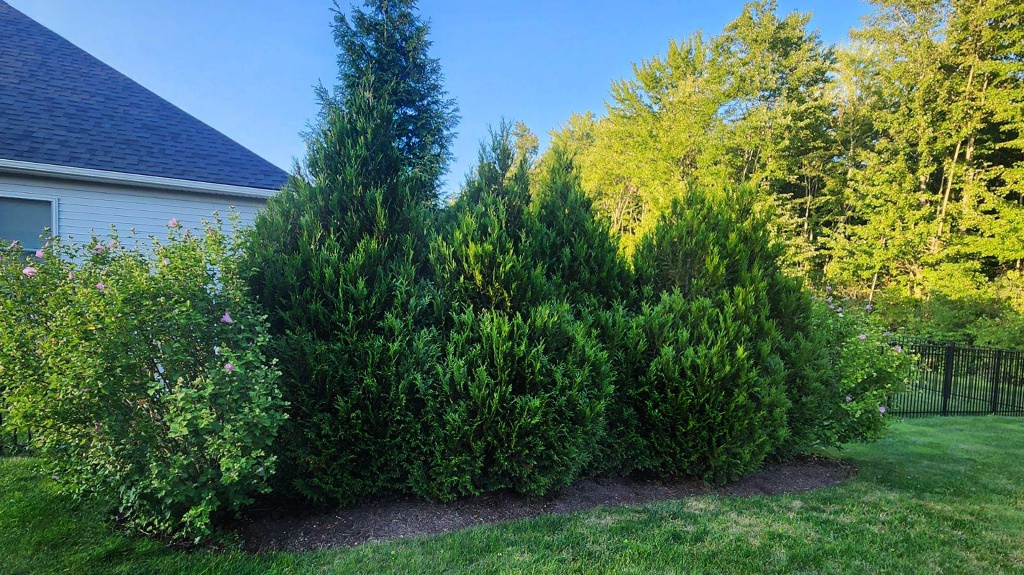

| Description | One of the finest evergreens for use as screening or a windbreak, this upright conifer is versatile, strong-rooted and virtually disease-free. Its uniform shape seldom needs pruning, but responds well to shearing. Thrives in southern heat and humidity. A durable, handsome accent tree. |
|---|---|
| Bloom Time | Conifer; prized for foliage. |
| Deciduous/Evergreen | Evergreen |
| Special Features | Easy Care, Improved Pest and Disease Resistance, Waterwise, Fast Growing, Benefits Birds |
| Growth Rate | Fast |
| Growth Habit | Pyramidal |
| Landscape Use | Privacy Screen, Windbreak |
| Design Ideas | Uniform, conical form makes an excellent disease-free substitute for Leland cypress, particularly in the southeastern U.S. |
| Foliage Color | Green |
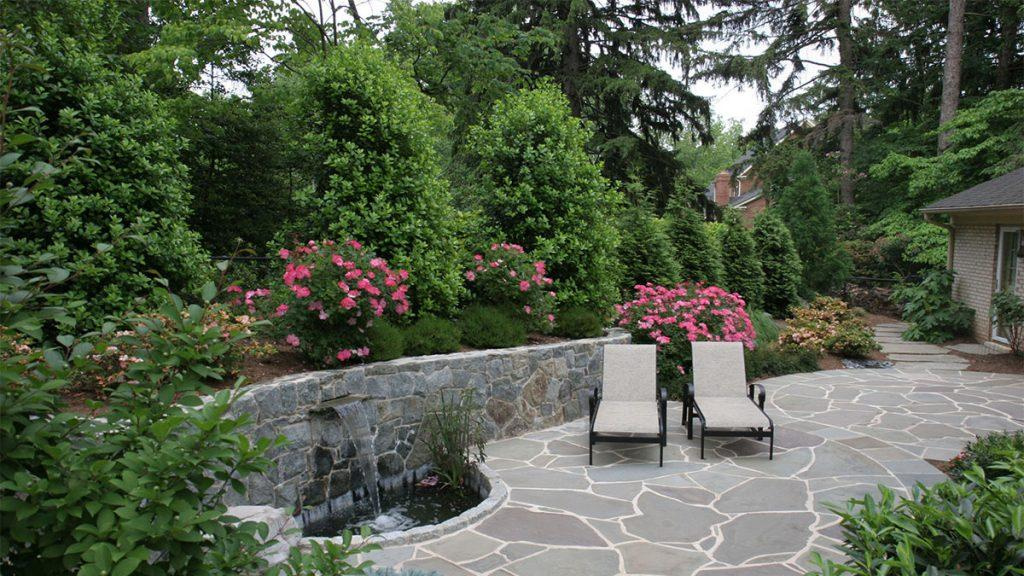
| Companion Plants | Smoke Tree (Cotinus); Rose (Rosa); Spirea (Spiraea); Hydrangea (Hydrangea); Daylily (Hemerocallis) |
| Care Instructions | Adapts to a wide range of soil types; avoid poorly drained, overly wet sites. Water deeply and regularly during first few growing seasons to establish an extensive root system. Once established, reduce frequency; tolerates drought. Feed with a general purpose fertilizer before new growth begins in spring. |
| History | A U.S. National Arboretum Introduction. In 1967, a single plant reputed to be Thuja (standishii x plicata) was received from D.T. Poulsen, Kvistgaard, Denmark, and planted at the U.S. National Arboretum. This plant exhibited exceptional landscape quality and propagations were distributed. In the distribution process, the name and identity of this clone became confused with that of another arborvitae from the same source, T. occidentalis 'Giganteoides'. The identity of the exceptional cloneas the T. (standishii x plicata) hybrid was resolved by Susan Martin, USNA, Kim Trip, New York Botanic Garden, and Robert Marquard, Holden Arboretum, through extensive records searches, nursery inspections, and isozyme analysis. The name Thuja 'Green Giant' was selected to identify and promote this clone. |
Details
| Description | One of the finest evergreens for use as screening or a windbreak, this upright conifer is versatile, strong-rooted and virtually disease-free. Its uniform shape seldom needs pruning, but responds well to shearing. Thrives in southern heat and humidity. A durable, handsome accent tree. |
|---|---|
| Bloom Time | Conifer; prized for foliage. |
| Deciduous/Evergreen | Evergreen |
| Special Features | Easy Care, Improved Pest and Disease Resistance, Waterwise, Fast Growing, Benefits Birds |
| Growth Rate | Fast |
| Growth Habit | Pyramidal |
Style
| Landscape Use | Privacy Screen, Windbreak |
|---|---|
| Design Ideas | Uniform, conical form makes an excellent disease-free substitute for Leland cypress, particularly in the southeastern U.S. |
| Foliage Color | Green |
| Companion Plants | Smoke Tree (Cotinus); Rose (Rosa); Spirea (Spiraea); Hydrangea (Hydrangea); Daylily (Hemerocallis) |
Care
| Care Instructions | Adapts to a wide range of soil types; avoid poorly drained, overly wet sites. Water deeply and regularly during first few growing seasons to establish an extensive root system. Once established, reduce frequency; tolerates drought. Feed with a general purpose fertilizer before new growth begins in spring. |
|---|
History
| History | A U.S. National Arboretum Introduction. In 1967, a single plant reputed to be Thuja (standishii x plicata) was received from D.T. Poulsen, Kvistgaard, Denmark, and planted at the U.S. National Arboretum. This plant exhibited exceptional landscape quality and propagations were distributed. In the distribution process, the name and identity of this clone became confused with that of another arborvitae from the same source, T. occidentalis 'Giganteoides'. The identity of the exceptional cloneas the T. (standishii x plicata) hybrid was resolved by Susan Martin, USNA, Kim Trip, New York Botanic Garden, and Robert Marquard, Holden Arboretum, through extensive records searches, nursery inspections, and isozyme analysis. The name Thuja 'Green Giant' was selected to identify and promote this clone. |
|---|
Retailers Near You
About Us
We have been pioneers and craftsmen in the art of growing plants for 100 years. Since our founding in Southern California by Harry E. Rosedale, Sr. in 1926, we have been absolutely dedicated and obsessed with quality.
We have been pioneers and craftsmen in the art of growing plants for nearly 100 years. Since our founding in Southern California by Harry E. Rosedale, Sr. in 1926, we have been absolutely dedicated and obsessed with quality.