
You're growing in this Zip Code:
Change LocationDiscover Plants for Your Area
Helene Rose of Sharon
Hibiscus syriacus 'Helene'
Pronunciation: hi-BIS-kus si-ri-A-kus
SKU #00226
LIGHT:
Full sun, Partial sun
WATER:
Water when top 3 inches of soil is dry.
SIZE:
Grows 9 ft. tall, 6 ft. wide.

Retailers Near You
Ready to Grow?
Ship Monrovia plants directly to your door. Browse a curated selection available online.
Shop Now >
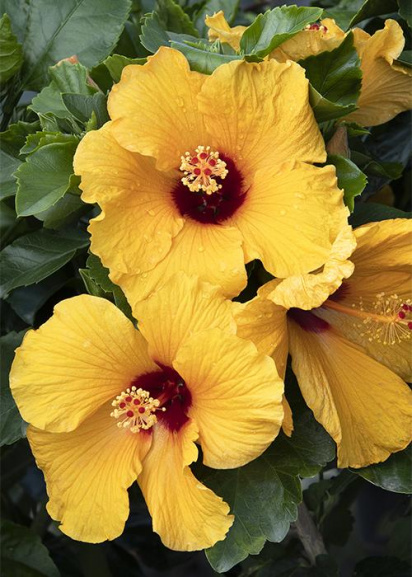
| Description | White, heavily ruffled flowers with reddish purple eyes complement handsome, leathery dark green leaves. Dense, upright growth is more compact than others. Blooms nearly continuously over a long season, and rarely sets seeds. Tolerates air pollution. Makes a wonderful informal hedge or screen, and is easily trained into a small tree. Deciduous. |
|---|---|
| Bloom Time | Summer |
| Deciduous/Evergreen | Deciduous |
| Special Features | Waterwise, Non-toxic to Cats and Dogs, Attracts Pollinators, Compact Form |
| Problems/Solutions | Coastal Exposure, Drought Tolerant, Tolerates Urban Pollution, Black Walnut Tolerant |
| Growth Rate | Moderate |
| Growth Habit | Upright |
| Flower Attributes | Flowers for Cutting, Long Bloom Season, Showy Flowers |
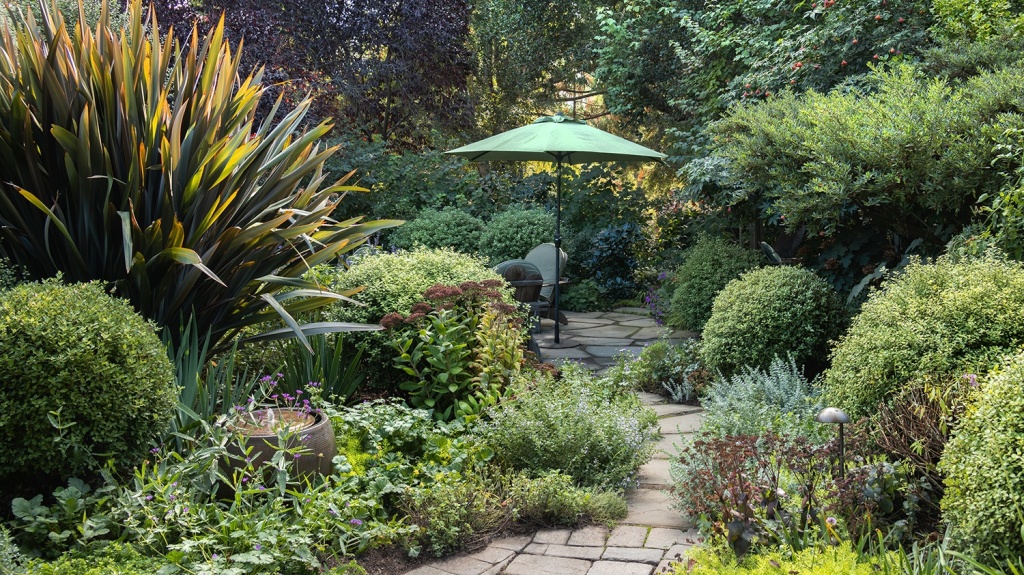
| Landscape Use | Border, Hedge, Privacy Screen |
| Flower Color | Multicolored |
| Foliage Color | Green |
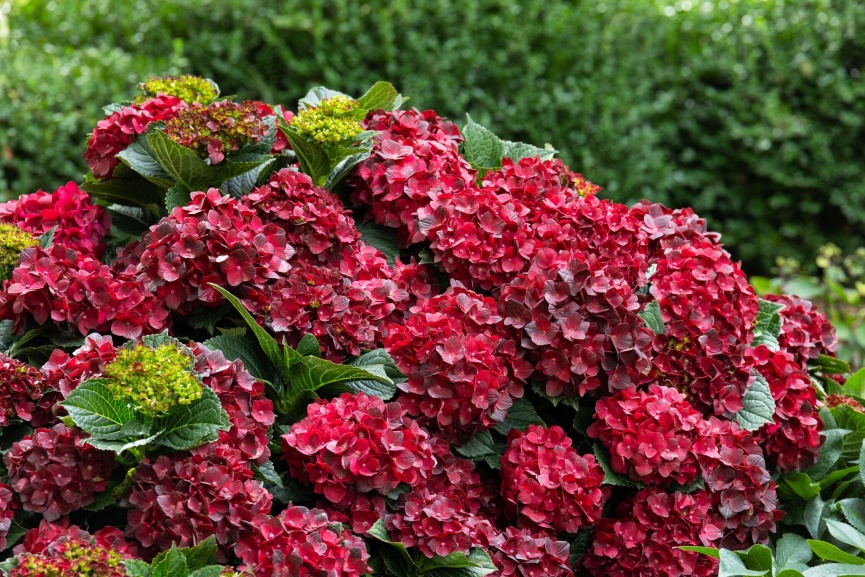
| Companion Plants | Hydrangea (Hydrangea); Viburnum (Viburnum); Lilac (Syringa); Lavender (Lavandula); Phlox (Phlox) |
| Care Instructions | Adaptable to most well-drained soils except very wet or dry. Water deeply, regularly in first growing season to establish root system. Once established, reduce frequency; tolerates brief periods of drought. Feed before new growth begins in spring. Prune after flowering to shape and promote vigorous new growth. |
| History | A U.S. National Arboretum Plant Introduction, Helene is a sterile triploid with a more compact form than the species Hibiscus syriacus. In 1971, a number of crosses were made between diploid Hibiscus seedling selections of (H. syriacus 'Suminokura-yae' x H. syriacus 'William R. Smith'),(H. syriacus 'Blue Bird' x H. syriacus 'Hanagasa'), or (H. syriacus 'Sokobeniyae' x H. syriacus 'William R. Smith') and colchicine-induced tetraploid seedlings ofH. syriacus 'William R. Smith'. The resulting triploids, 'Helene', 'Minerva', and 'Aphrodite' were released in 1980, 1986 and 1988, respectively. |
Details
| Description | White, heavily ruffled flowers with reddish purple eyes complement handsome, leathery dark green leaves. Dense, upright growth is more compact than others. Blooms nearly continuously over a long season, and rarely sets seeds. Tolerates air pollution. Makes a wonderful informal hedge or screen, and is easily trained into a small tree. Deciduous. |
|---|---|
| Bloom Time | Summer |
| Deciduous/Evergreen | Deciduous |
| Special Features | Waterwise, Non-toxic to Cats and Dogs, Attracts Pollinators, Compact Form |
| Problems/Solutions | Coastal Exposure, Drought Tolerant, Tolerates Urban Pollution, Black Walnut Tolerant |
| Growth Rate | Moderate |
| Growth Habit | Upright |
| Flower Attributes | Flowers for Cutting, Long Bloom Season, Showy Flowers |
Style
| Landscape Use | Border, Hedge, Privacy Screen |
|---|---|
| Flower Color | Multicolored |
| Foliage Color | Green |
| Companion Plants | Hydrangea (Hydrangea); Viburnum (Viburnum); Lilac (Syringa); Lavender (Lavandula); Phlox (Phlox) |
Care
| Care Instructions | Adaptable to most well-drained soils except very wet or dry. Water deeply, regularly in first growing season to establish root system. Once established, reduce frequency; tolerates brief periods of drought. Feed before new growth begins in spring. Prune after flowering to shape and promote vigorous new growth. |
|---|
History
| History | A U.S. National Arboretum Plant Introduction, Helene is a sterile triploid with a more compact form than the species Hibiscus syriacus. In 1971, a number of crosses were made between diploid Hibiscus seedling selections of (H. syriacus 'Suminokura-yae' x H. syriacus 'William R. Smith'),(H. syriacus 'Blue Bird' x H. syriacus 'Hanagasa'), or (H. syriacus 'Sokobeniyae' x H. syriacus 'William R. Smith') and colchicine-induced tetraploid seedlings ofH. syriacus 'William R. Smith'. The resulting triploids, 'Helene', 'Minerva', and 'Aphrodite' were released in 1980, 1986 and 1988, respectively. |
|---|
Retailers Near You
About Us
We have been pioneers and craftsmen in the art of growing plants for 100 years. Since our founding in Southern California by Harry E. Rosedale, Sr. in 1926, we have been absolutely dedicated and obsessed with quality.
We have been pioneers and craftsmen in the art of growing plants for nearly 100 years. Since our founding in Southern California by Harry E. Rosedale, Sr. in 1926, we have been absolutely dedicated and obsessed with quality.