
You're growing in this Zip Code:
Discover Plants for Your Area
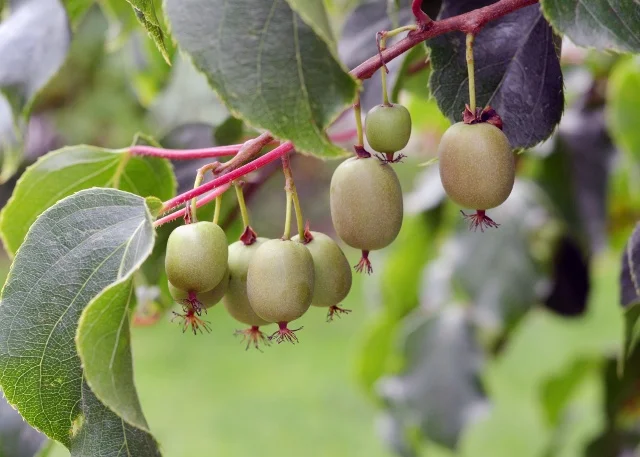
Kiwi Magic® Hardy Kiwi Combination
Actinidia arguta (Male),Actinidia arguta 'Issai' (Female)
Pronunciation: ak-tih-NID-ee-uh ar-GOO-tuh
SKU #42411
LIGHT:
Full sun, Partial sun
WATER:
Keep soil moist, but not soggy.
SIZE:
Quickly climbs 20 to 25 ft. tall, spreading 12 to 20 ft., with support.

Home Delivery Price
?
- Arrives in 3 to 7 days
- Free shipping on orders over $149
- Perfect Start Promise
Select Quantity
Retailers Near You
This Plant's Growing Zones: 4-8
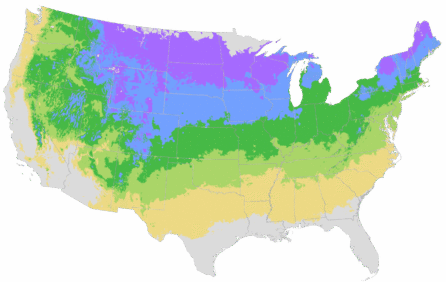
Your USDA Cold Hardiness Zone:
| Description | A fruit-producing variety and a male pollinizer together in the same container, providing a higher yield of small, delicious smooth-skinned fruit. This vigorous vine offers glossy foliage and fragrant white blooms in early summer, making it a showy landscape specimen. Attractive on an arbor or trellis. Deciduous. |
|---|---|
| Bloom Time | Late spring to early summer |
| Deciduous/Evergreen | Deciduous |
| Special Features | Edible, Fast Growing |
| Problems/Solutions | Coastal Exposure |
| Growth Rate | Fast |
| Growth Habit | Climbing |
| Flower Attributes | Fragrant, Showy Flowers |
| Landscape Use | Espalier, Privacy Screen |
| Design Ideas | Kiwi vines are ideal candidates for training onto virtually any kind of arbor or trellis. Grow along the top of a fence line for a long run of foliage. Will arch over a covered gateway too. |
| Flower Color | White |
| Foliage Color | Green |
| Companion Plants | Rosemary (Rosmarinus); Grape (Vitis); Pomegranate (Punica); Raspberry (Rubus); Lavender (Lavandula) |
| Care Instructions | Prefers fertile, loamy, well-drained soils. Water deeply, regularly during first growing season to establish extensive root system. Once established, water consistently; avoid soggy or overly dry soils. Fertilize in early spring and again in early summer. Prune back in late winter to control size. Provide trellis or arbor for support. |
| History | The A. arguta species was named by Friedrick Miquel, a botanist of Utrecht, Holland. It was collected first from eastern Asia where it is native to Japan, Korea and Manchuria. Due to self-fertility, this species has been grown for many centuries in China. |
| Lore | The genus was named from the Greek for ray, by John Lindley in the early 19th century, referring to the radiating styles of the flower. This is the signature genus of the Actinidiaceae family which includes many types of woody tropical vines. |
Details
| Description | A fruit-producing variety and a male pollinizer together in the same container, providing a higher yield of small, delicious smooth-skinned fruit. This vigorous vine offers glossy foliage and fragrant white blooms in early summer, making it a showy landscape specimen. Attractive on an arbor or trellis. Deciduous. |
|---|---|
| Bloom Time | Late spring to early summer |
| Deciduous/Evergreen | Deciduous |
| Special Features | Edible, Fast Growing |
| Problems/Solutions | Coastal Exposure |
| Growth Rate | Fast |
| Growth Habit | Climbing |
| Flower Attributes | Fragrant, Showy Flowers |
Style
| Landscape Use | Espalier, Privacy Screen |
|---|---|
| Design Ideas | Kiwi vines are ideal candidates for training onto virtually any kind of arbor or trellis. Grow along the top of a fence line for a long run of foliage. Will arch over a covered gateway too. |
| Flower Color | White |
| Foliage Color | Green |
| Companion Plants | Rosemary (Rosmarinus); Grape (Vitis); Pomegranate (Punica); Raspberry (Rubus); Lavender (Lavandula) |
Care
| Care Instructions | Prefers fertile, loamy, well-drained soils. Water deeply, regularly during first growing season to establish extensive root system. Once established, water consistently; avoid soggy or overly dry soils. Fertilize in early spring and again in early summer. Prune back in late winter to control size. Provide trellis or arbor for support. |
|---|
History
| History | The A. arguta species was named by Friedrick Miquel, a botanist of Utrecht, Holland. It was collected first from eastern Asia where it is native to Japan, Korea and Manchuria. Due to self-fertility, this species has been grown for many centuries in China. |
|---|---|
| Lore | The genus was named from the Greek for ray, by John Lindley in the early 19th century, referring to the radiating styles of the flower. This is the signature genus of the Actinidiaceae family which includes many types of woody tropical vines. |
Retailers Near You
About Us
We have been pioneers and craftsmen in the art of growing plants for 100 years. Since our founding in Southern California by Harry E. Rosedale, Sr. in 1926, we have been absolutely dedicated and obsessed with quality.
We have been pioneers and craftsmen in the art of growing plants for nearly 100 years. Since our founding in Southern California by Harry E. Rosedale, Sr. in 1926, we have been absolutely dedicated and obsessed with quality.