
You're growing in this Zip Code:
Change LocationDiscover Plants for Your Area
Lavender Swirl® Trailing Lantana
Lantana sellowiana 'Monswee'
Pronunciation: lan-TAY-na se-lo-ee-AH-na
SKU #05723
LIGHT:
Full sun
WATER:
Water deeply when soil is dry.
SIZE:
Moderate growing; reaches 8 to 12 in. tall, spreading 3 to 6 ft. wide.

Retailers Near You
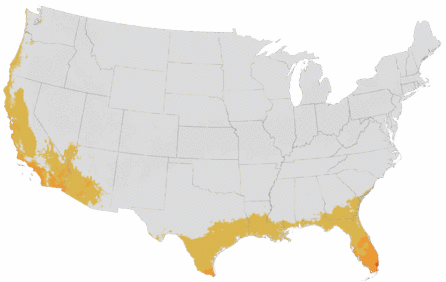
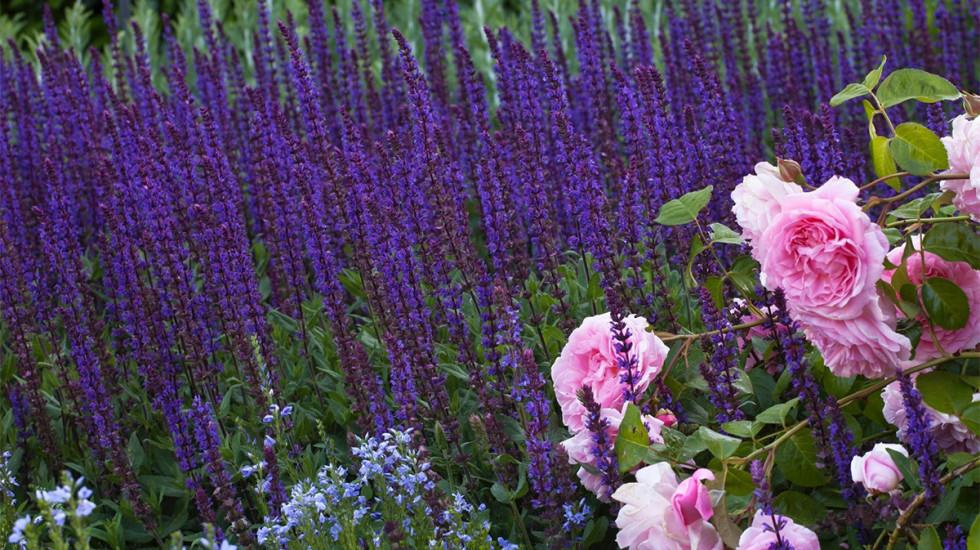
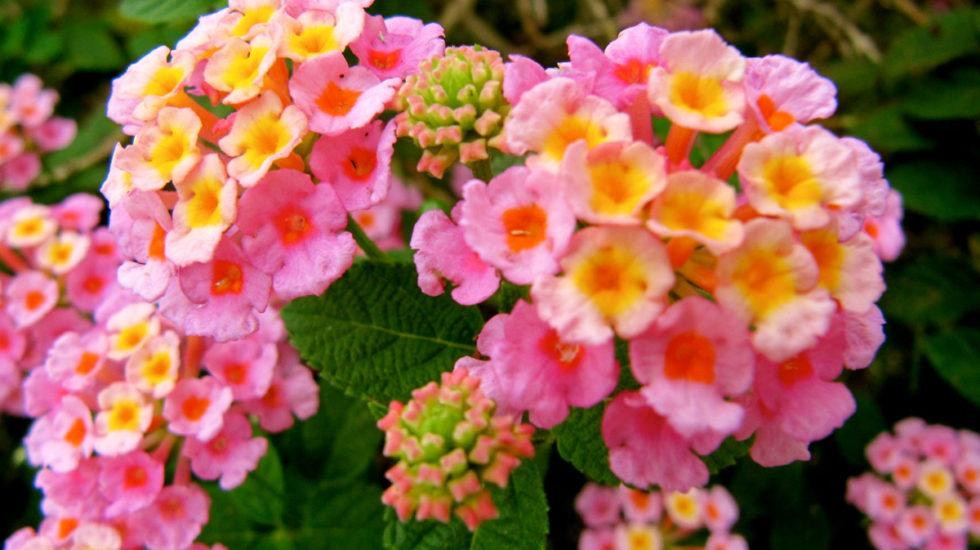

| Description | A profusion of both pure white and solid purple flowers cover this widely spreading groundcover nearly year-round! Its naturally spreading form is excellent for bank cover and erosion control. Wonderful cascading over raised beds and hanging baskets, or as a container specimen, trained into a patio tree form. Evergreen in frost-free climates. |
|---|---|
| Bloom Time | Spring and summer; longer in frost-free areas |
| Deciduous/Evergreen | Evergreen |
| Special Features | Attracts Hummingbirds, Easy Care, Waterwise, Attracts Pollinators, Benefits Birds |
| Problems/Solutions | Coastal Exposure, Deer Resistant, Erosion Control |
| Growth Rate | Moderate |
| Growth Habit | Spreading |
| Flower Attributes | Showy Flowers |
| Patent Act | Asexual reproduction of plants protected by the Plant Patent Act is prohibited during the life of the patent. |
| Landscape Use | Border, Container, Ground Cover, Hillside |
| Flower Color | Purple |
| Foliage Color | Green |
| Companion Plants | Phormium (Phormium); Mirror Plant (Coprosma); Princess Flower (Tibouchina); Plumbago (Plumbago); Cordyline (Cordyline) |
| Care Instructions | Thrives in average, well-drained soils. Water deeply, regularly in first growing season to establish root system. Once established in the landscape, reduce frequency; continue to water container plants regularly. Space 3 to 5 ft. apart as groundcover. Fertilize in spring. Remove spent flowers for a tidy appearance. Prune topiary form regularly to maintain size and shape. |
| History | This species of Lantana is native to South America, and was reportedly discovered in Montevideo, Uruguay, and classified as L. montevidensis in 1904. The plant was also described as Lippia sellowiana in 1826 and was subsequently renamed Lantana sellowiana in honor of German botanist Friedrich Sellow. While the names are synonymous, the most widely used is the original classification, Lantana montevidensis. |
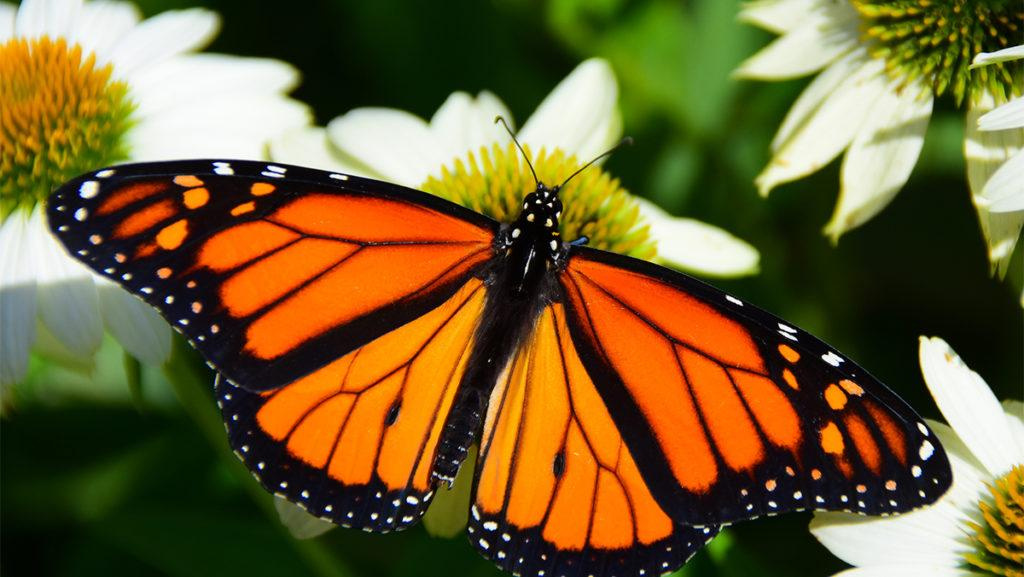
| Lore | Lantana sellowiana is also known as L. montevidensis, named because it is native to the hills surrounding Uruguay capital city of Montevideo. A member of the Verbenacea family, it is sometimes referred to as Wild Verbena. Lantana species have been cultivated for nearly 300 years, and lore tells us it has been used for centuries longer in folk medicines; poultices for snake bites and sprains, and elixirs to treat ailments. It is said that the dried leaves burned in a glass jar are a natural mosquito repellent. However, it must be noted that the leaves and stems contain an alkaloid that is toxic to browsing animals, and the berries are poisonous. The bright, aromatic flowers of Lantana are adored by nectar-seeking wildlife, and as such are a a staple of a classic butterfly garden. |
Details
| Description | A profusion of both pure white and solid purple flowers cover this widely spreading groundcover nearly year-round! Its naturally spreading form is excellent for bank cover and erosion control. Wonderful cascading over raised beds and hanging baskets, or as a container specimen, trained into a patio tree form. Evergreen in frost-free climates. |
|---|---|
| Bloom Time | Spring and summer; longer in frost-free areas |
| Deciduous/Evergreen | Evergreen |
| Special Features | Attracts Hummingbirds, Easy Care, Waterwise, Attracts Pollinators, Benefits Birds |
| Problems/Solutions | Coastal Exposure, Deer Resistant, Erosion Control |
| Growth Rate | Moderate |
| Growth Habit | Spreading |
| Flower Attributes | Showy Flowers |
| Patent Act | Asexual reproduction of plants protected by the Plant Patent Act is prohibited during the life of the patent. |
Style
| Landscape Use | Border, Container, Ground Cover, Hillside |
|---|---|
| Flower Color | Purple |
| Foliage Color | Green |
| Companion Plants | Phormium (Phormium); Mirror Plant (Coprosma); Princess Flower (Tibouchina); Plumbago (Plumbago); Cordyline (Cordyline) |
Care
| Care Instructions | Thrives in average, well-drained soils. Water deeply, regularly in first growing season to establish root system. Once established in the landscape, reduce frequency; continue to water container plants regularly. Space 3 to 5 ft. apart as groundcover. Fertilize in spring. Remove spent flowers for a tidy appearance. Prune topiary form regularly to maintain size and shape. |
|---|
History
| History | This species of Lantana is native to South America, and was reportedly discovered in Montevideo, Uruguay, and classified as L. montevidensis in 1904. The plant was also described as Lippia sellowiana in 1826 and was subsequently renamed Lantana sellowiana in honor of German botanist Friedrich Sellow. While the names are synonymous, the most widely used is the original classification, Lantana montevidensis. |
|---|---|
| Lore | Lantana sellowiana is also known as L. montevidensis, named because it is native to the hills surrounding Uruguay capital city of Montevideo. A member of the Verbenacea family, it is sometimes referred to as Wild Verbena. Lantana species have been cultivated for nearly 300 years, and lore tells us it has been used for centuries longer in folk medicines; poultices for snake bites and sprains, and elixirs to treat ailments. It is said that the dried leaves burned in a glass jar are a natural mosquito repellent. However, it must be noted that the leaves and stems contain an alkaloid that is toxic to browsing animals, and the berries are poisonous. The bright, aromatic flowers of Lantana are adored by nectar-seeking wildlife, and as such are a a staple of a classic butterfly garden. |
Retailers Near You
About Us
We have been pioneers and craftsmen in the art of growing plants for 100 years. Since our founding in Southern California by Harry E. Rosedale, Sr. in 1926, we have been absolutely dedicated and obsessed with quality.
We have been pioneers and craftsmen in the art of growing plants for nearly 100 years. Since our founding in Southern California by Harry E. Rosedale, Sr. in 1926, we have been absolutely dedicated and obsessed with quality.