
You're growing in this Zip Code:
Change LocationDiscover Plants for Your Area
Little John Dwarf Bottlebrush
Callistemon 'Little John'
Pronunciation: kal-LIS-tem-on
SKU #01440
LIGHT:
Full sun
WATER:
Once established, water if very dry.
SIZE:
Slowly reaches just 3 ft. tall, 5 ft. wide.

Retailers Near You
Ready to Grow?
Ship Monrovia plants directly to your door. Browse a curated selection available online.
Shop Now >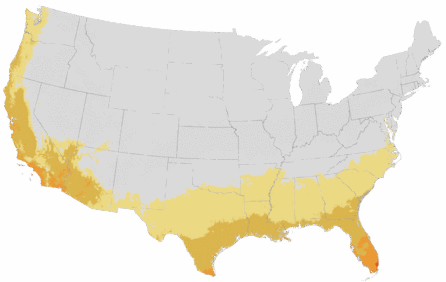

| Description | Blood red, bottlebrush-like flower spikes cover this dwarf evergreen shrub from spring into summer. In warm, temperate regions, it will continue to bloom intermittently throughout the year. A densely branched habit with blue-green leaves that have a citrus scent when crushed. The versatile compact size is perfect for today's smaller gardens. |
|---|---|
| Bloom Time | Spring to summer; longer in temperate regions |
| Deciduous/Evergreen | Evergreen |
| Special Features | Attracts Hummingbirds, Waterwise, Non-toxic to Cats and Dogs, Attracts Pollinators, Compact Form |
| Problems/Solutions | Coastal Exposure, Deer Resistant, Drought Tolerant |
| Growth Rate | Slow |
| Growth Habit | Rounded |
| Flower Attributes | Flowers for Cutting, Showy Flowers |
| Landscape Use | Border, Container, Hedge |
| Design Ideas | With its lower spreading habit, this hummingbird magnet fits into any garden. Use as a foundation cover-up in drought-resistant gardens or as middle-of-the-border accent plants. Line up several for a hedge or mass them like groundcover in very hot planting areas where other plants wilt. Ideal for desert landscapes. |
| Flower Color | Red |
| Foliage Color | Blue-green |
| Companion Plants | Agave (Agave); Aloe (Aloe); Maiden Grass (Miscanthus); Echeveria (Echeveria); Sedum (Sedum) |
| Care Instructions | Thrives in average, lightly acidic, well-drained soil; avoid alkaline soils. Water deeply, regularly during first growing season to establish an extensive root system; reduce frequency once established. More drought tolerant in coastal areas; less tolerant in hot, arid regions. Apply fertilizer in early spring. Prune to shape after flowering. |
| History | Callistemon and Melaleuca are closely related and the two were recently combined under the genus Melaleuca. However, because Callistemon is still widely used in the horticultural trade, we will continue to list them under their original name. |
Details
| Description | Blood red, bottlebrush-like flower spikes cover this dwarf evergreen shrub from spring into summer. In warm, temperate regions, it will continue to bloom intermittently throughout the year. A densely branched habit with blue-green leaves that have a citrus scent when crushed. The versatile compact size is perfect for today's smaller gardens. |
|---|---|
| Bloom Time | Spring to summer; longer in temperate regions |
| Deciduous/Evergreen | Evergreen |
| Special Features | Attracts Hummingbirds, Waterwise, Non-toxic to Cats and Dogs, Attracts Pollinators, Compact Form |
| Problems/Solutions | Coastal Exposure, Deer Resistant, Drought Tolerant |
| Growth Rate | Slow |
| Growth Habit | Rounded |
| Flower Attributes | Flowers for Cutting, Showy Flowers |
Style
| Landscape Use | Border, Container, Hedge |
|---|---|
| Design Ideas | With its lower spreading habit, this hummingbird magnet fits into any garden. Use as a foundation cover-up in drought-resistant gardens or as middle-of-the-border accent plants. Line up several for a hedge or mass them like groundcover in very hot planting areas where other plants wilt. Ideal for desert landscapes. |
| Flower Color | Red |
| Foliage Color | Blue-green |
| Companion Plants | Agave (Agave); Aloe (Aloe); Maiden Grass (Miscanthus); Echeveria (Echeveria); Sedum (Sedum) |
Care
| Care Instructions | Thrives in average, lightly acidic, well-drained soil; avoid alkaline soils. Water deeply, regularly during first growing season to establish an extensive root system; reduce frequency once established. More drought tolerant in coastal areas; less tolerant in hot, arid regions. Apply fertilizer in early spring. Prune to shape after flowering. |
|---|
History
| History | Callistemon and Melaleuca are closely related and the two were recently combined under the genus Melaleuca. However, because Callistemon is still widely used in the horticultural trade, we will continue to list them under their original name. |
|---|
Frequently asked questions
Does Little John Dwarf Bottlebrush produce flowers?
Spring to summer; longer in temperate regions
Is Little John Dwarf Bottlebrush evergreen or deciduous?
Little John Dwarf Bottlebrush is Evergreen.
What are the special features of Little John Dwarf Bottlebrush?
Little John Dwarf Bottlebrush is Attracts Hummingbirds, Waterwise, Non-toxic to Cats and Dogs, Attracts Pollinators, Compact Form.
Is Little John Dwarf Bottlebrush resistant to pests or animals?
Coastal Exposure, Deer Resistant, Drought Tolerant
How fast does Little John Dwarf Bottlebrush grow?
Little John Dwarf Bottlebrush has a Slow growth rate.
What is the growth habit of Little John Dwarf Bottlebrush?
Little John Dwarf Bottlebrush grows in an Rounded habit.
Where can I use Little John Dwarf Bottlebrush in my landscape?
Little John Dwarf Bottlebrush is suitable for: Border, Container, Hedge.
How can I use Little John Dwarf Bottlebrush in my garden design?
With its lower spreading habit, this hummingbird magnet fits into any garden. Use as a foundation cover-up in drought-resistant gardens or as middle-of-the-border accent plants. Line up several for a hedge or mass them like groundcover in very hot planting areas where other plants wilt. Ideal for desert landscapes.
What color are Little John Dwarf Bottlebrush flowers?
Little John Dwarf Bottlebrush produces Red flowers.
What color is the foliage of Little John Dwarf Bottlebrush?
Little John Dwarf Bottlebrush has Blue-green foliage.
What plants grow well with Little John Dwarf Bottlebrush?
Good companion plants for Little John Dwarf Bottlebrush include: Agave (Agave); Aloe (Aloe); Maiden Grass (Miscanthus); Echeveria (Echeveria); Sedum (Sedum).
How do I care for Little John Dwarf Bottlebrush?
Thrives in average, lightly acidic, well-drained soil; avoid alkaline soils. Water deeply, regularly during first growing season to establish an extensive root system; reduce frequency once established. More drought tolerant in coastal areas; less tolerant in hot, arid regions. Apply fertilizer in early spring. Prune to shape after flowering.
What is the history of Little John Dwarf Bottlebrush?
Callistemon and Melaleuca are closely related and the two were recently combined under the genus Melaleuca. However, because Callistemon is still widely used in the horticultural trade, we will continue to list them under their original name.
Retailers Near You
About Us
We have been pioneers and craftsmen in the art of growing plants for 100 years. Since our founding in Southern California by Harry E. Rosedale, Sr. in 1926, we have been absolutely dedicated and obsessed with quality.
We have been pioneers and craftsmen in the art of growing plants for nearly 100 years. Since our founding in Southern California by Harry E. Rosedale, Sr. in 1926, we have been absolutely dedicated and obsessed with quality.