
You're growing in this Zip Code:
Change LocationDiscover Plants for Your Area
Lyrical™ Blues Meadow Sage
Salvia x nemorosa 'Balyriclu' PP #22,919
Pronunciation: SAL-vee-uh nem-or-OH-suh
SKU #30223
LIGHT:
Full sun
WATER:
Water regularly in extreme heat; less often, once established.
SIZE:
Reaches 22 to 24 in. tall and wide.

Retailers Near You
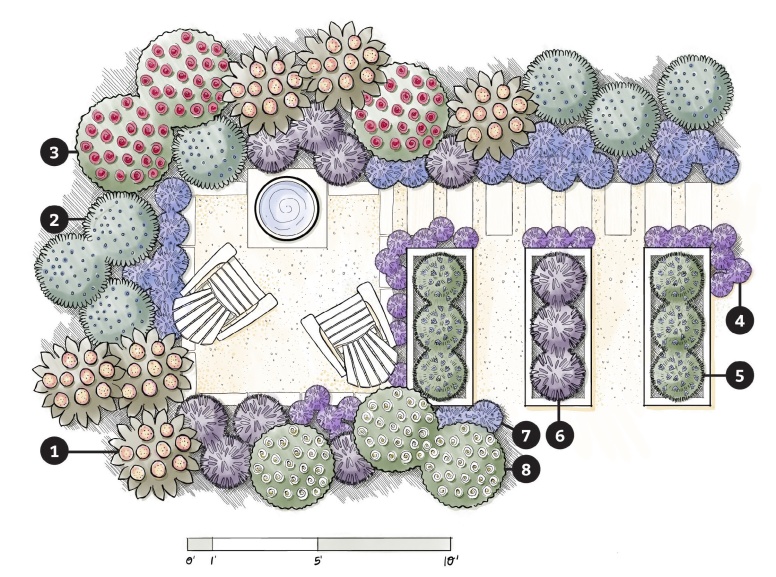
| Description | Hardy perennial sage, with sturdy mounding foliage. Upright spikes of dark burgundy buds open to deep, violet blue flowers over a long season. More compact than 'May Night', with richer flower color. Excellent heat tolerance. Reblooms readily to delight butterflies and hummingbirds. Nice in containers, or massed in a border. |
|---|---|
| Bloom Time | Late Spring to Early Summer |
| Deciduous/Evergreen | Herbaceous |
| Special Features | Attracts Butterflies, Attracts Hummingbirds, Easy Care, Waterwise, Fast Growing, Compact Form |
| Growth Rate | Moderate |
| Flower Attributes | Flowers for Cutting, Long Bloom Season, Showy Flowers |
| Patent Act | Asexual reproduction of plants protected by the Plant Patent Act is prohibited during the life of the patent. |
| Landscape Use | Border, Container, Edging |
| Flower Color | Violet-blue |
| Foliage Color | Gray-green |
| Companion Plants | Blanket Flower (Gaillardia); Black-Eyed Susan (Rudbeckia); Coneflower (Echinacea); Blue Fescue (Festuca); Shasta Daisy (Chrysanthemum) |
| Care Instructions | Thrives in average, well-drained soils. Tolerates mild drought when established; supplement in extreme heat. Feed monthly during growing season. Shear spent flowers to encourage continued bloom. Cut back at end of flowering. |
| History | From a breeding program in Elburn, Illinois, focused on developing new Salvia cultivars having distinctive flower color with mounded growth habit. Parentage: a proprietary Salvia x hybrida breeding selection as female parent and one of several proprietary Salvia nemorosa breeding selections as male (pollen) parent. This new cultivar was discovered and selected as a single flowering plant within the progeny, found to have deeper flower color, burgundy bract color, and a more mounded growth habit than that of Salvia 'May Night'. U.S. Plant Patent #22,919 was issued in July, 2012. |
| Lore | The genus name Salvia comes from the Latin word salveo meaning to save or heal, in reference to the curative properties attributed to some plants in this genus. The hybrid name of sylvestris comes from Latin meaning of or pertaining to forest or wood. |
Details
| Description | Hardy perennial sage, with sturdy mounding foliage. Upright spikes of dark burgundy buds open to deep, violet blue flowers over a long season. More compact than 'May Night', with richer flower color. Excellent heat tolerance. Reblooms readily to delight butterflies and hummingbirds. Nice in containers, or massed in a border. |
|---|---|
| Bloom Time | Late Spring to Early Summer |
| Deciduous/Evergreen | Herbaceous |
| Special Features | Attracts Butterflies, Attracts Hummingbirds, Easy Care, Waterwise, Fast Growing, Compact Form |
| Growth Rate | Moderate |
| Flower Attributes | Flowers for Cutting, Long Bloom Season, Showy Flowers |
| Patent Act | Asexual reproduction of plants protected by the Plant Patent Act is prohibited during the life of the patent. |
Style
| Landscape Use | Border, Container, Edging |
|---|---|
| Flower Color | Violet-blue |
| Foliage Color | Gray-green |
| Companion Plants | Blanket Flower (Gaillardia); Black-Eyed Susan (Rudbeckia); Coneflower (Echinacea); Blue Fescue (Festuca); Shasta Daisy (Chrysanthemum) |
Care
| Care Instructions | Thrives in average, well-drained soils. Tolerates mild drought when established; supplement in extreme heat. Feed monthly during growing season. Shear spent flowers to encourage continued bloom. Cut back at end of flowering. |
|---|
History
| History | From a breeding program in Elburn, Illinois, focused on developing new Salvia cultivars having distinctive flower color with mounded growth habit. Parentage: a proprietary Salvia x hybrida breeding selection as female parent and one of several proprietary Salvia nemorosa breeding selections as male (pollen) parent. This new cultivar was discovered and selected as a single flowering plant within the progeny, found to have deeper flower color, burgundy bract color, and a more mounded growth habit than that of Salvia 'May Night'. U.S. Plant Patent #22,919 was issued in July, 2012. |
|---|---|
| Lore | The genus name Salvia comes from the Latin word salveo meaning to save or heal, in reference to the curative properties attributed to some plants in this genus. The hybrid name of sylvestris comes from Latin meaning of or pertaining to forest or wood. |
Retailers Near You
About Us
We have been pioneers and craftsmen in the art of growing plants for 100 years. Since our founding in Southern California by Harry E. Rosedale, Sr. in 1926, we have been absolutely dedicated and obsessed with quality.
We have been pioneers and craftsmen in the art of growing plants for nearly 100 years. Since our founding in Southern California by Harry E. Rosedale, Sr. in 1926, we have been absolutely dedicated and obsessed with quality.