
You're growing in this Zip Code:
Change LocationDiscover Plants for Your Area
Mount Fuji Japanese Flowering Cherry
Prunus serrulata 'Mount Fuji'
Pronunciation: PROO-nus ser-YOO-lay-tuh
SKU #06694
LIGHT:
Full sun
WATER:
Water when top 2 inches of soil is dry.
SIZE:
Moderate growing; reaches 20 ft. tall, 25 ft. wide.

Retailers Near You
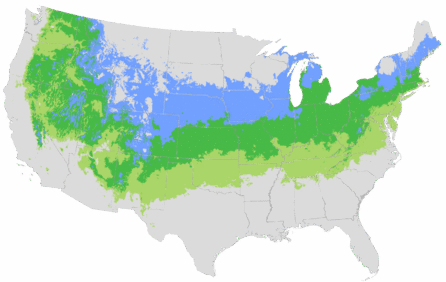
| Description | A magnificent show-stopper with showy clusters of fragrant white flowers backed by bronze-tinged new foliage. Works well as a single specimen or lawn tree in smaller landscapes or in groves for magnificent impact in larger landscapes. Excellent for use as a shade tree. Deciduous. |
|---|---|
| Bloom Time | Spring |
| Deciduous/Evergreen | Deciduous |
| Special Features | Attractive Bark, Attracts Pollinators, Benefits Birds |
| Problems/Solutions | Coastal Exposure |
| Growth Rate | Moderate |
| Growth Habit | Upright |
| Flower Attributes | Fragrant, Showy Flowers |
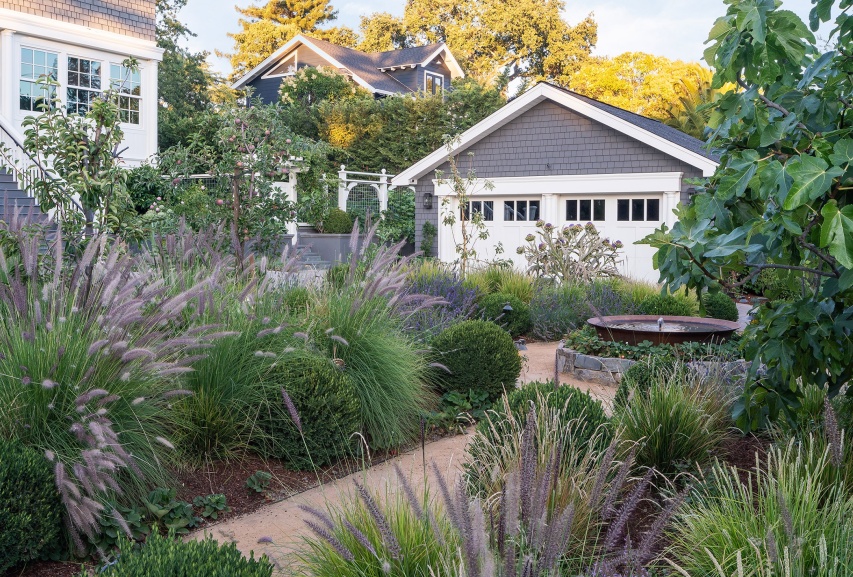
| Design Ideas | Flowering Cherry are certainly a part of the Asian garden palette, but they are just as appropriate for traditional beds and borders. Planted as single accents against darker background evergreens, its beautiful bark and graceful form are perfect for the romantic cottage or country garden. This upright Cherry works well as a street tree, front-yard showpiece, lining driveway edges in cooler climates or as a smaller shade tree in city gardens. Plant as a single specimen, in pairs at entries and gateways and in groves to compound their influence. |
| Flower Color | White |
| Foliage Color | Dark Green |
| Companion Plants | Boxwood (Buxus); Lilac (Syringa); Butterfly Bush (Buddleja); Rose Of Sharon (Hibiscus syriacus); Coneflower (Echinacea) |
| Care Instructions | Provide humus-rich, well-drained soil. Water deeply and regularly during the first growing season to establish an extensive root system; reduce frequency once established. Feed with a general purpose fertilizer before new growth begins in spring. Prune for shape and structure after flowering. |
| History | This is a fine cherry species native to China, Japan and Korea that came into the west relatively late. It was discovered by Ernest Wilson, perhaps the most famous of the plant hunters in China who worked at the time of this introduction for the Arnold Arboretum at Boston. He introduced P. serrulata in 1908. Its name and classification is credited to John Lindley of England choosing a species to described the serrated leaves. He died in 1865 however, suggesting that the Horticultural Society or Kew knew of the tree long before Wilson brought it to America. Perhaps the confusion is due to the many cultivars and hybrids created by the Chinese that were already sold and widely grown in gardens there by the time westerners arrived. |
| Lore | Flowering cherry trees are the very embodiment of all spring blossoms in the Japanese tea garden. |
Details
| Description | A magnificent show-stopper with showy clusters of fragrant white flowers backed by bronze-tinged new foliage. Works well as a single specimen or lawn tree in smaller landscapes or in groves for magnificent impact in larger landscapes. Excellent for use as a shade tree. Deciduous. |
|---|---|
| Bloom Time | Spring |
| Deciduous/Evergreen | Deciduous |
| Special Features | Attractive Bark, Attracts Pollinators, Benefits Birds |
| Problems/Solutions | Coastal Exposure |
| Growth Rate | Moderate |
| Growth Habit | Upright |
| Flower Attributes | Fragrant, Showy Flowers |
Style
| Design Ideas | Flowering Cherry are certainly a part of the Asian garden palette, but they are just as appropriate for traditional beds and borders. Planted as single accents against darker background evergreens, its beautiful bark and graceful form are perfect for the romantic cottage or country garden. This upright Cherry works well as a street tree, front-yard showpiece, lining driveway edges in cooler climates or as a smaller shade tree in city gardens. Plant as a single specimen, in pairs at entries and gateways and in groves to compound their influence. |
|---|---|
| Flower Color | White |
| Foliage Color | Dark Green |
| Companion Plants | Boxwood (Buxus); Lilac (Syringa); Butterfly Bush (Buddleja); Rose Of Sharon (Hibiscus syriacus); Coneflower (Echinacea) |
Care
| Care Instructions | Provide humus-rich, well-drained soil. Water deeply and regularly during the first growing season to establish an extensive root system; reduce frequency once established. Feed with a general purpose fertilizer before new growth begins in spring. Prune for shape and structure after flowering. |
|---|
History
| History | This is a fine cherry species native to China, Japan and Korea that came into the west relatively late. It was discovered by Ernest Wilson, perhaps the most famous of the plant hunters in China who worked at the time of this introduction for the Arnold Arboretum at Boston. He introduced P. serrulata in 1908. Its name and classification is credited to John Lindley of England choosing a species to described the serrated leaves. He died in 1865 however, suggesting that the Horticultural Society or Kew knew of the tree long before Wilson brought it to America. Perhaps the confusion is due to the many cultivars and hybrids created by the Chinese that were already sold and widely grown in gardens there by the time westerners arrived. |
|---|---|
| Lore | Flowering cherry trees are the very embodiment of all spring blossoms in the Japanese tea garden. |
Retailers Near You
About Us
We have been pioneers and craftsmen in the art of growing plants for 100 years. Since our founding in Southern California by Harry E. Rosedale, Sr. in 1926, we have been absolutely dedicated and obsessed with quality.
We have been pioneers and craftsmen in the art of growing plants for nearly 100 years. Since our founding in Southern California by Harry E. Rosedale, Sr. in 1926, we have been absolutely dedicated and obsessed with quality.