
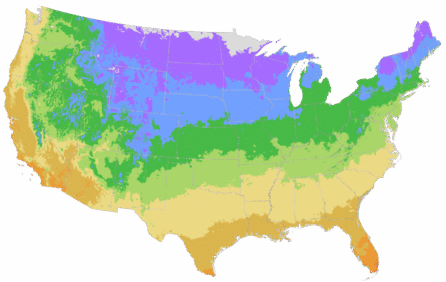
You're growing in this Zip Code:
Change LocationDiscover Plants for Your Area
Prairie Blue Eyes Daylily
Hemerocallis x 'Prairie Blue Eyes'
Pronunciation: hem-er-o-KAL-is
SKU #04063
LIGHT:
Full sun
WATER:
Keep soil moist, especially when in bloom.
SIZE:
Quickly reaches 2 ft. tall and wide.

Retailers Near You
| Description | Tolerant of heat and humidity, this is a favorite perennial for colorful summer blooms. Displays beautiful lavender flowers with yellow-green throats on tall stems above a dense clump of slender, arching, green foliage. A midseason bloomer. A good choice for adding perennial color in with firescaping. Semi-evergreen in mild winter areas. |
|---|---|
| Bloom Time | Summer |
| Deciduous/Evergreen | Herbaceous |
| Special Features | Easy Care, Improved Pest and Disease Resistance, Waterwise |
| Problems/Solutions | Coastal Exposure, Erosion Control, Rabbit Resistant, Very Wet Areas, Tolerates Urban Pollution, Road Salt Tolerant |
| Growth Rate | Fast |
| Growth Habit | Clumping |
| Flower Attributes | Flowers for Cutting, Showy Flowers |
| Landscape Use | Border, Container, Poolside, Edging |
| Design Ideas | This carefree perennial fits into almost any garden. Spot into borders as individuals or small clusters. Mass into a sea of color that functions much like groundcover. You can arrange them in a row against foundations as a mini hedge. With its strap-leafed form and flowers on long wand-like stems, Daylily offers dramatic relief between dwarf shrubs. |
| Flower Color | Purple |
| Foliage Color | Green |
| Companion Plants | Tickseed (Coreopsis); Shasta Daisy (Chrysanthemum); Speedwell (Veronica); Coneflower (Echinacea); Evening Primrose (Oenothera) |
| Care Instructions | Thrives in organically rich loam; adapts to most soil types, provided they are well-drained. Water deeply, regularly during first growing season to establish root system; reduce frequency, once established. Remove old foliage and spent blooms for a neat appearance and to promote continued bloom. |
| History | The history of the daylily begins in China and introduced early on to Europe but never caught on there in gardens. The early strains remained relatively unchanged due to difficulty in cross pollinating daylilies. Just recently in 1921 Dr. A. B. Stout perfected a method that proved so successful that by the 1990s there were nearly 40,000 named varieties. This diploid cultivar was introduced by Marsh in 1970 and received the 1976 Award of Merit. |
| Lore | The name hemerocallis is derived from the Greek for beauty and day because each flower blooms for just a single day. |
Details
| Description | Tolerant of heat and humidity, this is a favorite perennial for colorful summer blooms. Displays beautiful lavender flowers with yellow-green throats on tall stems above a dense clump of slender, arching, green foliage. A midseason bloomer. A good choice for adding perennial color in with firescaping. Semi-evergreen in mild winter areas. |
|---|---|
| Bloom Time | Summer |
| Deciduous/Evergreen | Herbaceous |
| Special Features | Easy Care, Improved Pest and Disease Resistance, Waterwise |
| Problems/Solutions | Coastal Exposure, Erosion Control, Rabbit Resistant, Very Wet Areas, Tolerates Urban Pollution, Road Salt Tolerant |
| Growth Rate | Fast |
| Growth Habit | Clumping |
| Flower Attributes | Flowers for Cutting, Showy Flowers |
Style
| Landscape Use | Border, Container, Poolside, Edging |
|---|---|
| Design Ideas | This carefree perennial fits into almost any garden. Spot into borders as individuals or small clusters. Mass into a sea of color that functions much like groundcover. You can arrange them in a row against foundations as a mini hedge. With its strap-leafed form and flowers on long wand-like stems, Daylily offers dramatic relief between dwarf shrubs. |
| Flower Color | Purple |
| Foliage Color | Green |
| Companion Plants | Tickseed (Coreopsis); Shasta Daisy (Chrysanthemum); Speedwell (Veronica); Coneflower (Echinacea); Evening Primrose (Oenothera) |
Care
| Care Instructions | Thrives in organically rich loam; adapts to most soil types, provided they are well-drained. Water deeply, regularly during first growing season to establish root system; reduce frequency, once established. Remove old foliage and spent blooms for a neat appearance and to promote continued bloom. |
|---|
History
| History | The history of the daylily begins in China and introduced early on to Europe but never caught on there in gardens. The early strains remained relatively unchanged due to difficulty in cross pollinating daylilies. Just recently in 1921 Dr. A. B. Stout perfected a method that proved so successful that by the 1990s there were nearly 40,000 named varieties. This diploid cultivar was introduced by Marsh in 1970 and received the 1976 Award of Merit. |
|---|---|
| Lore | The name hemerocallis is derived from the Greek for beauty and day because each flower blooms for just a single day. |
Retailers Near You
About Us
We have been pioneers and craftsmen in the art of growing plants for 100 years. Since our founding in Southern California by Harry E. Rosedale, Sr. in 1926, we have been absolutely dedicated and obsessed with quality.
We have been pioneers and craftsmen in the art of growing plants for nearly 100 years. Since our founding in Southern California by Harry E. Rosedale, Sr. in 1926, we have been absolutely dedicated and obsessed with quality.