
You're growing in this Zip Code:
Change LocationDiscover Plants for Your Area
Petite Pinkie™ Crape Myrtle
Lagerstroemia indica 'Monkie'
Pronunciation: la-ger-STRE-mee-a IN-dih-kuh
SKU #05560
LIGHT:
Full sun
WATER:
Water deeply when soil is dry.
SIZE:
Moderate growing; reaches 5 ft. tall, 4 ft. wide.

Retailers Near You
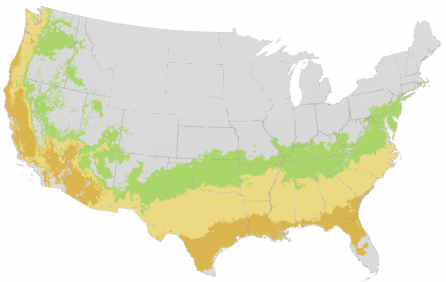

| Description | Vibrant, profuse clusters of clear pink, crepe-like blossoms on this popular, showy, dwarf crape myrtle with extremely attractive, smooth bark texture. Begins blooming in summer; later in colder winter zones. Excellent massed in single-color plantings or used as an individual accent. Deciduous. |
|---|---|
| Bloom Time | Summer to fall |
| Deciduous/Evergreen | Deciduous |
| Special Features | Attractive Bark, Easy Care, Fall Color, Waterwise, Non-toxic to Cats and Dogs, Attracts Pollinators, Compact Form |
| Problems/Solutions | Tolerates Urban Pollution |
| Growth Rate | Moderate |
| Growth Habit | Upright |
| Flower Attributes | Showy Flowers |
| Landscape Use | Border, Container, Hedge, Privacy Screen |
| Design Ideas | This is an ideal small shrub for the sunny garden. Its form, foliage and summer blooms combine well with other shrubs and trees. Planted alone, as a specimen, its showy pink flowers command attention in late summer. Absolutely beautiful when several are massed together. Perfect for the centerpiece of a raised terrace or planted along a driveway for a colorful welcome home. |
| Flower Color | Pink |
| Foliage Color | Green |
| Foliage Fall Color | Yellow |
| Companion Plants | California Lilac (Ceanothus); Agapanthus (Agapanthus); False Heather (Cuphea); Indian Hawthorn (Rhaphiolepis); Pink Jasmine (Jasminum); Daylily (Hemerocallis) |
| Care Instructions | Thrives in average, well-drained soil. Water deeply, regularly during first growing season to establish an extensive root system; once established, reduce frequency. Feed in early spring. Thin young trees late winter to early spring; leave 3 to 7 main trunks or canopy branches. Remove suckers from the base of older trees. |
| History | This dwarf form was introduced by Monrovia in 1962. Its parent is native to the South Pacific. It reached American shores around 1786 and received by the famed Charleston nurseryman, Andre Michaux. In his South Carolina nursery he began propagation, with many of the first plants grown in famous plantations such as Mount Vernon and Montechello. It would later prove well adapted to the American south and became a signature species of gardens there. |
| Lore | Linnaeus named the genus for is friend and contemporary botanist, Magnus von Lagerstroem. |
Details
| Description | Vibrant, profuse clusters of clear pink, crepe-like blossoms on this popular, showy, dwarf crape myrtle with extremely attractive, smooth bark texture. Begins blooming in summer; later in colder winter zones. Excellent massed in single-color plantings or used as an individual accent. Deciduous. |
|---|---|
| Bloom Time | Summer to fall |
| Deciduous/Evergreen | Deciduous |
| Special Features | Attractive Bark, Easy Care, Fall Color, Waterwise, Non-toxic to Cats and Dogs, Attracts Pollinators, Compact Form |
| Problems/Solutions | Tolerates Urban Pollution |
| Growth Rate | Moderate |
| Growth Habit | Upright |
| Flower Attributes | Showy Flowers |
Style
| Landscape Use | Border, Container, Hedge, Privacy Screen |
|---|---|
| Design Ideas | This is an ideal small shrub for the sunny garden. Its form, foliage and summer blooms combine well with other shrubs and trees. Planted alone, as a specimen, its showy pink flowers command attention in late summer. Absolutely beautiful when several are massed together. Perfect for the centerpiece of a raised terrace or planted along a driveway for a colorful welcome home. |
| Flower Color | Pink |
| Foliage Color | Green |
| Foliage Fall Color | Yellow |
| Companion Plants | California Lilac (Ceanothus); Agapanthus (Agapanthus); False Heather (Cuphea); Indian Hawthorn (Rhaphiolepis); Pink Jasmine (Jasminum); Daylily (Hemerocallis) |
Care
| Care Instructions | Thrives in average, well-drained soil. Water deeply, regularly during first growing season to establish an extensive root system; once established, reduce frequency. Feed in early spring. Thin young trees late winter to early spring; leave 3 to 7 main trunks or canopy branches. Remove suckers from the base of older trees. |
|---|
History
| History | This dwarf form was introduced by Monrovia in 1962. Its parent is native to the South Pacific. It reached American shores around 1786 and received by the famed Charleston nurseryman, Andre Michaux. In his South Carolina nursery he began propagation, with many of the first plants grown in famous plantations such as Mount Vernon and Montechello. It would later prove well adapted to the American south and became a signature species of gardens there. |
|---|---|
| Lore | Linnaeus named the genus for is friend and contemporary botanist, Magnus von Lagerstroem. |
Retailers Near You
About Us
We have been pioneers and craftsmen in the art of growing plants for 100 years. Since our founding in Southern California by Harry E. Rosedale, Sr. in 1926, we have been absolutely dedicated and obsessed with quality.
We have been pioneers and craftsmen in the art of growing plants for nearly 100 years. Since our founding in Southern California by Harry E. Rosedale, Sr. in 1926, we have been absolutely dedicated and obsessed with quality.