
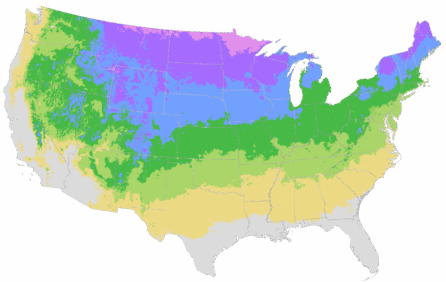
You're growing in this Zip Code:
Change LocationDiscover Plants for Your Area
Dwarf Mugo Pine
Pinus mugo var. pumilio
Pronunciation: PY-nus MEW-goh
SKU #06545
LIGHT:
Full sun
WATER:
Water when top 2 inches of soil is dry.
SIZE:
Slow growing; reaches 3 to 5 ft. tall, 6 to 10 ft. wide in 10 years.

Retailers Near You
Be Inspired: How to Use this Plant

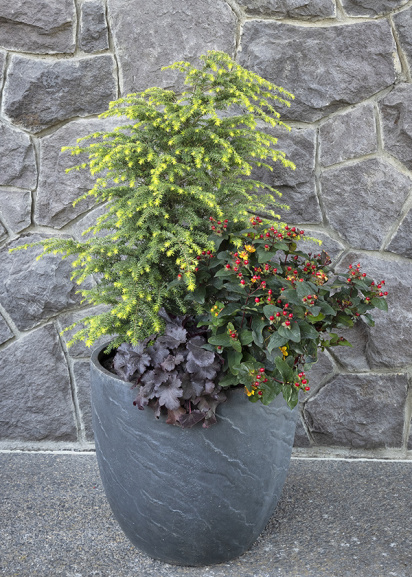

| Description | A popular dwarf conifer displaying dark green needles on dense branches. A very useful, slow growing evergreen for rock gardens, mass plantings, and in mixed groupings with broadleaf plants. Makes a great container specimen. |
|---|---|
| Bloom Time | Conifer; prized for foliage. |
| Deciduous/Evergreen | Evergreen |
| Special Features | Easy Care, Showy Fruit, Waterwise, Benefits Birds |
| Problems/Solutions | Deer Resistant, Rabbit Resistant |
| Growth Rate | Slow |
| Growth Habit | Spreading |
| Landscape Use | Border, Container, Suitable for Topiary |
| Design Ideas | Although Mugo Pine can grow taller with age, in the Japanese garden it is very carefully clipped into a neat mounding form. Of the small conifers, this is the easiest to grow in gardens and is often used individually or in small clusters with boulders. Has become popular as an evergreen contrast in perennial borders, but it's best used amidst other dwarf shrubs needing texture variations. |
| Foliage Color | Dark Green |
| Companion Plants | Japanese Maple (Acer); Winterberry (Ilex); Switch Grass (Panicum); Dogwood (Cornus); Barberry (Berberis) |
| Care Instructions | Grows easily in enriched, loamy and well-drained soils. Water deeply and regularly during the first growing season to establish an extensive root system; reduce frequency, once established. Feed with a general purpose fertilizer before new growth begins in spring. |
| History | P. mugo is native to the high elevation, mountain regions of Central and Southern Europe. It was first introduced into Denmark in 1798 and became widely grown in Europe commercially since 1860. It was often used to stabilize coastal sand dune areas in Norway, Sweden, Germany, Poland, Lithuania, Finland and Estonia. P.m. pumilio variety is native to the Alps regions of Austria and Switzerland, as well as Bulgaria, Romania, Italy and what was once Yugoslavia. While a variety of pines are popular for use in essential oils and fragrances, P. m. pumilio should not be use for that purpose due to its toxic or damaging affects. |
Details
| Description | A popular dwarf conifer displaying dark green needles on dense branches. A very useful, slow growing evergreen for rock gardens, mass plantings, and in mixed groupings with broadleaf plants. Makes a great container specimen. |
|---|---|
| Bloom Time | Conifer; prized for foliage. |
| Deciduous/Evergreen | Evergreen |
| Special Features | Easy Care, Showy Fruit, Waterwise, Benefits Birds |
| Problems/Solutions | Deer Resistant, Rabbit Resistant |
| Growth Rate | Slow |
| Growth Habit | Spreading |
Style
| Landscape Use | Border, Container, Suitable for Topiary |
|---|---|
| Design Ideas | Although Mugo Pine can grow taller with age, in the Japanese garden it is very carefully clipped into a neat mounding form. Of the small conifers, this is the easiest to grow in gardens and is often used individually or in small clusters with boulders. Has become popular as an evergreen contrast in perennial borders, but it's best used amidst other dwarf shrubs needing texture variations. |
| Foliage Color | Dark Green |
| Companion Plants | Japanese Maple (Acer); Winterberry (Ilex); Switch Grass (Panicum); Dogwood (Cornus); Barberry (Berberis) |
Care
| Care Instructions | Grows easily in enriched, loamy and well-drained soils. Water deeply and regularly during the first growing season to establish an extensive root system; reduce frequency, once established. Feed with a general purpose fertilizer before new growth begins in spring. |
|---|
History
| History | P. mugo is native to the high elevation, mountain regions of Central and Southern Europe. It was first introduced into Denmark in 1798 and became widely grown in Europe commercially since 1860. It was often used to stabilize coastal sand dune areas in Norway, Sweden, Germany, Poland, Lithuania, Finland and Estonia. P.m. pumilio variety is native to the Alps regions of Austria and Switzerland, as well as Bulgaria, Romania, Italy and what was once Yugoslavia. While a variety of pines are popular for use in essential oils and fragrances, P. m. pumilio should not be use for that purpose due to its toxic or damaging affects. |
|---|
Retailers Near You
About Us
We have been pioneers and craftsmen in the art of growing plants for nearly
100 years. Since our founding in Southern California by Harry E. Rosedale, Sr.
in 1926, we have been absolutely dedicated and obsessed with quality.
We have been pioneers and craftsmen in the art of growing plants for nearly 100 years. Since our founding in Southern California by Harry E. Rosedale, Sr. in 1926, we have been absolutely dedicated and obsessed with quality.