
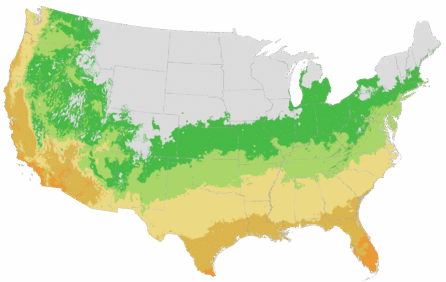
You're growing in this Zip Code:
Change LocationDiscover Plants for Your Area
Dynamite® Crape Myrtle
Lagerstroemia indica 'Whit II'
Pronunciation: la-ger-STRE-mee-a IN-dih-kuh
SKU #00886
LIGHT:
Full sun
WATER:
Water deeply when soil is dry.
SIZE:
Moderate growing; reaches 15 to 20 ft. tall, 10 to 15 ft. wide.

Retailers Near You
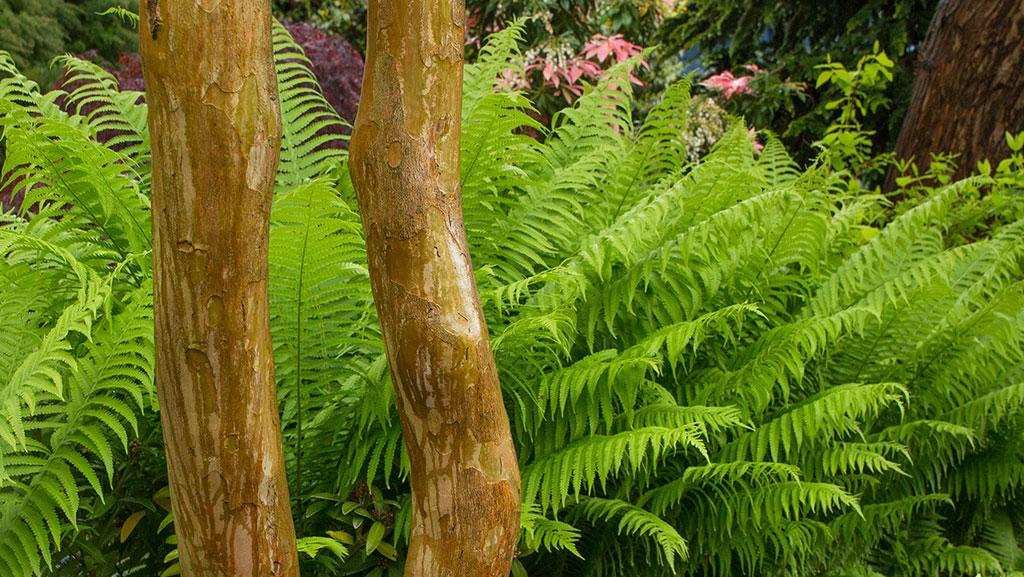
| Description | An attractive ornamental shrub or small tree with smooth, peeling bark. Showy, ruffled, fiery red summer flowers are followed by vibrant orange-red fall foliage. An excellent choice as a specimen plant, or en masse for an explosion of color in the landscape and year-round interest. Deciduous. |
|---|---|
| Bloom Time | Summer |
| Deciduous/Evergreen | Deciduous |
| Special Features | Attractive Bark, Fall Color, Waterwise, Non-toxic to Cats and Dogs, Attracts Pollinators |
| Growth Rate | Moderate |
| Growth Habit | Upright |
| Flower Attributes | Long Bloom Season, Showy Flowers |
| Patent Act | Asexual reproduction of plants protected by the Plant Patent Act is prohibited during the life of the patent. |
| Landscape Use | Hedge, Privacy Screen |
| Flower Color | Red |
| Foliage Color | Green |
| Foliage Fall Color | Red |
| Companion Plants | California Lilac (Ceanothus); Lilyturf (Liriope); Daylily (Hemerocallis); Indian Hawthorn (Rhaphiolepis); Mexican Heather (Cuphea); Agapanthus (Agapanthus) |
| Care Instructions | Thrives in average, well-drained soil. Water deeply, regularly during first growing season to establish an extensive root system; reduce frequency, once established. Feed in early spring. Thin young trees late winter to early spring; leave 3 to 7 main trunks or canopy branches. Remove suckers from the base of older trees. |
| History | Dynamite® crape myrtle is a product of Carl Whitcom's breeding program, which rather than hybridizing L. indica and L. fauriei, instead focused on evaluating seedlings from an outstanding red cultivar of L. indica, Selections were chosen for mildew resistance, cold hardiness and drought tolerance, and resulted in outstanding new introductions with more vivid colors, longer bloom and in some cases, dark-hued foliage. Two of the most popular are Dynamite® (L. indica 'Whit II'), with bright, true red flowers; and Red Rocket ® (L. indica 'Whit IV'), with extra-large, cherry red trusses. |
| Lore | It has been noted that prolonged periods of overcast weather can cause red-flowered crape myrtle flowers to fade to white. |
Details
| Description | An attractive ornamental shrub or small tree with smooth, peeling bark. Showy, ruffled, fiery red summer flowers are followed by vibrant orange-red fall foliage. An excellent choice as a specimen plant, or en masse for an explosion of color in the landscape and year-round interest. Deciduous. |
|---|---|
| Bloom Time | Summer |
| Deciduous/Evergreen | Deciduous |
| Special Features | Attractive Bark, Fall Color, Waterwise, Non-toxic to Cats and Dogs, Attracts Pollinators |
| Growth Rate | Moderate |
| Growth Habit | Upright |
| Flower Attributes | Long Bloom Season, Showy Flowers |
| Patent Act | Asexual reproduction of plants protected by the Plant Patent Act is prohibited during the life of the patent. |
Style
| Landscape Use | Hedge, Privacy Screen |
|---|---|
| Flower Color | Red |
| Foliage Color | Green |
| Foliage Fall Color | Red |
| Companion Plants | California Lilac (Ceanothus); Lilyturf (Liriope); Daylily (Hemerocallis); Indian Hawthorn (Rhaphiolepis); Mexican Heather (Cuphea); Agapanthus (Agapanthus) |
Care
| Care Instructions | Thrives in average, well-drained soil. Water deeply, regularly during first growing season to establish an extensive root system; reduce frequency, once established. Feed in early spring. Thin young trees late winter to early spring; leave 3 to 7 main trunks or canopy branches. Remove suckers from the base of older trees. |
|---|
History
| History | Dynamite® crape myrtle is a product of Carl Whitcom's breeding program, which rather than hybridizing L. indica and L. fauriei, instead focused on evaluating seedlings from an outstanding red cultivar of L. indica, Selections were chosen for mildew resistance, cold hardiness and drought tolerance, and resulted in outstanding new introductions with more vivid colors, longer bloom and in some cases, dark-hued foliage. Two of the most popular are Dynamite® (L. indica 'Whit II'), with bright, true red flowers; and Red Rocket ® (L. indica 'Whit IV'), with extra-large, cherry red trusses. |
|---|---|
| Lore | It has been noted that prolonged periods of overcast weather can cause red-flowered crape myrtle flowers to fade to white. |
Retailers Near You
About Us
We have been pioneers and craftsmen in the art of growing plants for 100 years. Since our founding in Southern California by Harry E. Rosedale, Sr. in 1926, we have been absolutely dedicated and obsessed with quality.
We have been pioneers and craftsmen in the art of growing plants for nearly 100 years. Since our founding in Southern California by Harry E. Rosedale, Sr. in 1926, we have been absolutely dedicated and obsessed with quality.