
You're growing in this Zip Code:
Discover Plants for Your Area
Exclusive
Plumshine™ Japanese Anise Tree
Illicium anisatum 'HinPurlf'
Pronunciation: il-LISS-ee-um an-ee-SAH-tum
SKU #09633
LIGHT:
Filtered sun, Partial shade
WATER:
Keep soil consistently moist.
SIZE:
Slow growing; reaches 5 ft. tall, 4 ft. wide.

Retailers Near You
Ready to Grow?
Ship Monrovia plants directly to your door. Browse a curated selection available online.
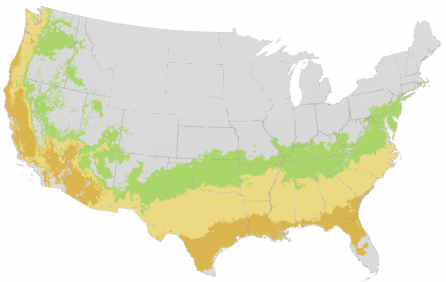
Shop Now >This Plant's Growing Zones: 7-9
Your USDA Cold Hardiness Zone:
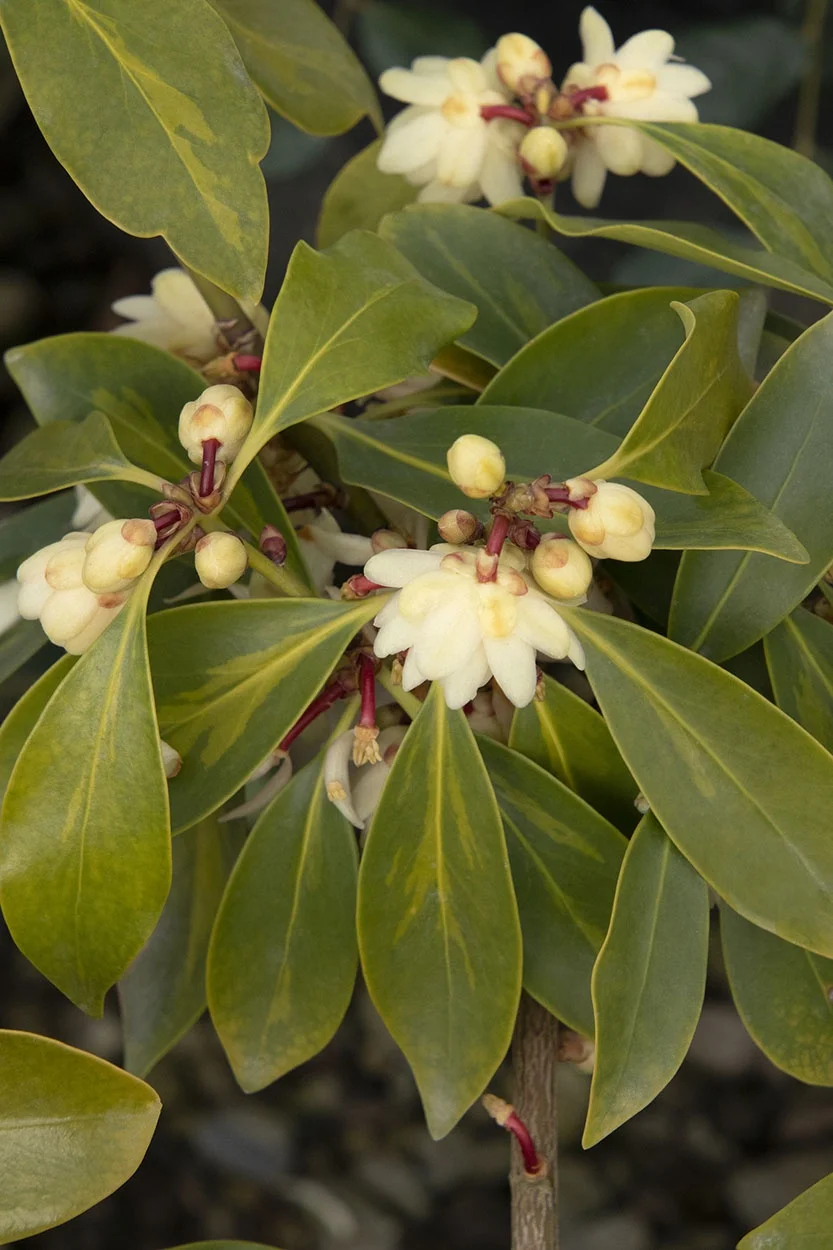
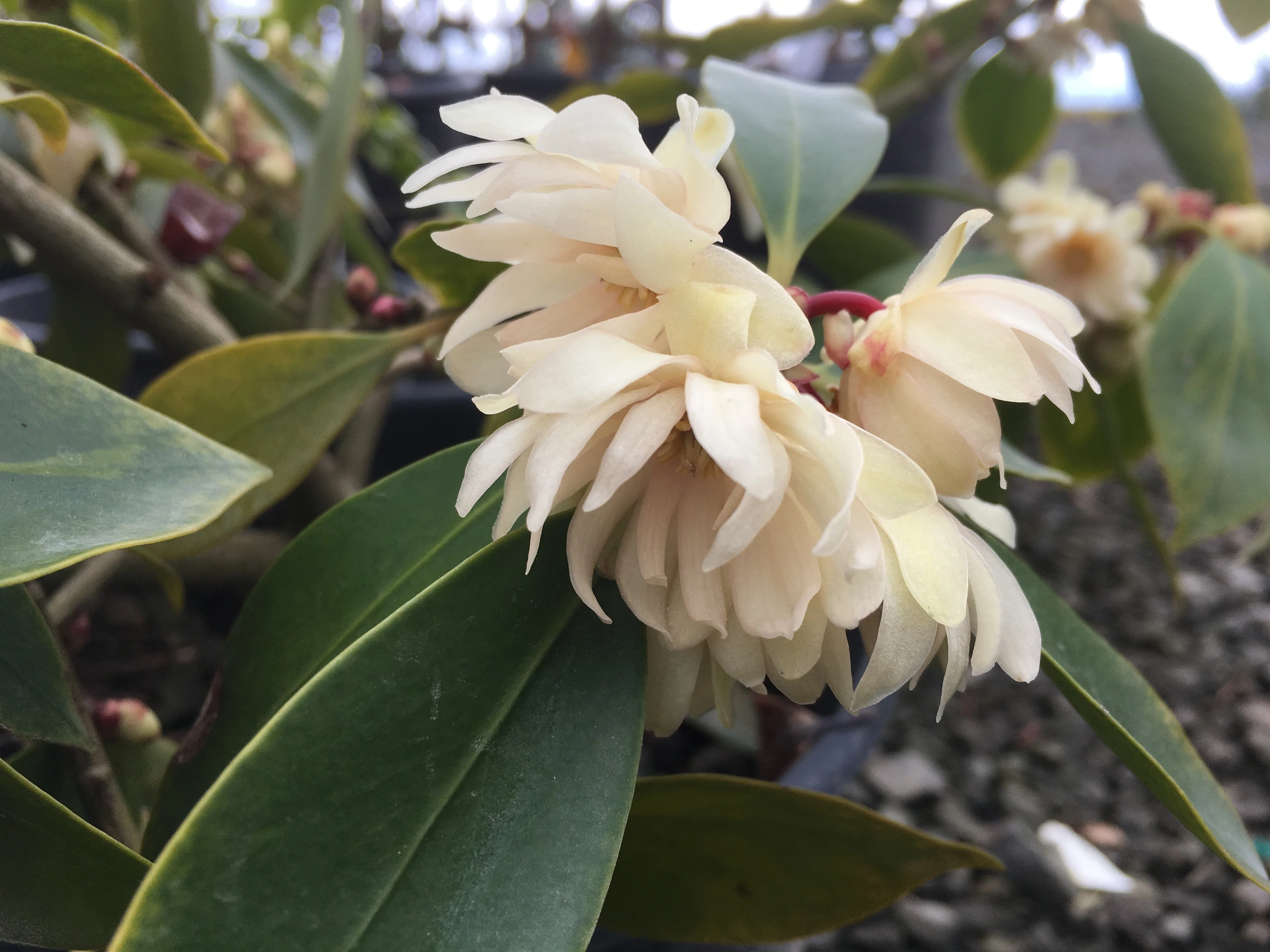
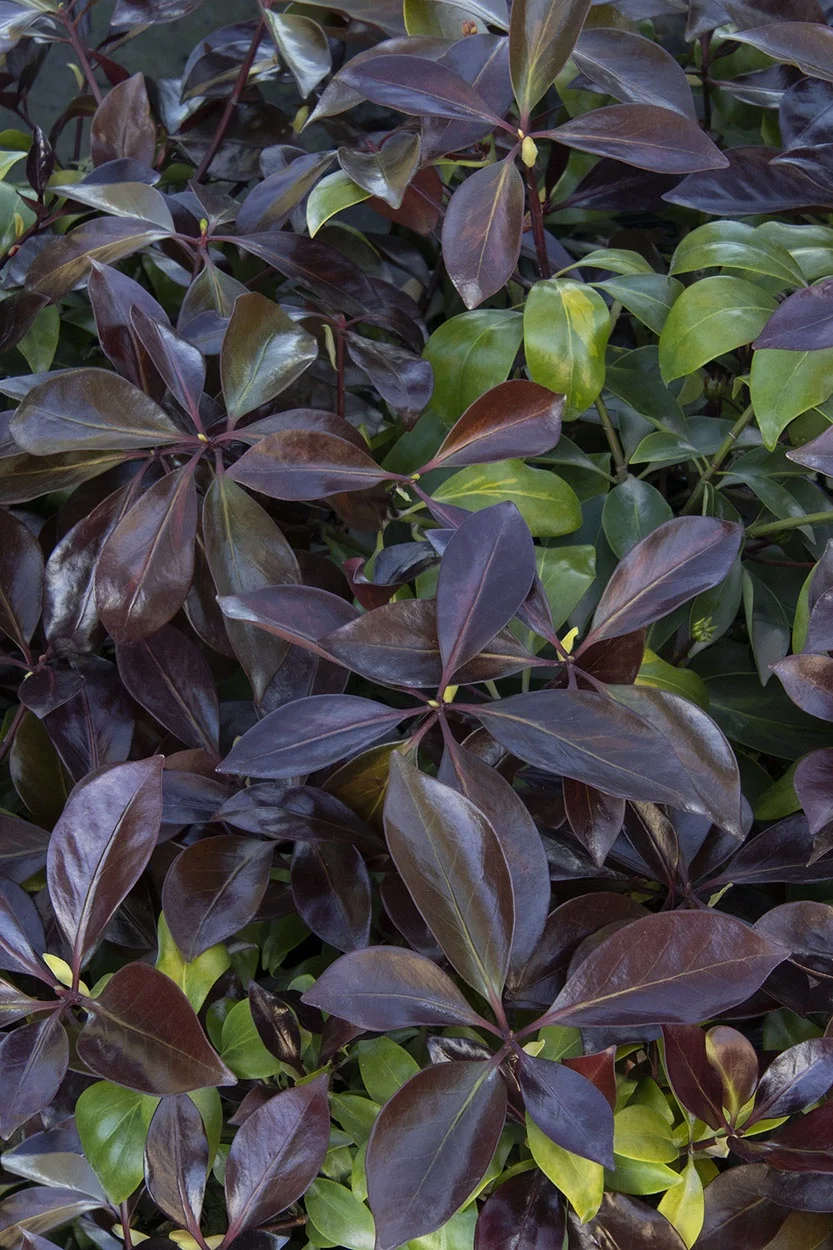
| Description | Thick, aromatic, evergreen foliage emerges a glossy, deep burgundy and matures to a lustrous green, with flushes of the intensely colored new foliage throughout the year. Small, ivory-white, star-shaped flowers have a spicy fragrance. Japanese Anise is an ornamental shrub that is non-edible. An excellent shrub or small tree from the Dan Hinkley collection. |
|---|---|
| Bloom Time | Spring |
| Deciduous/Evergreen | Evergreen |
| Special Features | Easy Care, Benefits Birds |
| Problems/Solutions | Deer Resistant, Erosion Control, Very Wet Areas |
| Growth Rate | Slow |
| Growth Habit | Rounded, Upright |
| Flower Attributes | Fragrant |
| Landscape Use | Border, Espalier, Hedge, Privacy Screen |
| Flower Color | White |
| Foliage Color | Green |
| Care Instructions | Provide organically rich, loamy, moist, well-drained soil with acidic to neutral pH; tolerates wet soils. Shelter from harsh afternoon sun. Mulch to keep roots cool and conserve moisture. Apply an acid fertilizer in early spring. Prune to shape after flowering. Protect from severe winter elements, especially when young. |
| History | A treasure from the Dan Hinkley Collection of rare global finds, Illicium anisatum 'HinPurlf' features intensely colored new foliage that flushes throughout the year, complementing the mature green foliage, and frilly star-shaped flowers that have up to 30 petals a piece. Unlike some species of Illicium, I. anisatum generally does not form colonies via root suckers. |
| Lore | Illicium anisatum (a.k.a. Japanese Anise) is often found in plantings near the Buddhist shrines of Japan. The highly aromatic foliage is burned much like incense. Japanese Anise should not be confused with Chinese Star Anise; the foliage and fruit/seedpods are not suitable for culinary use or consumption and can be toxic if ingested. Japanese Anise foliage is prized by florists for cut flower arrangement because of its lustrous sheen and long vase-life. |
Details
| Description | Thick, aromatic, evergreen foliage emerges a glossy, deep burgundy and matures to a lustrous green, with flushes of the intensely colored new foliage throughout the year. Small, ivory-white, star-shaped flowers have a spicy fragrance. Japanese Anise is an ornamental shrub that is non-edible. An excellent shrub or small tree from the Dan Hinkley collection. |
|---|---|
| Bloom Time | Spring |
| Deciduous/Evergreen | Evergreen |
| Special Features | Easy Care, Benefits Birds |
| Problems/Solutions | Deer Resistant, Erosion Control, Very Wet Areas |
| Growth Rate | Slow |
| Growth Habit | Rounded, Upright |
| Flower Attributes | Fragrant |
Style
| Landscape Use | Border, Espalier, Hedge, Privacy Screen |
|---|---|
| Flower Color | White |
| Foliage Color | Green |
Care
| Care Instructions | Provide organically rich, loamy, moist, well-drained soil with acidic to neutral pH; tolerates wet soils. Shelter from harsh afternoon sun. Mulch to keep roots cool and conserve moisture. Apply an acid fertilizer in early spring. Prune to shape after flowering. Protect from severe winter elements, especially when young. |
|---|
History
| History | A treasure from the Dan Hinkley Collection of rare global finds, Illicium anisatum 'HinPurlf' features intensely colored new foliage that flushes throughout the year, complementing the mature green foliage, and frilly star-shaped flowers that have up to 30 petals a piece. Unlike some species of Illicium, I. anisatum generally does not form colonies via root suckers. |
|---|---|
| Lore | Illicium anisatum (a.k.a. Japanese Anise) is often found in plantings near the Buddhist shrines of Japan. The highly aromatic foliage is burned much like incense. Japanese Anise should not be confused with Chinese Star Anise; the foliage and fruit/seedpods are not suitable for culinary use or consumption and can be toxic if ingested. Japanese Anise foliage is prized by florists for cut flower arrangement because of its lustrous sheen and long vase-life. |
Retailers Near You
About Us
We have been pioneers and craftsmen in the art of growing plants for 100 years. Since our founding in Southern California by Harry E. Rosedale, Sr. in 1926, we have been absolutely dedicated and obsessed with quality.
We have been pioneers and craftsmen in the art of growing plants for nearly 100 years. Since our founding in Southern California by Harry E. Rosedale, Sr. in 1926, we have been absolutely dedicated and obsessed with quality.