
You're growing in this Zip Code:
Change LocationDiscover Plants for Your Area
Red Dynamo Photinia
Photinia glabra 'Parsur' PP #19,390
Pronunciation: foh-TEN-i-uh GLAY-bruh
SKU #41059
LIGHT:
Full sun
WATER:
Water when top 2 inches of soil is dry.
SIZE:
Fast growing; reaches 8 to 10 ft. tall, 5 to 7 ft. wide.

Retailers Near You
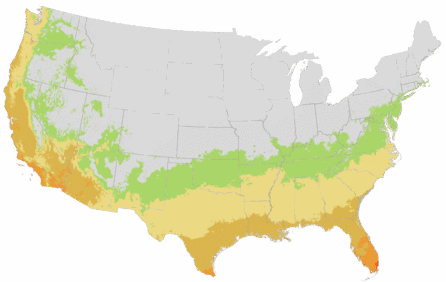
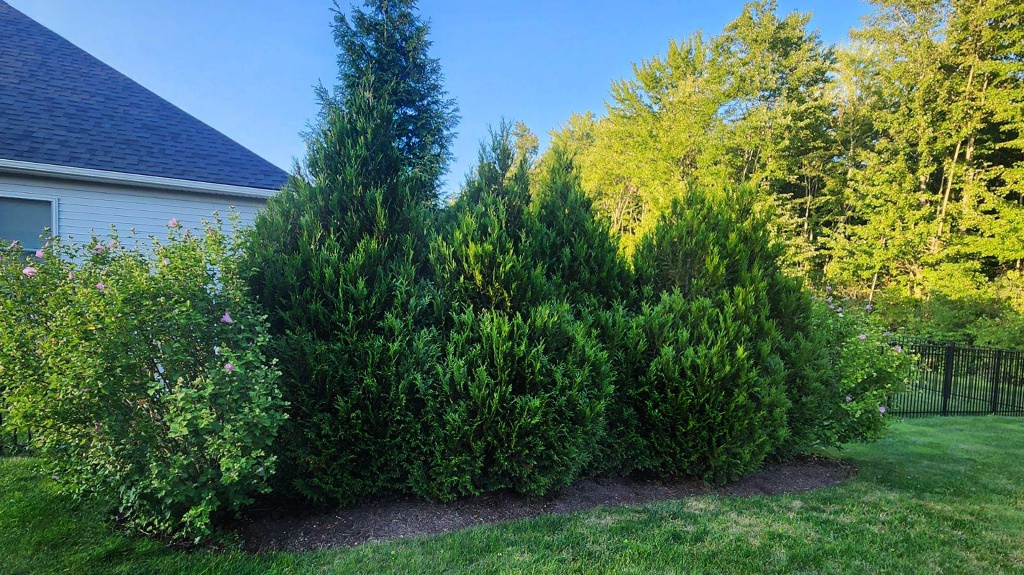

| Description | Perfect for a quick hedge or privacy screen, this handsome, pest and disease-resistant shrub offers fantastic color to any low-maintenance landscape, with lustrous burgundy-red new foliage on a dense, upright form that rarely needs pruning. High heat tolerance makes it a natural for southern gardens, where it provides year-round interest. Evergreen. |
|---|---|
| Bloom Time | Summer |
| Deciduous/Evergreen | Evergreen |
| Special Features | Dramatic Foliage Color, Easy Care, Fast Growing |
| Problems/Solutions | Drought Tolerant |
| Growth Rate | Fast |
| Patent Act | Asexual reproduction of plants protected by the Plant Patent Act is prohibited during the life of the patent. |
| Landscape Use | Border, Container, Hedge, Privacy Screen, Windbreak, Hillside |
| Design Ideas | Photinia is a popular backbone of landscapes in mild winter regions. Rapid, dense growth and colorful new foliage combine to produce the perfect tall hedge, whether grown in natural or sheared form. Useful in sideyards to create attractive boundaries between property lines, or spaced strategically in a natural landscape for spring foliage contrast. This fast-growing variety will grow three to five feet per year in ideal conditions and is easily trained into a neat small tree, perfect for smaller lots and urban spaces, or offering a focal point for entries, front yards or even near the street. |
| Flower Color | White |
| Foliage Color | Multicolored |
| Companion Plants | Euonymus (Euonymus); Crape Myrtle (Lagerstroemia); Rose (Rosa); Cryptomeria (Cryptomeria); Smokebush (Cotinus) |
| Care Instructions | Highly adaptable to most well-drained soils. Water deeply, regularly in first growing season to establish an extensive root system. Once established, reduce frequency; tolerates periodic drought. Apply a general-purpose fertilizer in early spring. Prune only as needed to maintain the desired form. |
| History | This hybrid Photinia is a product of a planned breeding program conducted in Kulnurra, NSW Australia. It originated from open pollination in 2000 of Photinia 'Red Robin' with an unknown male parent. The cultivar Parsur' was discovered and selected by the inventor John Robb in 2001 as a single plant within the progeny, in an outdoor field of the plants that originated in a greenhouse and were transplanted outdoors. The new Photinia differed from plants of its female parent in the following characteristics: More lateral branches, a more upright habit, darker, shorter, elliptic-slightly obovate leaves rather than the oblanceolate shaped leaves, of 'Red Robin'. darker leaves than 'Red Robin'. Photinia glabra 'Parsur' was issued U.S. Plant Patent #19,390 in October of 2008. |
Details
| Description | Perfect for a quick hedge or privacy screen, this handsome, pest and disease-resistant shrub offers fantastic color to any low-maintenance landscape, with lustrous burgundy-red new foliage on a dense, upright form that rarely needs pruning. High heat tolerance makes it a natural for southern gardens, where it provides year-round interest. Evergreen. |
|---|---|
| Bloom Time | Summer |
| Deciduous/Evergreen | Evergreen |
| Special Features | Dramatic Foliage Color, Easy Care, Fast Growing |
| Problems/Solutions | Drought Tolerant |
| Growth Rate | Fast |
| Patent Act | Asexual reproduction of plants protected by the Plant Patent Act is prohibited during the life of the patent. |
Style
| Landscape Use | Border, Container, Hedge, Privacy Screen, Windbreak, Hillside |
|---|---|
| Design Ideas | Photinia is a popular backbone of landscapes in mild winter regions. Rapid, dense growth and colorful new foliage combine to produce the perfect tall hedge, whether grown in natural or sheared form. Useful in sideyards to create attractive boundaries between property lines, or spaced strategically in a natural landscape for spring foliage contrast. This fast-growing variety will grow three to five feet per year in ideal conditions and is easily trained into a neat small tree, perfect for smaller lots and urban spaces, or offering a focal point for entries, front yards or even near the street. |
| Flower Color | White |
| Foliage Color | Multicolored |
| Companion Plants | Euonymus (Euonymus); Crape Myrtle (Lagerstroemia); Rose (Rosa); Cryptomeria (Cryptomeria); Smokebush (Cotinus) |
Care
| Care Instructions | Highly adaptable to most well-drained soils. Water deeply, regularly in first growing season to establish an extensive root system. Once established, reduce frequency; tolerates periodic drought. Apply a general-purpose fertilizer in early spring. Prune only as needed to maintain the desired form. |
|---|
History
| History | This hybrid Photinia is a product of a planned breeding program conducted in Kulnurra, NSW Australia. It originated from open pollination in 2000 of Photinia 'Red Robin' with an unknown male parent. The cultivar Parsur' was discovered and selected by the inventor John Robb in 2001 as a single plant within the progeny, in an outdoor field of the plants that originated in a greenhouse and were transplanted outdoors. The new Photinia differed from plants of its female parent in the following characteristics: More lateral branches, a more upright habit, darker, shorter, elliptic-slightly obovate leaves rather than the oblanceolate shaped leaves, of 'Red Robin'. darker leaves than 'Red Robin'. Photinia glabra 'Parsur' was issued U.S. Plant Patent #19,390 in October of 2008. |
|---|
Retailers Near You
About Us
We have been pioneers and craftsmen in the art of growing plants for 100 years. Since our founding in Southern California by Harry E. Rosedale, Sr. in 1926, we have been absolutely dedicated and obsessed with quality.
We have been pioneers and craftsmen in the art of growing plants for nearly 100 years. Since our founding in Southern California by Harry E. Rosedale, Sr. in 1926, we have been absolutely dedicated and obsessed with quality.