
You're growing in this Zip Code:
Discover Plants for Your Area
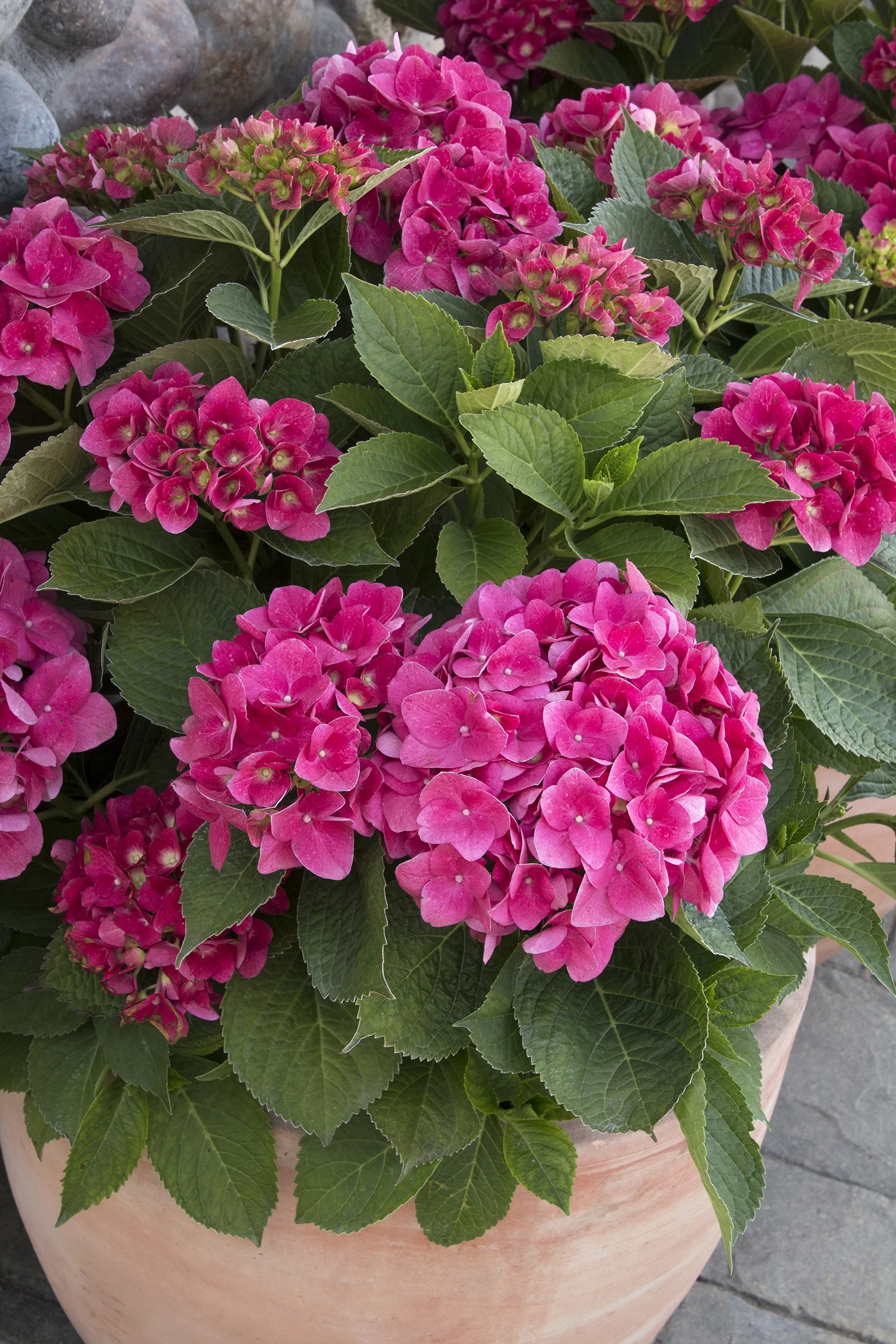
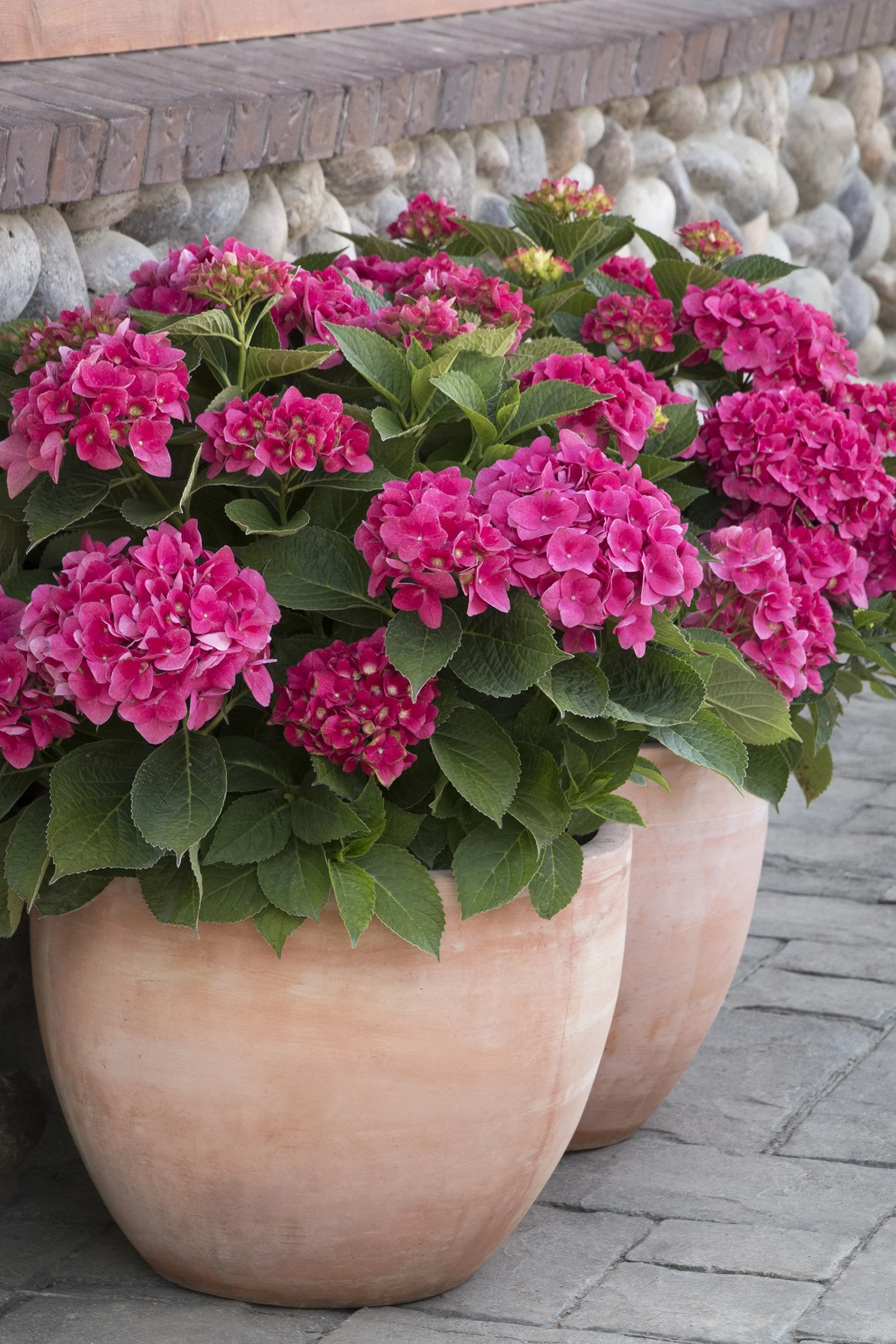
Red N' Pretty® Hydrangea
Hydrangea macrophylla 'Monred'
Pronunciation: hye-DRAYN-jee-uh mak-roh-FIL-uh
SKU #04198
LIGHT:
Filtered sun, Partial shade, Partial sun
WATER:
Keep soil moist, but not soggy.
SIZE:
Moderate growing; reaches 4 to 6 ft. tall, 3 to 4 ft. wide.

Retailers Near You
Ready to Grow?
Ship Monrovia plants directly to your door. Browse a curated selection available online.
Shop Now >This Plant's Growing Zones: 5-10
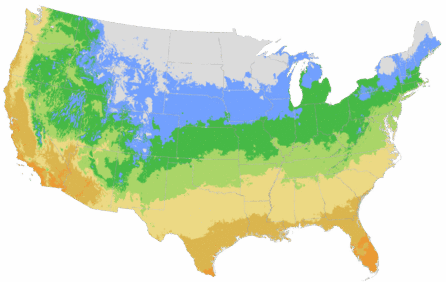
Your USDA Cold Hardiness Zone:
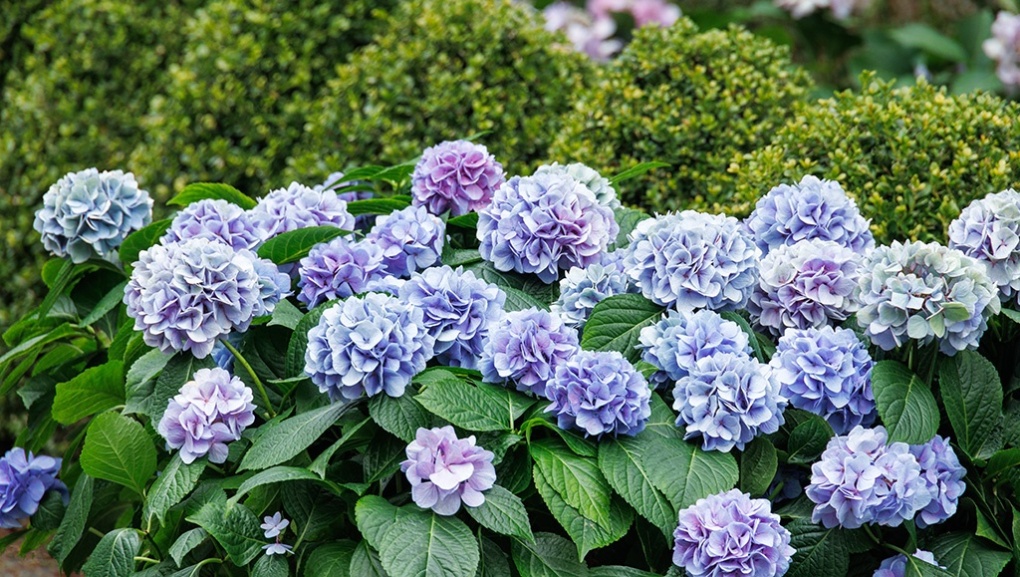
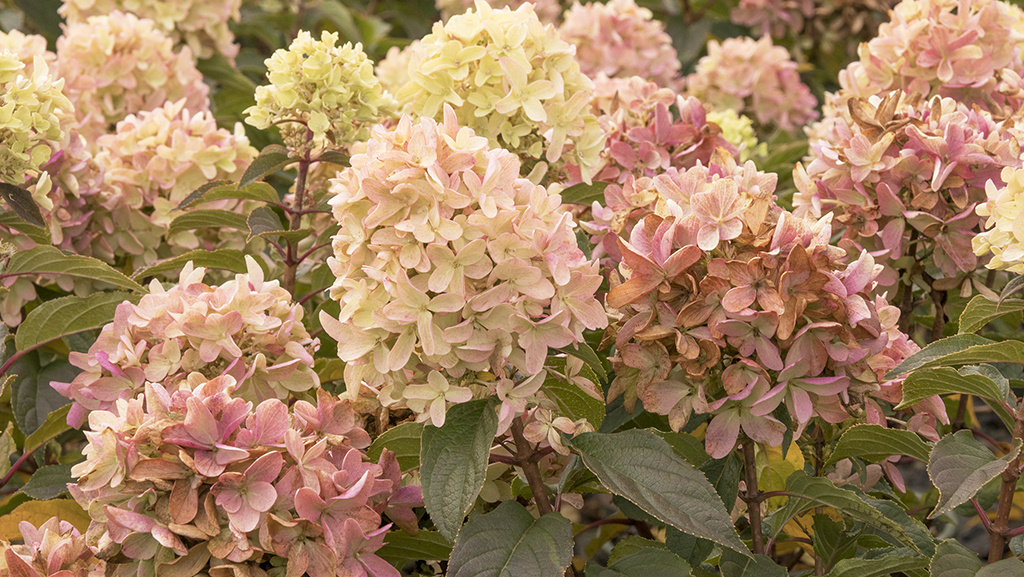
| Description | A superb flowering shrub to use as a showy accent or specimen, or for perennial borders in semi-shaded areas. Desired for its abundance of splendid, vibrant red-violet, large mophead flower clusters and handsome, glossy green foliage on a boldly branched, mounded form. Excellent flowers for cutting. Deciduous. |
|---|---|
| Bloom Time | Summer |
| Deciduous/Evergreen | Deciduous |
| Special Features | Easy Care |
| Problems/Solutions | Coastal Exposure |
| Growth Rate | Moderate |
| Growth Habit | Rounded |
| Flower Attributes | Flowers for Cutting, Showy Flowers |
| Landscape Use | Border, Container |
| Design Ideas | Compact hydrangeas are perfect for high profile front yard foundation planting to add summer color to shaded exposures. Plant in problem acidic soils beneath canopies of great old shade or street trees and around groves of evergreens. An elegant beauty in mixed borders and behind larger perennials along fences or walls. Bright flowers call attention to an entry or focal point. Particularly appealing at outdoor living spaces under filtered shade arbors, or plant in narrow sideyards to bring flowers for viewing at window level. A vital component of a florist's or crafter's garden when massed to provide plentiful cutting materials. |
| Flower Color | Red |
| Foliage Color | Green |
| Companion Plants | Azalea (Azalea); Holly (Ilex); Hosta (Hosta); Camellia (Camellia); Rose of Sharon (Hibiscus) |
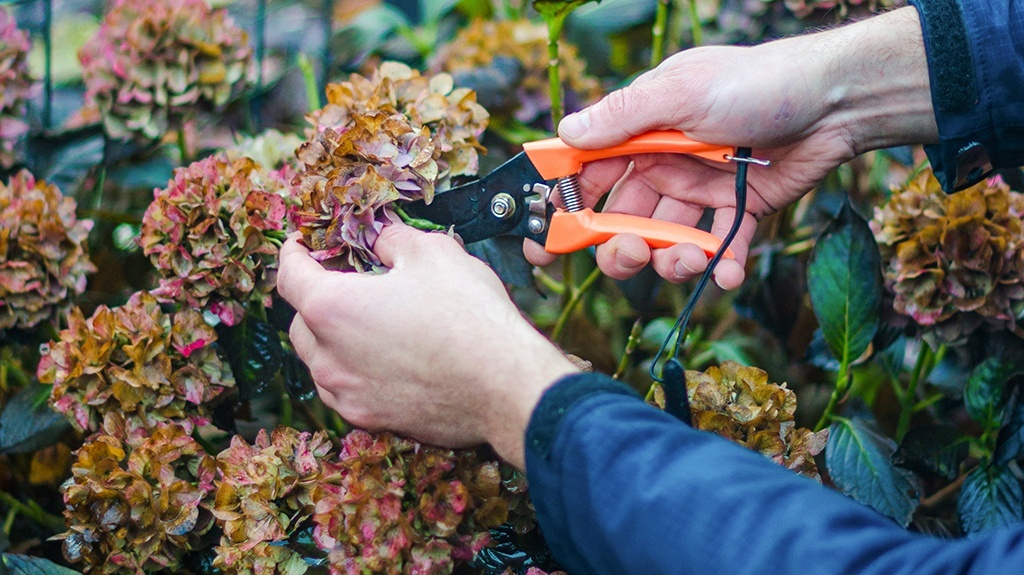
| Care Instructions | Provide enriched, well-drained soil that is moist but not soggy. Apply mulch to conserve moisture and protect in harsh winters. Water deeply, regularly in first growing season to establish extensive root system. Once established, water as needed to maintain evenly moist soil. Feed in early spring. Blooms on old wood; prune after flowering. |
| History | This is the most widely planted of the 80 species of genus Hydrangea. It originates in Japan although it is believed that plants first introduced to the west were gathered in China. The species was named by Nicolas Seringe of France, but was also known by Viburnum and a more generalized Hydrangea hortensis due to the variations between lacecap and mophead flower types. This cultivar was developed and introduced by Monrovia. Big trusses of mophead hydrangea blossoms are popular cut flowers to dry and use in arrangements. Flowers are so coveted they are actually stolen out of front yards in many cities. |
Details
| Description | A superb flowering shrub to use as a showy accent or specimen, or for perennial borders in semi-shaded areas. Desired for its abundance of splendid, vibrant red-violet, large mophead flower clusters and handsome, glossy green foliage on a boldly branched, mounded form. Excellent flowers for cutting. Deciduous. |
|---|---|
| Bloom Time | Summer |
| Deciduous/Evergreen | Deciduous |
| Special Features | Easy Care |
| Problems/Solutions | Coastal Exposure |
| Growth Rate | Moderate |
| Growth Habit | Rounded |
| Flower Attributes | Flowers for Cutting, Showy Flowers |
Style
| Landscape Use | Border, Container |
|---|---|
| Design Ideas | Compact hydrangeas are perfect for high profile front yard foundation planting to add summer color to shaded exposures. Plant in problem acidic soils beneath canopies of great old shade or street trees and around groves of evergreens. An elegant beauty in mixed borders and behind larger perennials along fences or walls. Bright flowers call attention to an entry or focal point. Particularly appealing at outdoor living spaces under filtered shade arbors, or plant in narrow sideyards to bring flowers for viewing at window level. A vital component of a florist's or crafter's garden when massed to provide plentiful cutting materials. |
| Flower Color | Red |
| Foliage Color | Green |
| Companion Plants | Azalea (Azalea); Holly (Ilex); Hosta (Hosta); Camellia (Camellia); Rose of Sharon (Hibiscus) |
Care
| Care Instructions | Provide enriched, well-drained soil that is moist but not soggy. Apply mulch to conserve moisture and protect in harsh winters. Water deeply, regularly in first growing season to establish extensive root system. Once established, water as needed to maintain evenly moist soil. Feed in early spring. Blooms on old wood; prune after flowering. |
|---|
History
| History | This is the most widely planted of the 80 species of genus Hydrangea. It originates in Japan although it is believed that plants first introduced to the west were gathered in China. The species was named by Nicolas Seringe of France, but was also known by Viburnum and a more generalized Hydrangea hortensis due to the variations between lacecap and mophead flower types. This cultivar was developed and introduced by Monrovia. Big trusses of mophead hydrangea blossoms are popular cut flowers to dry and use in arrangements. Flowers are so coveted they are actually stolen out of front yards in many cities. |
|---|
Retailers Near You
About Us
We have been pioneers and craftsmen in the art of growing plants for 100 years. Since our founding in Southern California by Harry E. Rosedale, Sr. in 1926, we have been absolutely dedicated and obsessed with quality.
We have been pioneers and craftsmen in the art of growing plants for nearly 100 years. Since our founding in Southern California by Harry E. Rosedale, Sr. in 1926, we have been absolutely dedicated and obsessed with quality.