
You're growing in this Zip Code:
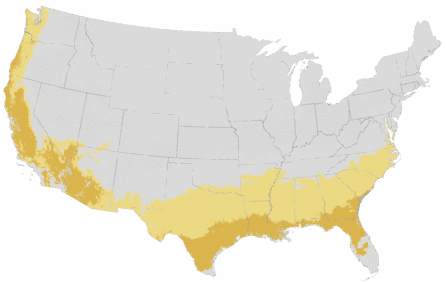
Change LocationDiscover Plants for Your Area
Red Ruffles Azalea
Azalea x 'Red Ruffles' (Rutherfordiana hybrid)
Pronunciation: uh-ZAY-lee-uh
SKU #00640
LIGHT:
Filtered sun, Full sun, Partial shade, Partial sun
WATER:
Keep soil moist, but not soggy.
SIZE:
Moderate growing; reaches 2 to 4 ft. tall and wide.

Retailers Near You
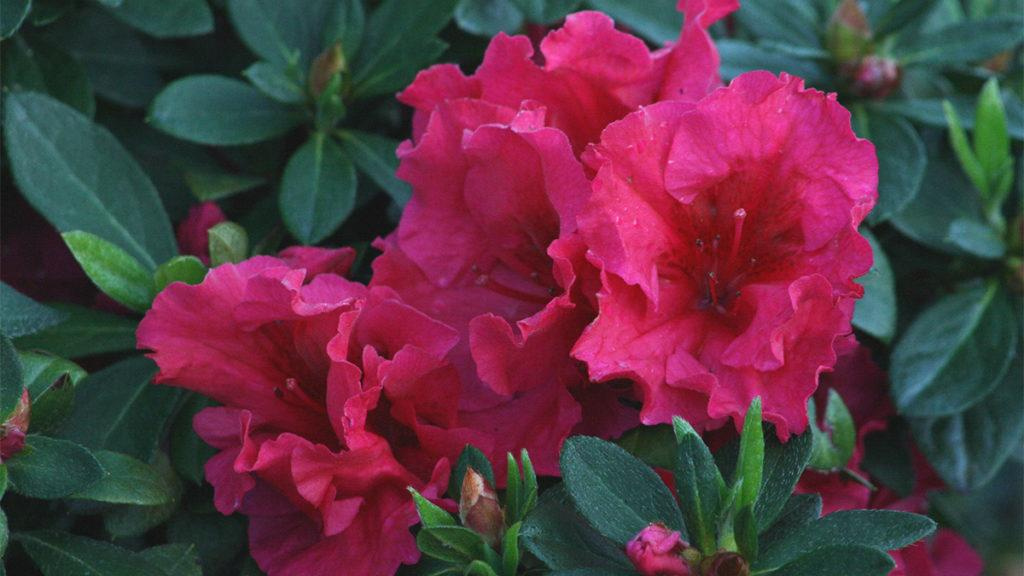

| Description | Produces masses of showy, deep cerise, single to semi-double blooms with frilly petals. A beautiful evergreen shrub for use as a low hedge or screen for an impressive color display. Best in sun to part sun in cooler climates, dappled shade in hot summer areas. Also makes a colorful container planting. |
|---|---|
| Bloom Time | Spring |
| Deciduous/Evergreen | Evergreen |
| Special Features | Attracts Hummingbirds, Easy Care, Attracts Pollinators, Compact Form |
| Growth Rate | Moderate |
| Growth Habit | Rounded |
| Flower Attributes | Showy Flowers |
| Landscape Use | Border, Container, Hedge, Privacy Screen |
| Design Ideas | The unusual ruffled texture of 'Red Ruffles' stands out against simple backgrounds such as a stucco wall or planted among large leaf foliage plants. Use this plant selectively for showy color as a single patio tree or in mass to create a low hedge. |
| Flower Color | Red |
| Foliage Color | Green |
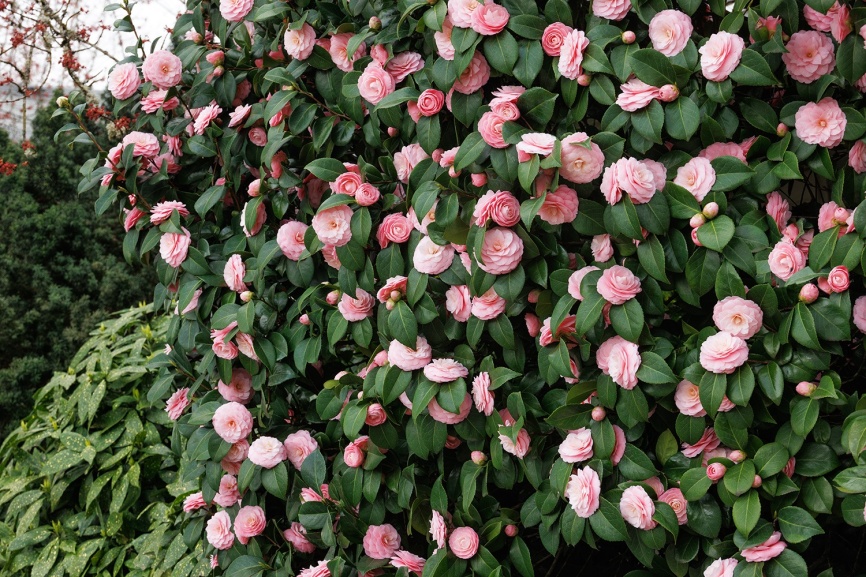
| Companion Plants | Japanese Maple (Acer palmatum); Gardenia (Gardenia); Hydrangea (Hydrangea); Bush Lily (Clivia); Camellia (Camellia); Oregon Grape Holly (Mahonia) |
| Care Instructions | Thrives in humus-rich, acidic, moist, well-drained soils. Shelter from harsh sun exposures in hot summer areas. Water deeply, regularly during the first growing season to establish an extensive root system; once established, maintain evenly moist soil. Keep roots cool with a layer of mulch. Feed with an acid fertilizer after bloom. |
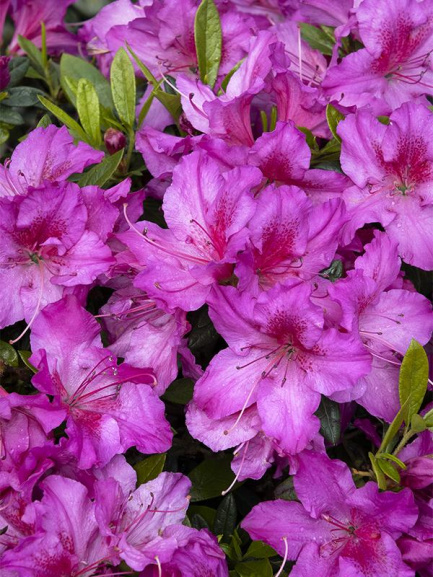
| History | The American equivalent of Belgian Indian hybrids, Rutherford hybrids were developed in the 1920's in New Jersey as greenhouse forcing azaleas from R. simsii and R. indicum. Colors range from reddish orange, to purple and white. Many are have frilled leaves. |
| Lore | Azaleas are among the few blooming plants found in the traditional Japanese tea garden, and the earliest known hybrids originated in Japan. All azaleas are actually classified under the genus Rhododendron, but share their own distinct taxonomical grouping. |
Details
| Description | Produces masses of showy, deep cerise, single to semi-double blooms with frilly petals. A beautiful evergreen shrub for use as a low hedge or screen for an impressive color display. Best in sun to part sun in cooler climates, dappled shade in hot summer areas. Also makes a colorful container planting. |
|---|---|
| Bloom Time | Spring |
| Deciduous/Evergreen | Evergreen |
| Special Features | Attracts Hummingbirds, Easy Care, Attracts Pollinators, Compact Form |
| Growth Rate | Moderate |
| Growth Habit | Rounded |
| Flower Attributes | Showy Flowers |
Style
| Landscape Use | Border, Container, Hedge, Privacy Screen |
|---|---|
| Design Ideas | The unusual ruffled texture of 'Red Ruffles' stands out against simple backgrounds such as a stucco wall or planted among large leaf foliage plants. Use this plant selectively for showy color as a single patio tree or in mass to create a low hedge. |
| Flower Color | Red |
| Foliage Color | Green |
| Companion Plants | Japanese Maple (Acer palmatum); Gardenia (Gardenia); Hydrangea (Hydrangea); Bush Lily (Clivia); Camellia (Camellia); Oregon Grape Holly (Mahonia) |
Care
| Care Instructions | Thrives in humus-rich, acidic, moist, well-drained soils. Shelter from harsh sun exposures in hot summer areas. Water deeply, regularly during the first growing season to establish an extensive root system; once established, maintain evenly moist soil. Keep roots cool with a layer of mulch. Feed with an acid fertilizer after bloom. |
|---|
History
| History | The American equivalent of Belgian Indian hybrids, Rutherford hybrids were developed in the 1920's in New Jersey as greenhouse forcing azaleas from R. simsii and R. indicum. Colors range from reddish orange, to purple and white. Many are have frilled leaves. |
|---|---|
| Lore | Azaleas are among the few blooming plants found in the traditional Japanese tea garden, and the earliest known hybrids originated in Japan. All azaleas are actually classified under the genus Rhododendron, but share their own distinct taxonomical grouping. |
Retailers Near You
About Us
We have been pioneers and craftsmen in the art of growing plants for 100 years. Since our founding in Southern California by Harry E. Rosedale, Sr. in 1926, we have been absolutely dedicated and obsessed with quality.
We have been pioneers and craftsmen in the art of growing plants for nearly 100 years. Since our founding in Southern California by Harry E. Rosedale, Sr. in 1926, we have been absolutely dedicated and obsessed with quality.