
You're growing in this Zip Code:
Change LocationDiscover Plants for Your Area
Red Sprite Winterberry
Ilex verticillata 'Red Sprite'
Pronunciation: EYE-leks ver-tiss-ih-LAY-tuh
SKU #04575
LIGHT:
Full sun, Partial sun
WATER:
Keep soil moist to wet.
SIZE:
Slow growing; reaches 3 to 5 ft. tall and wide.

Retailers Near You
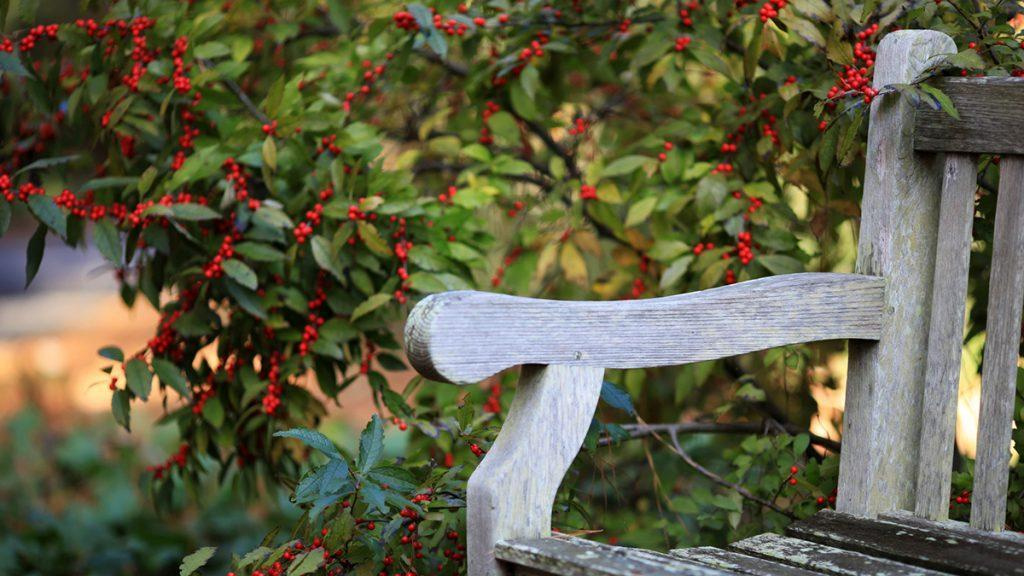

| Description | A profusion of bright red berries on this hardy deciduous shrub will brighten the winter landscape and provide food for overwintering birds. Use as foundation color, for a natural hedge, or in a shrub border for seasonal interest. An early-flowering male pollenizer such as Jim Dandy Winterberry is required for berry set. |
|---|---|
| Bloom Time | Inconspicuous spring flowers. |
| Deciduous/Evergreen | Deciduous |
| Special Features | Ornamental Berries, Benefits Birds |
| Problems/Solutions | Deer Resistant, Erosion Control, Rabbit Resistant, Very Wet Areas, Tolerates Urban Pollution, Road Salt Tolerant |
| Growth Rate | Slow |
| Growth Habit | Rounded |
| Landscape Use | Barrier, Border, Hedge |
| Design Ideas | This native deciduous Holly requires a pollinator for a beautiful winter display of berries set on bare branches. Plant as specimens in the landscape, where the bright red won't have competition. Great at corners of fences, around woodland gardens or in the all-native landscape. Good for the bird-friendly garden. |
| Flower Color | White |
| Foliage Color | Green |
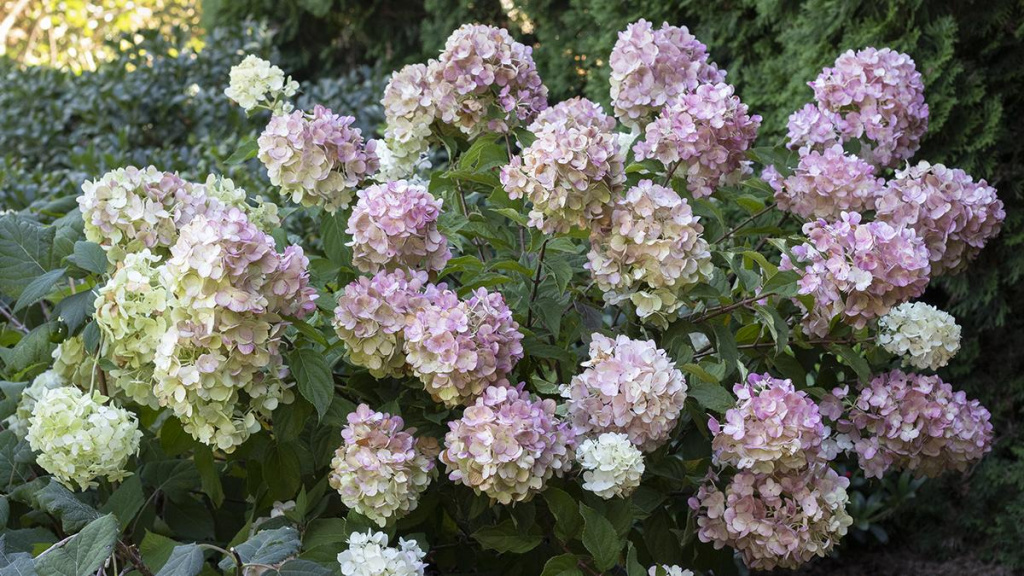
| Companion Plants | Lily of the Valley (Pieris); Rhododendron (Rhododendron); Magnolia (Magnolia); Hydrangea (Hydrangea); Mountain Laurel (Kalmia) |
| Care Instructions | Provide organically rich, acidic, moist, loamy soil; tolerates wet, heavy soils. Water deeply, regularly in first few growing seasons to establish root system; once established, water regularly to maintain evenly moist soil. Feed and prune annually to shape before new growth emerges in late winter to early spring. |
| Lore | Ilex verticillata is native to eastern North America where it is typically found in low elevation wooded areas, along ponds and streams, and in damp thickets, and swamps. Ilex verticillata are dioecious (translated as "two houses"), meaning there are distinctly separate male and female plants. The attractive red berries which are the signature of the winterberries are produced on female varieties such as 'Red Sprite' if a male variety (such as 'Jim Dandy') is planted nearby to provide pollen. Generally, one male winterberry can pollenize up to ten female plants. 'Red Sprite' is an early-blooming winterberry that produces female flowers in spring and is best partnered with a correlating early-blooming male winterberry. |
Details
| Description | A profusion of bright red berries on this hardy deciduous shrub will brighten the winter landscape and provide food for overwintering birds. Use as foundation color, for a natural hedge, or in a shrub border for seasonal interest. An early-flowering male pollenizer such as Jim Dandy Winterberry is required for berry set. |
|---|---|
| Bloom Time | Inconspicuous spring flowers. |
| Deciduous/Evergreen | Deciduous |
| Special Features | Ornamental Berries, Benefits Birds |
| Problems/Solutions | Deer Resistant, Erosion Control, Rabbit Resistant, Very Wet Areas, Tolerates Urban Pollution, Road Salt Tolerant |
| Growth Rate | Slow |
| Growth Habit | Rounded |
Style
| Landscape Use | Barrier, Border, Hedge |
|---|---|
| Design Ideas | This native deciduous Holly requires a pollinator for a beautiful winter display of berries set on bare branches. Plant as specimens in the landscape, where the bright red won't have competition. Great at corners of fences, around woodland gardens or in the all-native landscape. Good for the bird-friendly garden. |
| Flower Color | White |
| Foliage Color | Green |
| Companion Plants | Lily of the Valley (Pieris); Rhododendron (Rhododendron); Magnolia (Magnolia); Hydrangea (Hydrangea); Mountain Laurel (Kalmia) |
Care
| Care Instructions | Provide organically rich, acidic, moist, loamy soil; tolerates wet, heavy soils. Water deeply, regularly in first few growing seasons to establish root system; once established, water regularly to maintain evenly moist soil. Feed and prune annually to shape before new growth emerges in late winter to early spring. |
|---|
History
| Lore | Ilex verticillata is native to eastern North America where it is typically found in low elevation wooded areas, along ponds and streams, and in damp thickets, and swamps. Ilex verticillata are dioecious (translated as "two houses"), meaning there are distinctly separate male and female plants. The attractive red berries which are the signature of the winterberries are produced on female varieties such as 'Red Sprite' if a male variety (such as 'Jim Dandy') is planted nearby to provide pollen. Generally, one male winterberry can pollenize up to ten female plants. 'Red Sprite' is an early-blooming winterberry that produces female flowers in spring and is best partnered with a correlating early-blooming male winterberry. |
|---|
Retailers Near You
About Us
We have been pioneers and craftsmen in the art of growing plants for 100 years. Since our founding in Southern California by Harry E. Rosedale, Sr. in 1926, we have been absolutely dedicated and obsessed with quality.
We have been pioneers and craftsmen in the art of growing plants for nearly 100 years. Since our founding in Southern California by Harry E. Rosedale, Sr. in 1926, we have been absolutely dedicated and obsessed with quality.