
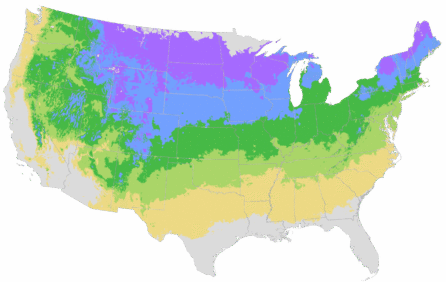
You're growing in this Zip Code:
Change LocationDiscover Plants for Your Area
Rose Queen Bishop's Hat
Epimedium grandiflorum 'Rose Queen'
Pronunciation: ep-i-MEE-di-um gran-di-FLOR-um
SKU #03202
LIGHT:
Filtered sun, Full shade, Partial shade, Partial sun
WATER:
Keep soil moist, but not soggy.
SIZE:
Slow to moderate growing; reaches 12 in. tall, spreading 12 to 18 in. wide.

Retailers Near You
| Description | An outstanding selection for shade, with dainty crimson flowers and beautiful dark bronze-purple foliage in fall. An excellent groundcover for the understory of rhododendrons, azaleas, and camellias. Hardy, sturdy and tolerant of dry shade conditions. Spreads to form attractive colonies over time. Adapts well to containers. An herbaceous perennial. |
|---|---|
| Bloom Time | Late spring to summer |
| Deciduous/Evergreen | Herbaceous |
| Special Features | Easy Care, Fall Color, Waterwise |
| Problems/Solutions | Deer Resistant, Rabbit Resistant, Dry Shade |
| Growth Rate | Slow |
| Growth Habit | Clumping |
| Flower Attributes | Flowers for Cutting, Showy Flowers |
| Landscape Use | Border, Container, Ground Cover, Edging |
| Design Ideas | A rare groundcover because it flowers and loves shade! Plant in masses under larger woody plants or add to shaded corners of perennial plantings. Works very well under larger shade-tree canopies, where sunlight is limited. |
| Flower Color | Pink |
| Foliage Color | Green |
| Foliage Fall Color | Yellow |
| Companion Plants | Sedge (Carex); Hosta (Hosta); Astilbe (Astilbe); Coral Bells (Heuchera hybrids); Soloman's Seal (Polygonatum); Snakeroot (Actaea simplex) |
| Care Instructions | Thrives in humus-rich, neutral to acidic, well-drained soils. Best in shade or dappled morning sun with afternoon shade. Water regularly during the first growing season to establish an extensive root system. Once established, prefers regular water, but tolerates drier conditions in well-shaded areas. Divide every 2 to 3 years in early spring. |
| History | This plant is grouped into the barberry family, Berberidaceae. The genus was classified by Linnaeus who named it from an old Greek title to the plant used in Dioscorides's medical texts. Plants in this group have also been classified by French botanist Joseph Decasine, 1809-1822, under Aceranthus which has since been dropped from the references altogether. Epimedium contains about 21 species of herbaceous plants native to temperate regions of Europe and Asia. This is the most widely cultivated species which is native to a large range spanning Japan, Manchuria and Korea. This plant's rose coloring suggests it is likely a hybrid of E. grandiflorum and one or more of the following species, E. alpinum, E. pinnatum, or E. diphyllum |
Details
| Description | An outstanding selection for shade, with dainty crimson flowers and beautiful dark bronze-purple foliage in fall. An excellent groundcover for the understory of rhododendrons, azaleas, and camellias. Hardy, sturdy and tolerant of dry shade conditions. Spreads to form attractive colonies over time. Adapts well to containers. An herbaceous perennial. |
|---|---|
| Bloom Time | Late spring to summer |
| Deciduous/Evergreen | Herbaceous |
| Special Features | Easy Care, Fall Color, Waterwise |
| Problems/Solutions | Deer Resistant, Rabbit Resistant, Dry Shade |
| Growth Rate | Slow |
| Growth Habit | Clumping |
| Flower Attributes | Flowers for Cutting, Showy Flowers |
Style
| Landscape Use | Border, Container, Ground Cover, Edging |
|---|---|
| Design Ideas | A rare groundcover because it flowers and loves shade! Plant in masses under larger woody plants or add to shaded corners of perennial plantings. Works very well under larger shade-tree canopies, where sunlight is limited. |
| Flower Color | Pink |
| Foliage Color | Green |
| Foliage Fall Color | Yellow |
| Companion Plants | Sedge (Carex); Hosta (Hosta); Astilbe (Astilbe); Coral Bells (Heuchera hybrids); Soloman's Seal (Polygonatum); Snakeroot (Actaea simplex) |
Care
| Care Instructions | Thrives in humus-rich, neutral to acidic, well-drained soils. Best in shade or dappled morning sun with afternoon shade. Water regularly during the first growing season to establish an extensive root system. Once established, prefers regular water, but tolerates drier conditions in well-shaded areas. Divide every 2 to 3 years in early spring. |
|---|
History
| History | This plant is grouped into the barberry family, Berberidaceae. The genus was classified by Linnaeus who named it from an old Greek title to the plant used in Dioscorides's medical texts. Plants in this group have also been classified by French botanist Joseph Decasine, 1809-1822, under Aceranthus which has since been dropped from the references altogether. Epimedium contains about 21 species of herbaceous plants native to temperate regions of Europe and Asia. This is the most widely cultivated species which is native to a large range spanning Japan, Manchuria and Korea. This plant's rose coloring suggests it is likely a hybrid of E. grandiflorum and one or more of the following species, E. alpinum, E. pinnatum, or E. diphyllum |
|---|
Retailers Near You
About Us
We have been pioneers and craftsmen in the art of growing plants for 100 years. Since our founding in Southern California by Harry E. Rosedale, Sr. in 1926, we have been absolutely dedicated and obsessed with quality.
We have been pioneers and craftsmen in the art of growing plants for nearly 100 years. Since our founding in Southern California by Harry E. Rosedale, Sr. in 1926, we have been absolutely dedicated and obsessed with quality.