
You're growing in this Zip Code:
Change LocationDiscover Plants for Your Area
Summer Wine Daylily
Hemerocallis x 'Summer Wine'
Pronunciation: hem-er-oh-KAL-iss
SKU #04029
LIGHT:
Full sun
WATER:
Keep soil moist, especially when in bloom.
SIZE:
Foliage reaches 2 ft. tall and wide; flowers reach 3 to 4 ft. tall.

Retailers Near You
| Description | A garden favorite for summer blooms. Large clumps of long, slender green foliage are highlighted by lily-like flowers on tall stems. A mid-season bloomer that is perfect for massing in beds and borders. An herbaceous perennial that may remain evergreen in mild winter regions. |
|---|---|
| Bloom Time | Summer |
| Deciduous/Evergreen | Herbaceous |
| Special Features | Easy Care, Improved Pest and Disease Resistance, Waterwise |
| Problems/Solutions | Coastal Exposure, Erosion Control, Rabbit Resistant, Very Wet Areas, Tolerates Urban Pollution, Road Salt Tolerant |
| Growth Rate | Moderate |
| Growth Habit | Clumping |
| Flower Attributes | Flowers for Cutting, Repeat Flowering, Showy Flowers |
| Landscape Use | Border, Container, Poolside |
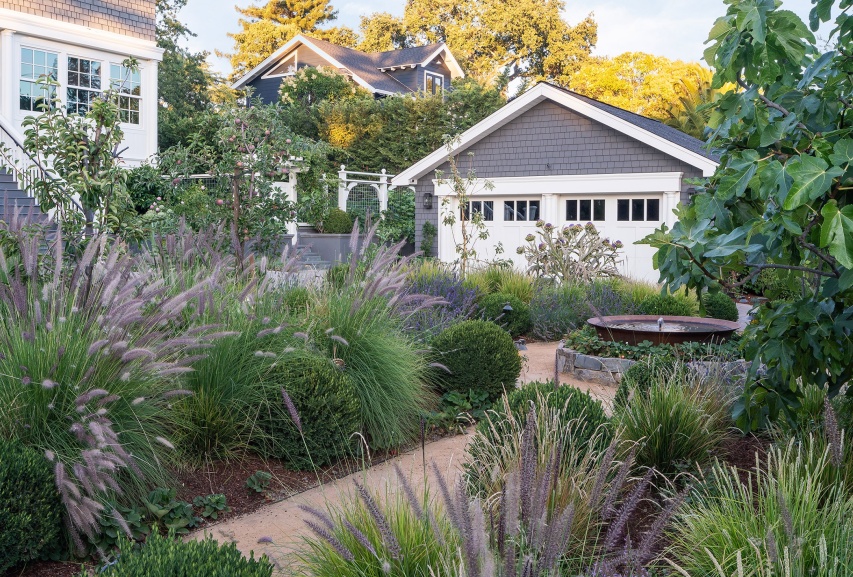
| Design Ideas | This carefree perennial fits into almost any garden. Spot into perennial borders as individuals or small clusters. Mass into a sea of color that functions much like groundcover. You can arrange them in a row against foundations as a mini hedge. With its strap-leafed form and flowers on long wand-like stems, Daylily offers dramatic relief between dwarf shrubs. |
| Flower Color | Purple |
| Foliage Color | Green |
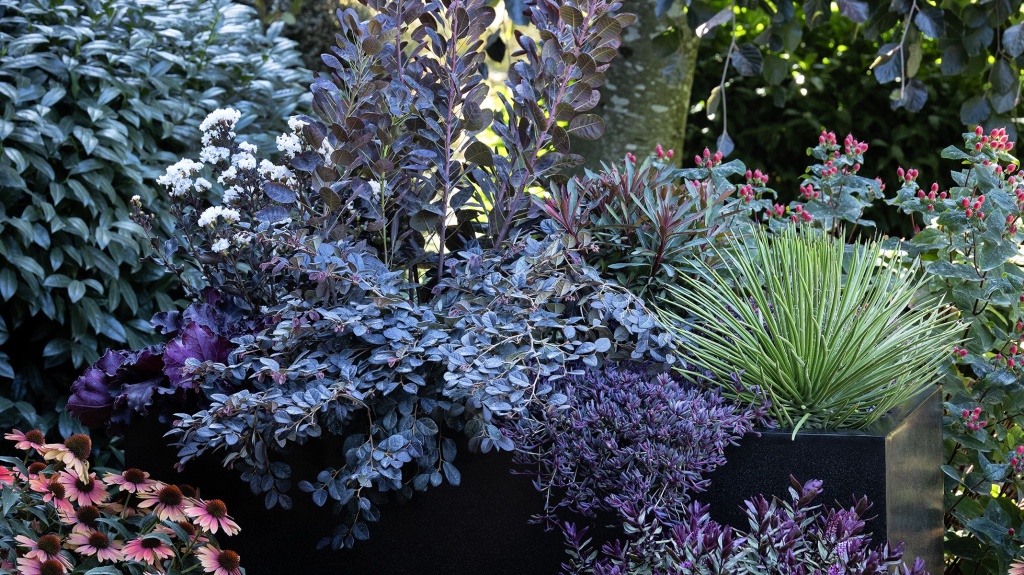
| Companion Plants | Coneflower (Echinacea); Russian Sage (Perovskia); Maiden Grass (Miscanthus); Switch Grass (Panicum); Sedum (Sedum) |
| Care Instructions | Thrives in organically rich loam; adapts to most soil types, provided they are well-drained. Water deeply, regularly during the first growing season to establish an extensive root system. Once established, reduce frequency; tolerates mild drought. Remove old foliage and spent blooms for a neat appearance and to promote continued bloom. |
| Lore | The daylily originated in China and can be found in literature as early as 2697 BC. It arrived in Europe by the first century AD but failed to be of much interest. Because daylily does not easily cross-pollinate, breeding did not ensue. The key to pollination was just discovered in 1921 by the American, A. B. Stout. Since that time the number of cultivars has reached nearly 40,000. In China, the daylily was considered a food and medicinal plant. |
Details
| Description | A garden favorite for summer blooms. Large clumps of long, slender green foliage are highlighted by lily-like flowers on tall stems. A mid-season bloomer that is perfect for massing in beds and borders. An herbaceous perennial that may remain evergreen in mild winter regions. |
|---|---|
| Bloom Time | Summer |
| Deciduous/Evergreen | Herbaceous |
| Special Features | Easy Care, Improved Pest and Disease Resistance, Waterwise |
| Problems/Solutions | Coastal Exposure, Erosion Control, Rabbit Resistant, Very Wet Areas, Tolerates Urban Pollution, Road Salt Tolerant |
| Growth Rate | Moderate |
| Growth Habit | Clumping |
| Flower Attributes | Flowers for Cutting, Repeat Flowering, Showy Flowers |
Style
| Landscape Use | Border, Container, Poolside |
|---|---|
| Design Ideas | This carefree perennial fits into almost any garden. Spot into perennial borders as individuals or small clusters. Mass into a sea of color that functions much like groundcover. You can arrange them in a row against foundations as a mini hedge. With its strap-leafed form and flowers on long wand-like stems, Daylily offers dramatic relief between dwarf shrubs. |
| Flower Color | Purple |
| Foliage Color | Green |
| Companion Plants | Coneflower (Echinacea); Russian Sage (Perovskia); Maiden Grass (Miscanthus); Switch Grass (Panicum); Sedum (Sedum) |
Care
| Care Instructions | Thrives in organically rich loam; adapts to most soil types, provided they are well-drained. Water deeply, regularly during the first growing season to establish an extensive root system. Once established, reduce frequency; tolerates mild drought. Remove old foliage and spent blooms for a neat appearance and to promote continued bloom. |
|---|
History
| Lore | The daylily originated in China and can be found in literature as early as 2697 BC. It arrived in Europe by the first century AD but failed to be of much interest. Because daylily does not easily cross-pollinate, breeding did not ensue. The key to pollination was just discovered in 1921 by the American, A. B. Stout. Since that time the number of cultivars has reached nearly 40,000. In China, the daylily was considered a food and medicinal plant. |
|---|
Retailers Near You
About Us
We have been pioneers and craftsmen in the art of growing plants for 100 years. Since our founding in Southern California by Harry E. Rosedale, Sr. in 1926, we have been absolutely dedicated and obsessed with quality.
We have been pioneers and craftsmen in the art of growing plants for nearly 100 years. Since our founding in Southern California by Harry E. Rosedale, Sr. in 1926, we have been absolutely dedicated and obsessed with quality.