
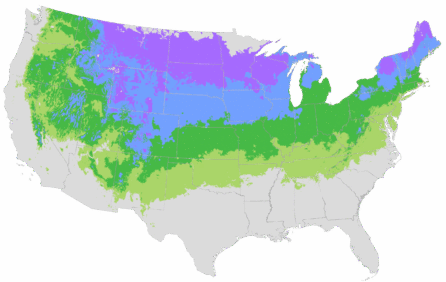
You're growing in this Zip Code:
Change LocationDiscover Plants for Your Area
Tricolor European Beech
Fagus sylvatica 'Tricolor'
Pronunciation: FA-gus sil-VAT-i-ka TRYE-kol-or
SKU #03578
LIGHT:
Partial sun
WATER:
Water when top 3 inches of soil is dry.
SIZE:
Slowly reaches 25 to 35 ft. tall, 18 to 25 ft. wide.

Retailers Near You

| Description | Striking foliage is purple with irregular creamy pink and rose-colored margins. A stunning specimen tree with an overall pink effect that will be a wonderful addition to the landscape. Not recommended for hot, dry areas. Deciduous. |
|---|---|
| Bloom Time | Inconspicuous; prized for foliage. |
| Deciduous/Evergreen | Deciduous |
| Special Features | Dramatic Foliage Color, Fall Color |
| Growth Rate | Slow |
| Design Ideas | This is the ideal purple-pink Beech for smaller city lots. Use it for shade, along an entry drive or as a street tree. Very cold hardy, the Beech can be both an accent among evergreens or planted in a grove and its color will be perceptible from a distance. Majestic and well formed, it's a great front-yard statement for larger homesites with traditional architecture. |
| Foliage Color | Purple |
| Foliage Fall Color | Yellow |
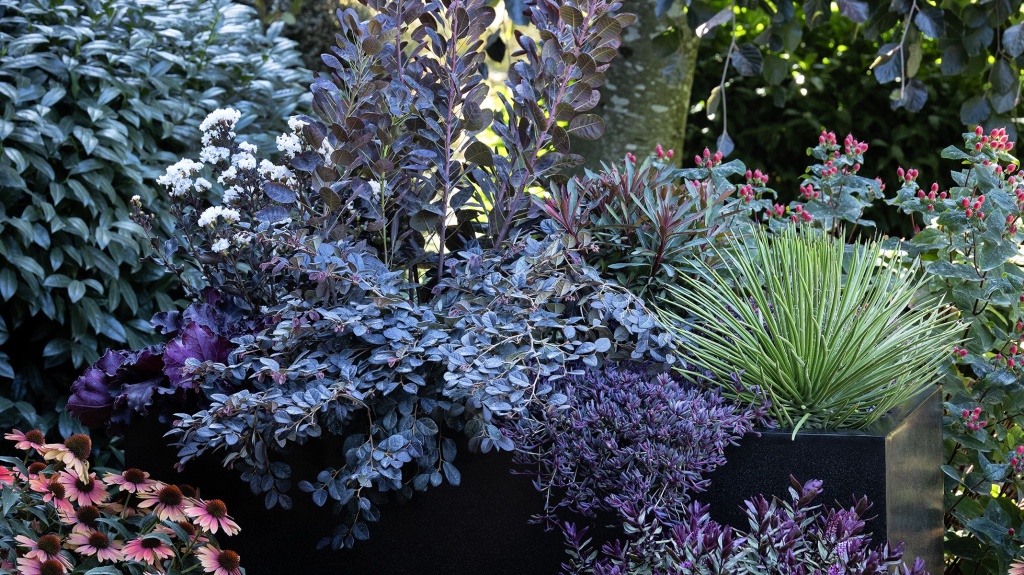
| Companion Plants | Maidenhair Tree (Ginkgo); Lilac (Syringa); Weigela (Weigela); Dove Tree (Davidia); Daylily (Hemerocallis) |
| Care Instructions | Highly adaptable to a wide range of soil types, providing it is well-drained. Water deeply, regularly during first few growing seasons to establish an extensive root system; reduce frequency once established. Feed with a general purpose fertilizer before new growth begins in spring. Seldom needs pruning. |
| History | This vividly colored tree was introduced in 1888. Its ancestry includes the copper beech which explains its rich bronze coloring. The genus was classified by Linnaeus under its ancient European Latin name, fagus, which includes about ten cultivated species and innumerable varieties and clones. Its primary ancestor, A. sylvatic is a forest tree native to central and southern Europe, which was introduced into North American in colonial times. |
| Lore | In ancient Britain, many beech trees were pollarded to create a crop of straight poles out of reach of deer. |
Details
| Description | Striking foliage is purple with irregular creamy pink and rose-colored margins. A stunning specimen tree with an overall pink effect that will be a wonderful addition to the landscape. Not recommended for hot, dry areas. Deciduous. |
|---|---|
| Bloom Time | Inconspicuous; prized for foliage. |
| Deciduous/Evergreen | Deciduous |
| Special Features | Dramatic Foliage Color, Fall Color |
| Growth Rate | Slow |
Style
| Design Ideas | This is the ideal purple-pink Beech for smaller city lots. Use it for shade, along an entry drive or as a street tree. Very cold hardy, the Beech can be both an accent among evergreens or planted in a grove and its color will be perceptible from a distance. Majestic and well formed, it's a great front-yard statement for larger homesites with traditional architecture. |
|---|---|
| Foliage Color | Purple |
| Foliage Fall Color | Yellow |
| Companion Plants | Maidenhair Tree (Ginkgo); Lilac (Syringa); Weigela (Weigela); Dove Tree (Davidia); Daylily (Hemerocallis) |
Care
| Care Instructions | Highly adaptable to a wide range of soil types, providing it is well-drained. Water deeply, regularly during first few growing seasons to establish an extensive root system; reduce frequency once established. Feed with a general purpose fertilizer before new growth begins in spring. Seldom needs pruning. |
|---|
History
| History | This vividly colored tree was introduced in 1888. Its ancestry includes the copper beech which explains its rich bronze coloring. The genus was classified by Linnaeus under its ancient European Latin name, fagus, which includes about ten cultivated species and innumerable varieties and clones. Its primary ancestor, A. sylvatic is a forest tree native to central and southern Europe, which was introduced into North American in colonial times. |
|---|---|
| Lore | In ancient Britain, many beech trees were pollarded to create a crop of straight poles out of reach of deer. |
Retailers Near You
About Us
We have been pioneers and craftsmen in the art of growing plants for 100 years. Since our founding in Southern California by Harry E. Rosedale, Sr. in 1926, we have been absolutely dedicated and obsessed with quality.
We have been pioneers and craftsmen in the art of growing plants for nearly 100 years. Since our founding in Southern California by Harry E. Rosedale, Sr. in 1926, we have been absolutely dedicated and obsessed with quality.