
You're growing in this Zip Code:
Change LocationDiscover Plants for Your Area
Asian Star Jasmine
Trachelospermum asiaticum
Pronunciation: trak-ee-lo-SPERM-um ay-shi-AT-i-kum
SKU #07000
LIGHT:
Full sun, Partial sun
WATER:
Water when top 2 inches of soil is dry.
SIZE:
As a groundcover; 1 to 2 ft. high, spreading to 10 to 12 ft.

Retailers Near You
Ready to Grow?
Ship Monrovia plants directly to your door. Browse a curated selection available online.
Shop Now >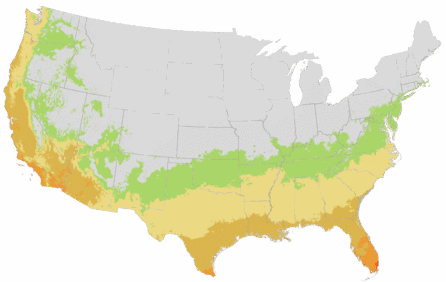

| Description | Vigorous twining or sprawling vine displays small, fragrant creamy-yellow flowers. An effective groundcover, or give it support to climb fence, trellis, arbor. Good in cascading planters. Evergreen. |
|---|---|
| Bloom Time | Summer |
| Deciduous/Evergreen | Evergreen |
| Special Features | Easy Care, Non-toxic to Cats and Dogs, Attracts Pollinators, Fast Growing, Benefits Birds |
| Problems/Solutions | Coastal Exposure |
| Growth Rate | Moderate |
| Growth Habit | Climbing |
| Flower Attributes | Fragrant, Showy Flowers |
| Landscape Use | Border, Container, Espalier, Ground Cover |
| Design Ideas | This is a fine, quick-growing groundcover that may be used in the front of the border, to fill difficult sized planters or as coverage on banks and slopes. Exceptional for twining up chain link fence, trellis narrow balustrades and into pickets. |
| Flower Color | Yellow |
| Foliage Color | Green |
| Companion Plants | Use as a groundcover with tall shrubs such as Confederate Rose Mallow (Hibiscus mutalbilis 'Rubrus') or with the sword-like foliage of Bronze New Zealand Flax (Phormium tenax 'Atropurpureum Compactum'). Train on a trellis or wall in back of Miss Huff Hardy Lantana (Lantana camara 'Miss Huff'). |
| Care Instructions | Follow a regular watering schedule during the first growing season to establish a deep, extensive root system. As a groundcover, space plants 5 ft. apart, (closer for faster coverage). Control weeds with mulch until the plants cover the area. |
| History | This genus is classified into the dogbane family, Apocynaceae. Philip von Siebold may have been the first westerner to see this plant in Japan while stationed there for the Dutch East India Company from 1826 to 1830. However, this species is also native to Korea. |
| Lore | Despite its common name, this is not a true jasmine but does bear potently similar fragrance. |
Details
| Description | Vigorous twining or sprawling vine displays small, fragrant creamy-yellow flowers. An effective groundcover, or give it support to climb fence, trellis, arbor. Good in cascading planters. Evergreen. |
|---|---|
| Bloom Time | Summer |
| Deciduous/Evergreen | Evergreen |
| Special Features | Easy Care, Non-toxic to Cats and Dogs, Attracts Pollinators, Fast Growing, Benefits Birds |
| Problems/Solutions | Coastal Exposure |
| Growth Rate | Moderate |
| Growth Habit | Climbing |
| Flower Attributes | Fragrant, Showy Flowers |
Style
| Landscape Use | Border, Container, Espalier, Ground Cover |
|---|---|
| Design Ideas | This is a fine, quick-growing groundcover that may be used in the front of the border, to fill difficult sized planters or as coverage on banks and slopes. Exceptional for twining up chain link fence, trellis narrow balustrades and into pickets. |
| Flower Color | Yellow |
| Foliage Color | Green |
| Companion Plants | Use as a groundcover with tall shrubs such as Confederate Rose Mallow (Hibiscus mutalbilis 'Rubrus') or with the sword-like foliage of Bronze New Zealand Flax (Phormium tenax 'Atropurpureum Compactum'). Train on a trellis or wall in back of Miss Huff Hardy Lantana (Lantana camara 'Miss Huff'). |
Care
| Care Instructions | Follow a regular watering schedule during the first growing season to establish a deep, extensive root system. As a groundcover, space plants 5 ft. apart, (closer for faster coverage). Control weeds with mulch until the plants cover the area. |
|---|
History
| History | This genus is classified into the dogbane family, Apocynaceae. Philip von Siebold may have been the first westerner to see this plant in Japan while stationed there for the Dutch East India Company from 1826 to 1830. However, this species is also native to Korea. |
|---|---|
| Lore | Despite its common name, this is not a true jasmine but does bear potently similar fragrance. |
Frequently asked questions
Does Asian Star Jasmine produce flowers?
Summer
Is Asian Star Jasmine evergreen or deciduous?
Asian Star Jasmine is Evergreen.
What are the special features of Asian Star Jasmine?
Asian Star Jasmine is Easy Care, Non-toxic to Cats and Dogs, Attracts Pollinators, Fast Growing, Benefits Birds.
Is Asian Star Jasmine resistant to pests or animals?
Coastal Exposure
How fast does Asian Star Jasmine grow?
Asian Star Jasmine has a Moderate growth rate.
What is the growth habit of Asian Star Jasmine?
Asian Star Jasmine grows in an Climbing habit.
Where can I use Asian Star Jasmine in my landscape?
Asian Star Jasmine is suitable for: Border, Container, Espalier, Ground Cover.
How can I use Asian Star Jasmine in my garden design?
This is a fine, quick-growing groundcover that may be used in the front of the border, to fill difficult sized planters or as coverage on banks and slopes. Exceptional for twining up chain link fence, trellis narrow balustrades and into pickets.
What color are Asian Star Jasmine flowers?
Asian Star Jasmine produces Yellow flowers.
What color is the foliage of Asian Star Jasmine?
Asian Star Jasmine has Green foliage.
What plants grow well with Asian Star Jasmine?
Good companion plants for Asian Star Jasmine include: Use as a groundcover with tall shrubs such as Confederate Rose Mallow (Hibiscus mutalbilis 'Rubrus') or with the sword-like foliage of Bronze New Zealand Flax (Phormium tenax 'Atropurpureum Compactum'). Train on a trellis or wall in back of Miss Huff Hardy Lantana (Lantana camara 'Miss Huff')..
How do I care for Asian Star Jasmine?
Follow a regular watering schedule during the first growing season to establish a deep, extensive root system. As a groundcover, space plants 5 ft. apart, (closer for faster coverage). Control weeds with mulch until the plants cover the area.
What is the history of Asian Star Jasmine?
This genus is classified into the dogbane family, Apocynaceae. Philip von Siebold may have been the first westerner to see this plant in Japan while stationed there for the Dutch East India Company from 1826 to 1830. However, this species is also native to Korea.
Retailers Near You
About Us
We have been pioneers and craftsmen in the art of growing plants for 100 years. Since our founding in Southern California by Harry E. Rosedale, Sr. in 1926, we have been absolutely dedicated and obsessed with quality.
We have been pioneers and craftsmen in the art of growing plants for nearly 100 years. Since our founding in Southern California by Harry E. Rosedale, Sr. in 1926, we have been absolutely dedicated and obsessed with quality.