
You're growing in this Zip Code:
Change LocationDiscover Plants for Your Area
Austrian Pine
Pinus nigra
Pronunciation: PY-nus Ny-gruh
SKU #06546
LIGHT:
Full sun
WATER:
Water when top 2 inches of soil is dry.
SIZE:
Fast growing; reaches 40 to 60 ft. tall, 15 to 25 ft. wide.

Retailers Near You
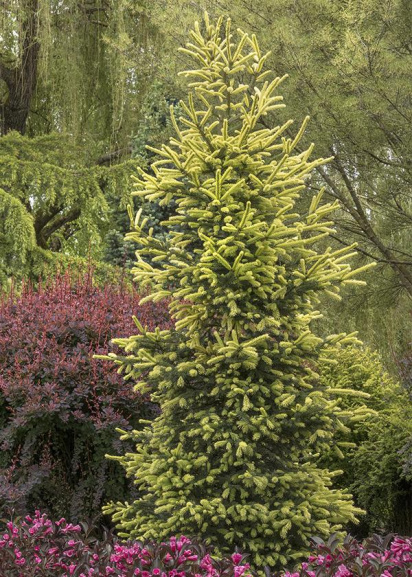

| Description | A handsome evergreen tree with a densely branched conical form when young that becomes umbrella-shaped with age. Needles are long and dark green. Tolerates poor soils, and harsh, drying winds. A superb conifer for windbreaks or for use as a large landscape specimen. |
|---|---|
| Bloom Time | Conifer; prized for foliage. |
| Deciduous/Evergreen | Evergreen |
| Special Features | Easy Care, Showy Fruit, Waterwise, Fast Growing, Benefits Birds |
| Problems/Solutions | Coastal Exposure, Deer Resistant, Rabbit Resistant, Tolerates Urban Pollution, Road Salt Tolerant |
| Growth Rate | Fast |
| Growth Habit | Pyramidal |
| Landscape Use | Privacy Screen, Windbreak, Suitable for Topiary |
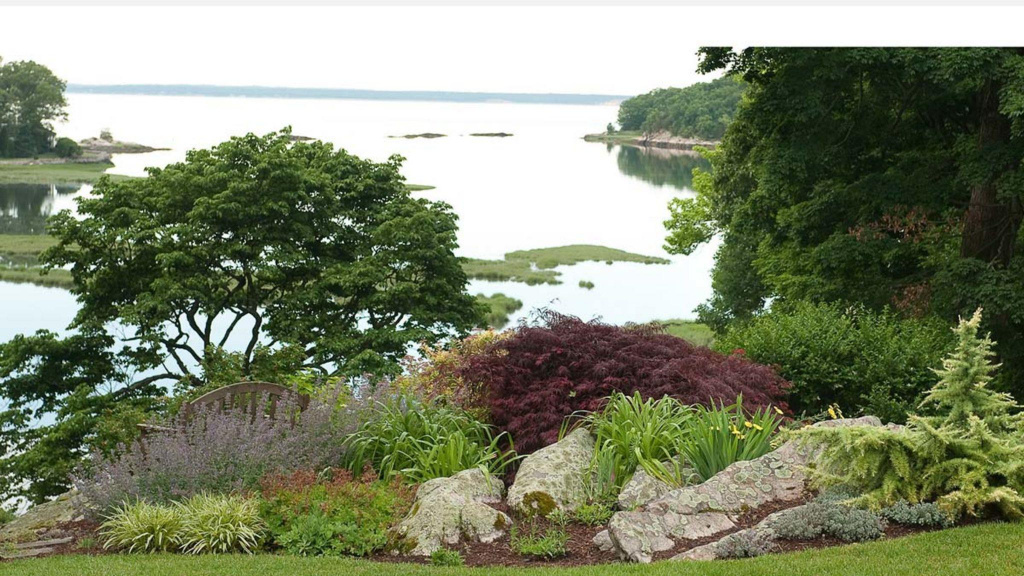
| Design Ideas | A very resilient Pine for the poor soils or alkaline conditions in the Midwest and far West. It is remarkably tolerant of hot and cold wind and is a crucial component in shelterbelts and windbreaks. Adapts well to dry conditions in the West, both in semi-desert and mountain foothill regions where soils are thin and poor. Makes a very graceful single specimen for front yards, parks or expansive estate-sized landscapes. |
| Foliage Color | Dark Green |
| Companion Plants | Japanese Maple (Acer); Winterberry (Ilex); Switch Grass (Panicum); Dogwood (Cornus); Barberry (Berberis) |
| Care Instructions | Thrives in deep, average, well-drained, sandy or gravelly loams, but highly adaptable to a wide range, except soggy soils. Water deeply, regularly during the first growing season to establish an extensive root system. Once established, reduce frequency; tolerates occasional, moderate drought. Apply fertilizer in early spring. |
| History | This pine is native to an enormous range of Europe and western Asia where it attains a height of about 100 feet. It came into cultivation on the continent in 1759 and classified by Austrian botanist Johann Arnold who published it in his work on the flora in 1785. It did not reach Britain or the United States until 1835. However, over the years the Austrian pine has been given a number of different species by botanists various nationalities of 19th century Europe such as P. Laricio by Jean Poiret of France; P. austricaca by Franz Hoess of Austria, P. nigra var austriaca, Paul Ascherson, professor of botany in Berlin; and P. nigricans by the botanist and physician Nicholas Host. There are two subspecies or varieties, P. nigra var austriaca and P. n. 'Pyramidalis'. |
Details
| Description | A handsome evergreen tree with a densely branched conical form when young that becomes umbrella-shaped with age. Needles are long and dark green. Tolerates poor soils, and harsh, drying winds. A superb conifer for windbreaks or for use as a large landscape specimen. |
|---|---|
| Bloom Time | Conifer; prized for foliage. |
| Deciduous/Evergreen | Evergreen |
| Special Features | Easy Care, Showy Fruit, Waterwise, Fast Growing, Benefits Birds |
| Problems/Solutions | Coastal Exposure, Deer Resistant, Rabbit Resistant, Tolerates Urban Pollution, Road Salt Tolerant |
| Growth Rate | Fast |
| Growth Habit | Pyramidal |
Style
| Landscape Use | Privacy Screen, Windbreak, Suitable for Topiary |
|---|---|
| Design Ideas | A very resilient Pine for the poor soils or alkaline conditions in the Midwest and far West. It is remarkably tolerant of hot and cold wind and is a crucial component in shelterbelts and windbreaks. Adapts well to dry conditions in the West, both in semi-desert and mountain foothill regions where soils are thin and poor. Makes a very graceful single specimen for front yards, parks or expansive estate-sized landscapes. |
| Foliage Color | Dark Green |
| Companion Plants | Japanese Maple (Acer); Winterberry (Ilex); Switch Grass (Panicum); Dogwood (Cornus); Barberry (Berberis) |
Care
| Care Instructions | Thrives in deep, average, well-drained, sandy or gravelly loams, but highly adaptable to a wide range, except soggy soils. Water deeply, regularly during the first growing season to establish an extensive root system. Once established, reduce frequency; tolerates occasional, moderate drought. Apply fertilizer in early spring. |
|---|
History
| History | This pine is native to an enormous range of Europe and western Asia where it attains a height of about 100 feet. It came into cultivation on the continent in 1759 and classified by Austrian botanist Johann Arnold who published it in his work on the flora in 1785. It did not reach Britain or the United States until 1835. However, over the years the Austrian pine has been given a number of different species by botanists various nationalities of 19th century Europe such as P. Laricio by Jean Poiret of France; P. austricaca by Franz Hoess of Austria, P. nigra var austriaca, Paul Ascherson, professor of botany in Berlin; and P. nigricans by the botanist and physician Nicholas Host. There are two subspecies or varieties, P. nigra var austriaca and P. n. 'Pyramidalis'. |
|---|
Retailers Near You
About Us
We have been pioneers and craftsmen in the art of growing plants for 100 years. Since our founding in Southern California by Harry E. Rosedale, Sr. in 1926, we have been absolutely dedicated and obsessed with quality.
We have been pioneers and craftsmen in the art of growing plants for nearly 100 years. Since our founding in Southern California by Harry E. Rosedale, Sr. in 1926, we have been absolutely dedicated and obsessed with quality.