
You're growing in this Zip Code:
Discover Plants for Your Area
Black Lace® Elderberry
Sambucus nigra 'Eva' ; CPBR #2633
Pronunciation: sam-BYOO-kus NY-gruh
SKU #03594
LIGHT:
Full sun
WATER:
Water when top 2 inches of soil is dry.
SIZE:
Moderate growing; reaches 6 to 8 ft. tall and wide.

Retailers Near You
Ready to Grow?
Ship Monrovia plants directly to your door. Browse a curated selection available online.
Shop Now >This Plant's Growing Zones: 4-7
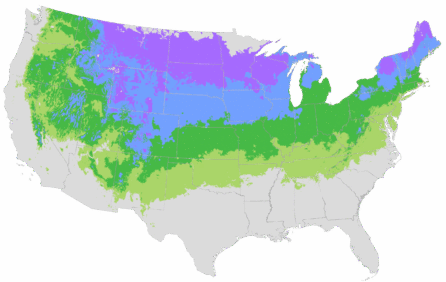
Your USDA Cold Hardiness Zone:
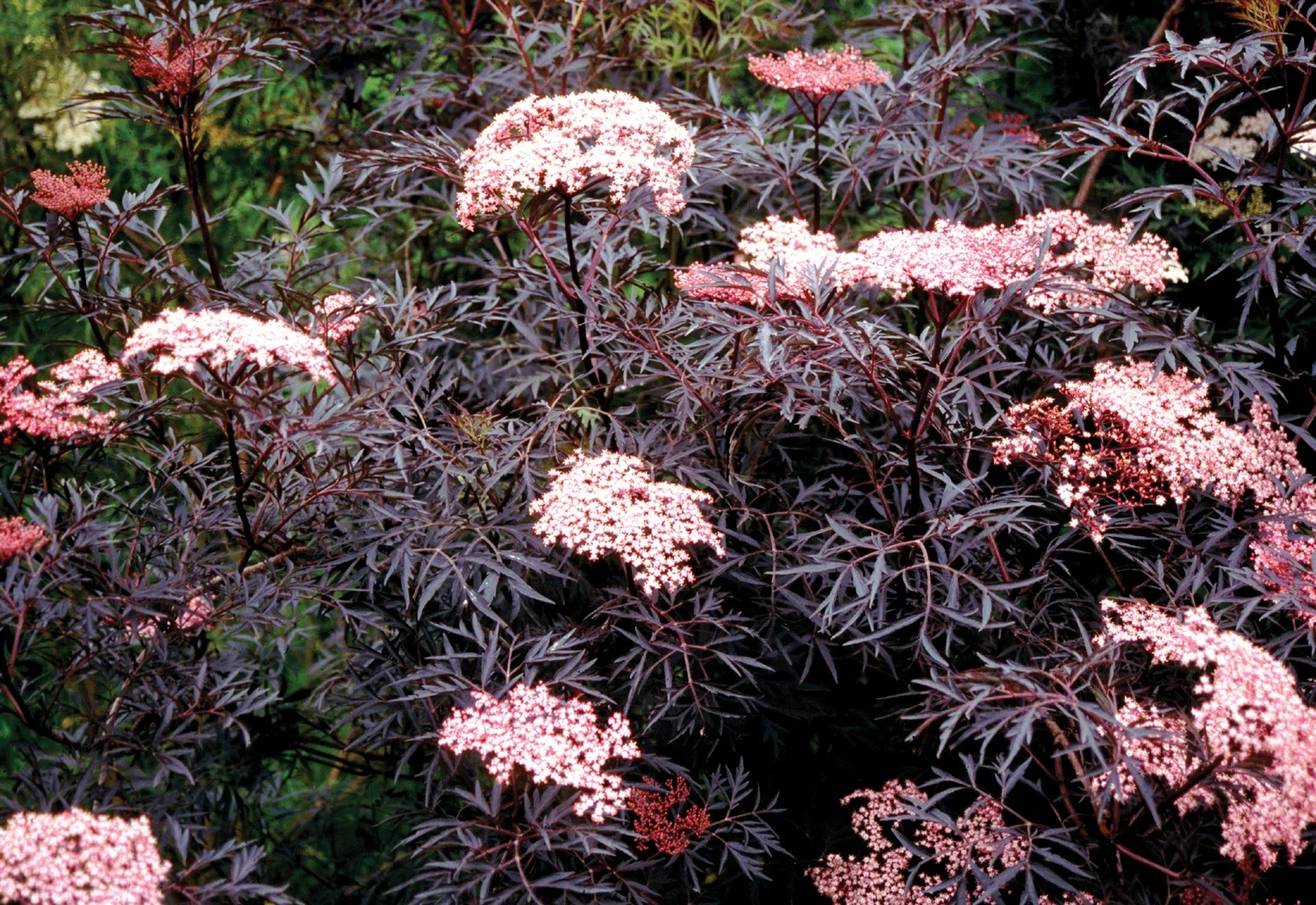
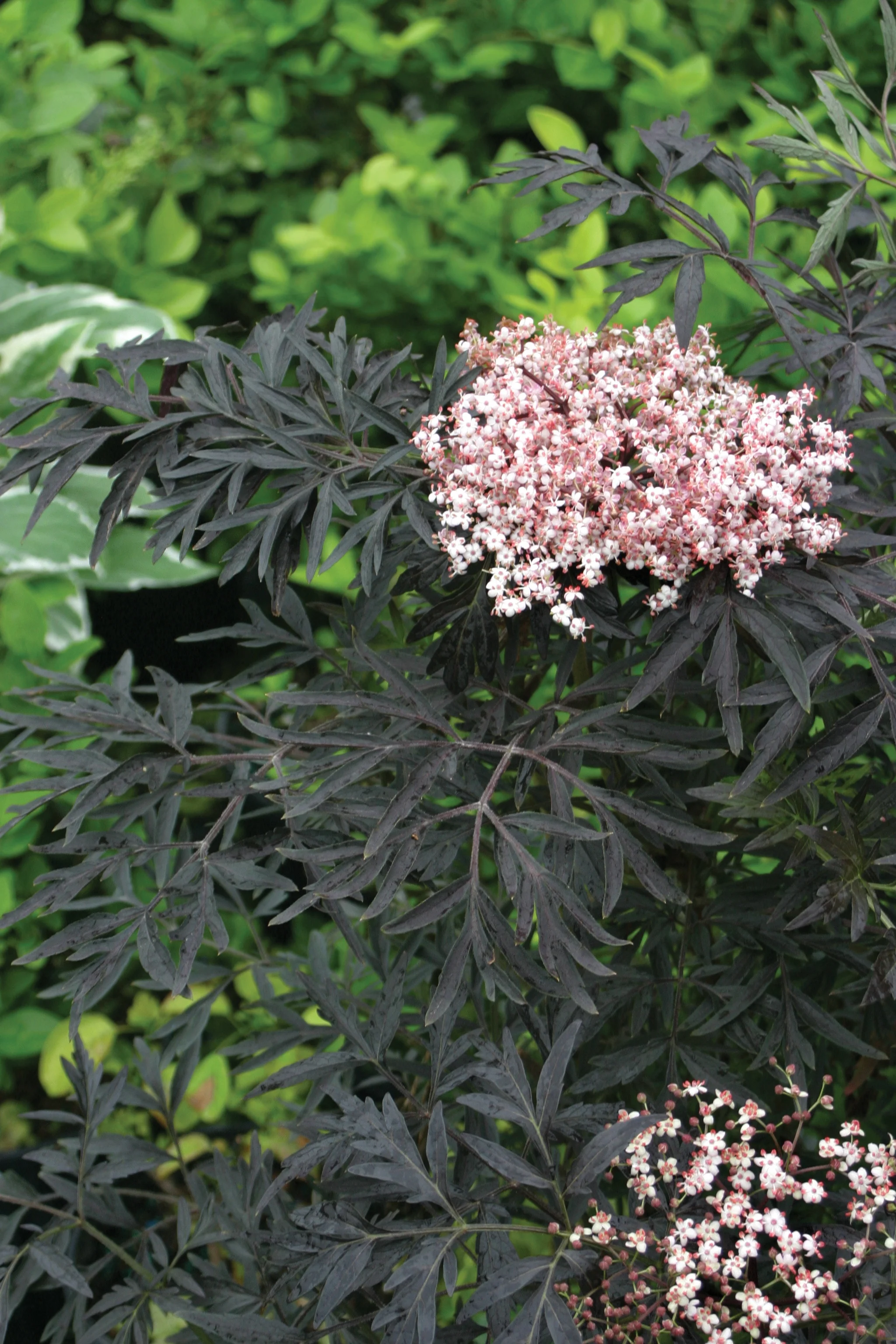
| Description | Black Lace™ is a stunning development in Elderberry breeding. Intense purple black foliage is finely cut, giving it an effect similar to that of Japanese maple. Creamy pink flowers in spring contrast nicely with the dark leaves. They are followed by blackish red fall berries which can be harvested for making elderberry wine and jam, or left on the plant to attract birds and other wildlife. |
|---|---|
| Bloom Time | Spring, followed by berries in the fall. |
| Deciduous/Evergreen | Deciduous |
| Special Features | Dramatic Foliage Color, Ornamental Berries, Edible, Benefits Birds |
| Problems/Solutions | Deer Resistant, Rabbit Resistant, Very Wet Areas |
| Growth Rate | Moderate |
| Flower Attributes | Showy Flowers |
| Patent Act | Asexual reproduction of plants protected by the Plant Patent Act is prohibited during the life of the patent. |
| Landscape Use | Border, Hedge, Privacy Screen |
| Design Ideas | It can be used as a dramatic accent plant, planted en masse for a trouble free high hedge, or incorporated into the mixed or perennial border. Left alone it will reach up to 8 feet in height, but BLACK LACE™ can also be pruned back each year to fit into more formal settings. |
| Flower Color | Pink |
| Foliage Color | Purple |
| Care Instructions | Best in moist soil although will tolerate dry soils. Thrives under acid or alkaline soils. Best if pruned immediately after blooming. May be pruned to the ground each year and treated like a perennial, though this may compromise flowering. This plant will benefit from a good hard pruning as a young plant. Best with high moisture. Fertilize in early spring by applying a slow release fertilizer specialized for trees and shrubs. |
| Lore | According to the Humane Society of America, Sambucus leaves, bark, roots, and buds can be toxic to pets. |
Details
| Description | Black Lace™ is a stunning development in Elderberry breeding. Intense purple black foliage is finely cut, giving it an effect similar to that of Japanese maple. Creamy pink flowers in spring contrast nicely with the dark leaves. They are followed by blackish red fall berries which can be harvested for making elderberry wine and jam, or left on the plant to attract birds and other wildlife. |
|---|---|
| Bloom Time | Spring, followed by berries in the fall. |
| Deciduous/Evergreen | Deciduous |
| Special Features | Dramatic Foliage Color, Ornamental Berries, Edible, Benefits Birds |
| Problems/Solutions | Deer Resistant, Rabbit Resistant, Very Wet Areas |
| Growth Rate | Moderate |
| Flower Attributes | Showy Flowers |
| Patent Act | Asexual reproduction of plants protected by the Plant Patent Act is prohibited during the life of the patent. |
Style
| Landscape Use | Border, Hedge, Privacy Screen |
|---|---|
| Design Ideas | It can be used as a dramatic accent plant, planted en masse for a trouble free high hedge, or incorporated into the mixed or perennial border. Left alone it will reach up to 8 feet in height, but BLACK LACE™ can also be pruned back each year to fit into more formal settings. |
| Flower Color | Pink |
| Foliage Color | Purple |
Care
| Care Instructions | Best in moist soil although will tolerate dry soils. Thrives under acid or alkaline soils. Best if pruned immediately after blooming. May be pruned to the ground each year and treated like a perennial, though this may compromise flowering. This plant will benefit from a good hard pruning as a young plant. Best with high moisture. Fertilize in early spring by applying a slow release fertilizer specialized for trees and shrubs. |
|---|
History
| Lore | According to the Humane Society of America, Sambucus leaves, bark, roots, and buds can be toxic to pets. |
|---|
Retailers Near You
About Us
We have been pioneers and craftsmen in the art of growing plants for 100 years. Since our founding in Southern California by Harry E. Rosedale, Sr. in 1926, we have been absolutely dedicated and obsessed with quality.
We have been pioneers and craftsmen in the art of growing plants for nearly 100 years. Since our founding in Southern California by Harry E. Rosedale, Sr. in 1926, we have been absolutely dedicated and obsessed with quality.