
You're growing in this Zip Code:
Change LocationDiscover Plants for Your Area
Black Scallop Ajuga
Ajuga reptans 'Black Scallop'
Pronunciation: a-JU-gah REP-tanz
SKU #40054
LIGHT:
Full sun, Partial sun
WATER:
Keep soil moderately moist.
SIZE:
Forms a dense mat 4 to 6 in. tall, spreading 12 to 24 in. wide.

Home Delivery Price
?
- Arrives in 3 to 7 days
- Free shipping on orders over $99
- Perfect Start Promise
Select Quantity
Retailers Near You

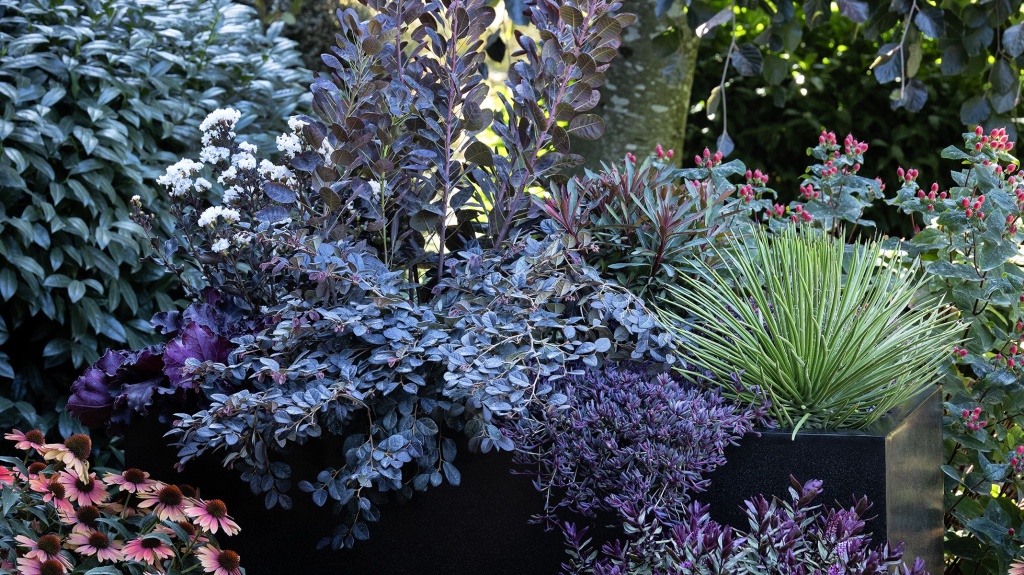
| Description | A dense, mat of richly colored, dark burgundy-maroon foliage with dark green undertones. Whorls of small, rounded leaves with scalloped edges on reddish stems that support showy spikes of lacy, deep violet flowers in spring. Good powdery mildew resistance. Ideal in containers, around shrubs or between stepping stones. An herbaceous perennial. |
|---|---|
| Bloom Time | Late spring to early summer |
| Deciduous/Evergreen | Herbaceous |
| Special Features | Dramatic Foliage Color, Easy Care, Improved Pest and Disease Resistance, Fast Growing, Compact Form |
| Problems/Solutions | Deer Resistant, Erosion Control, Rabbit Resistant, Black Walnut Tolerant |
| Growth Rate | Moderate |
| Growth Habit | Spreading |
| Flower Attributes | Flowers for Cutting, Showy Flowers |
| Patent Act | Asexual reproduction of plants protected by the Plant Patent Act is prohibited during the life of the patent. |
| Landscape Use | Border, Container, Ground Cover, Edging |
| Flower Color | Violet-blue |
| Foliage Color | Burgundy |
| Companion Plants | Coral Bells (Heuchera); Painted Fern (Athyrium); Mondo Grass (Ophiopogon); Japanese Spurge (Pachysandra); Sweet Flag (Acorus) |
| Care Instructions | Thrives in organically rich, moist, well-drained soils. Best foliage color in sunnier exposures. Water regularly during the first growing season to establish an extensive root system; once established, water as needed to maintain evenly moist soil. Apply a low-nitrogen fertilizer in late summer. Space 1 to 2 ft. apart as groundcover. |
| Lore | This garden perennial falls into the mint family along with all the useful herbs. It is known as bugle weed and the more ground hugging species were the carpet bugles. The genus was assigned by Linnaeus from the Latin for "not Yoked" which refers to a certain part of the flower. There are over 50 different species, this one named A. reptans, from the Latin for creeping, which describes its growth habit. Ajuga was an ancient medicinal and used as a wound coagulant, which led to it's lesser known common name, "carpenter's herb". |
Details
| Description | A dense, mat of richly colored, dark burgundy-maroon foliage with dark green undertones. Whorls of small, rounded leaves with scalloped edges on reddish stems that support showy spikes of lacy, deep violet flowers in spring. Good powdery mildew resistance. Ideal in containers, around shrubs or between stepping stones. An herbaceous perennial. |
|---|---|
| Bloom Time | Late spring to early summer |
| Deciduous/Evergreen | Herbaceous |
| Special Features | Dramatic Foliage Color, Easy Care, Improved Pest and Disease Resistance, Fast Growing, Compact Form |
| Problems/Solutions | Deer Resistant, Erosion Control, Rabbit Resistant, Black Walnut Tolerant |
| Growth Rate | Moderate |
| Growth Habit | Spreading |
| Flower Attributes | Flowers for Cutting, Showy Flowers |
| Patent Act | Asexual reproduction of plants protected by the Plant Patent Act is prohibited during the life of the patent. |
Style
| Landscape Use | Border, Container, Ground Cover, Edging |
|---|---|
| Flower Color | Violet-blue |
| Foliage Color | Burgundy |
| Companion Plants | Coral Bells (Heuchera); Painted Fern (Athyrium); Mondo Grass (Ophiopogon); Japanese Spurge (Pachysandra); Sweet Flag (Acorus) |
Care
| Care Instructions | Thrives in organically rich, moist, well-drained soils. Best foliage color in sunnier exposures. Water regularly during the first growing season to establish an extensive root system; once established, water as needed to maintain evenly moist soil. Apply a low-nitrogen fertilizer in late summer. Space 1 to 2 ft. apart as groundcover. |
|---|
History
| Lore | This garden perennial falls into the mint family along with all the useful herbs. It is known as bugle weed and the more ground hugging species were the carpet bugles. The genus was assigned by Linnaeus from the Latin for "not Yoked" which refers to a certain part of the flower. There are over 50 different species, this one named A. reptans, from the Latin for creeping, which describes its growth habit. Ajuga was an ancient medicinal and used as a wound coagulant, which led to it's lesser known common name, "carpenter's herb". |
|---|
Frequently asked questions
Does Black Scallop Ajuga produce flowers?
Late spring to early summer
Is Black Scallop Ajuga evergreen or deciduous?
Black Scallop Ajuga is Herbaceous.
What are the special features of Black Scallop Ajuga?
Black Scallop Ajuga is Dramatic Foliage Color, Easy Care, Improved Pest and Disease Resistance, Fast Growing, Compact Form.
Is Black Scallop Ajuga resistant to pests or animals?
Deer Resistant, Erosion Control, Rabbit Resistant, Black Walnut Tolerant
How fast does Black Scallop Ajuga grow?
Black Scallop Ajuga has a Moderate growth rate.
What is the growth habit of Black Scallop Ajuga?
Black Scallop Ajuga grows in an Spreading habit.
Where can I use Black Scallop Ajuga in my landscape?
Black Scallop Ajuga is suitable for: Border, Container, Ground Cover, Edging.
What color are Black Scallop Ajuga flowers?
Black Scallop Ajuga produces Violet-blue flowers.
What color is the foliage of Black Scallop Ajuga?
Black Scallop Ajuga has Burgundy foliage.
What plants grow well with Black Scallop Ajuga?
Good companion plants for Black Scallop Ajuga include: Coral Bells (Heuchera); Painted Fern (Athyrium); Mondo Grass (Ophiopogon); Japanese Spurge (Pachysandra); Sweet Flag (Acorus).
How do I care for Black Scallop Ajuga?
Thrives in organically rich, moist, well-drained soils. Best foliage color in sunnier exposures. Water regularly during the first growing season to establish an extensive root system; once established, water as needed to maintain evenly moist soil. Apply a low-nitrogen fertilizer in late summer. Space 1 to 2 ft. apart as groundcover.
Retailers Near You
About Us
We have been pioneers and craftsmen in the art of growing plants for 100 years. Since our founding in Southern California by Harry E. Rosedale, Sr. in 1926, we have been absolutely dedicated and obsessed with quality.
We have been pioneers and craftsmen in the art of growing plants for nearly 100 years. Since our founding in Southern California by Harry E. Rosedale, Sr. in 1926, we have been absolutely dedicated and obsessed with quality.