
You're growing in this Zip Code:
Discover Plants for Your Area
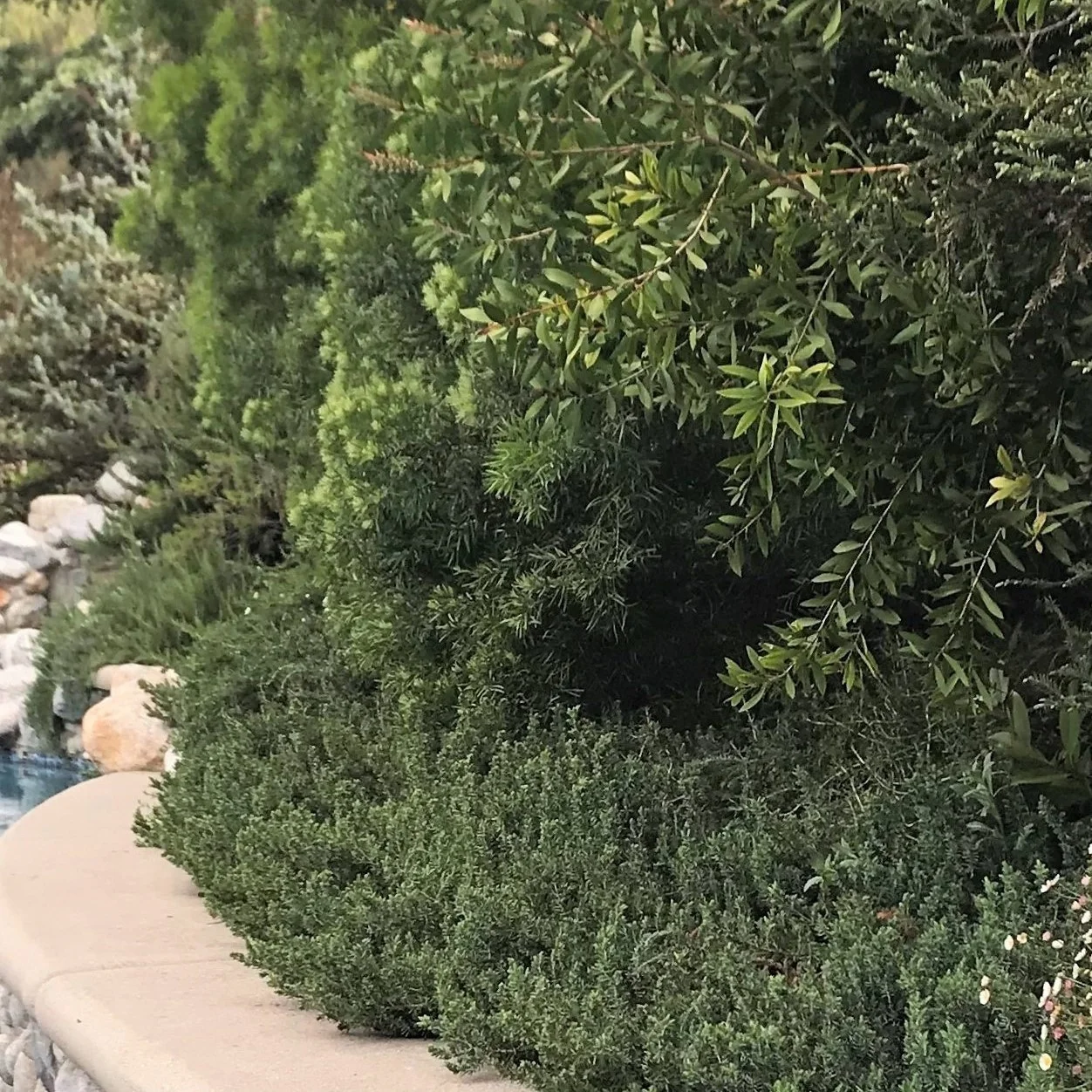
Blue Pacific Shore Juniper
Juniperus conferta 'Blue Pacific'
Pronunciation: ju-NIP-er-us kon-FER-ta
SKU #04910
LIGHT:
Full sun
WATER:
Water when top 2 inches of soil is dry.
SIZE:
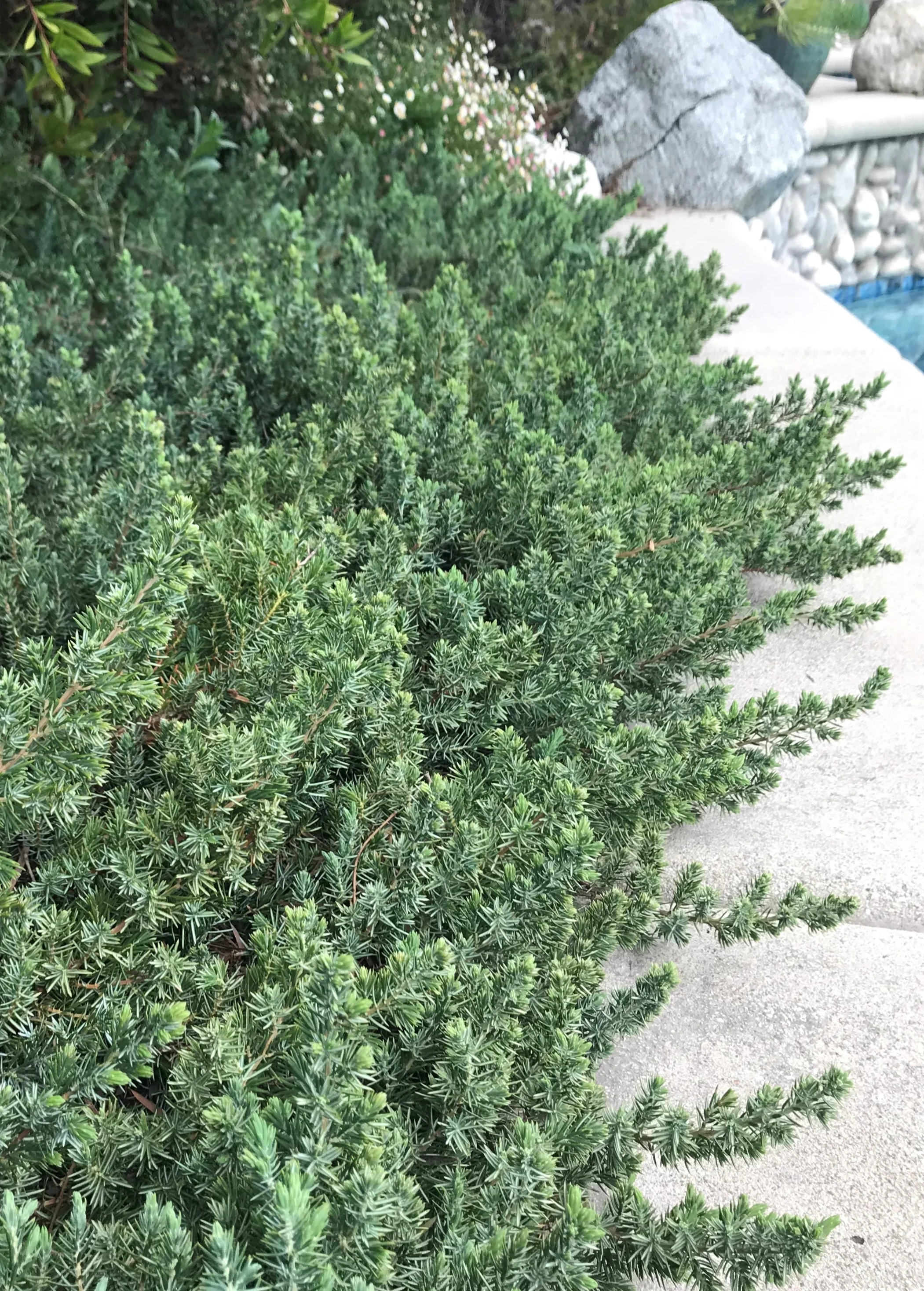
Slow growing; reaches 1 ft. tall, spreading 6 to 7 ft. wide.

Retailers Near You
Ready to Grow?
Ship Monrovia plants directly to your door. Browse a curated selection available online.
Shop Now >This Plant's Growing Zones: 5-9
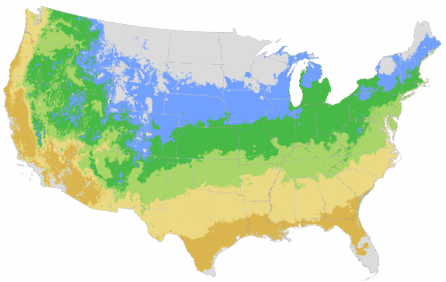
Your USDA Cold Hardiness Zone:
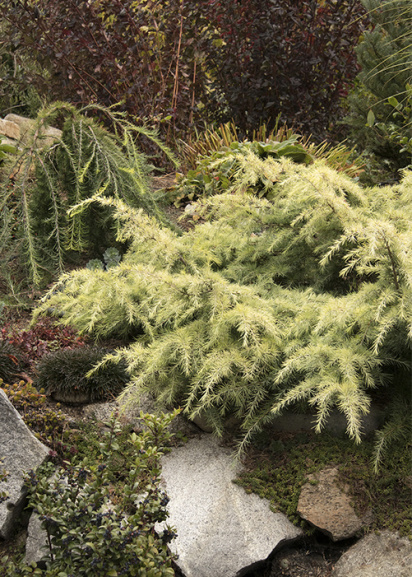
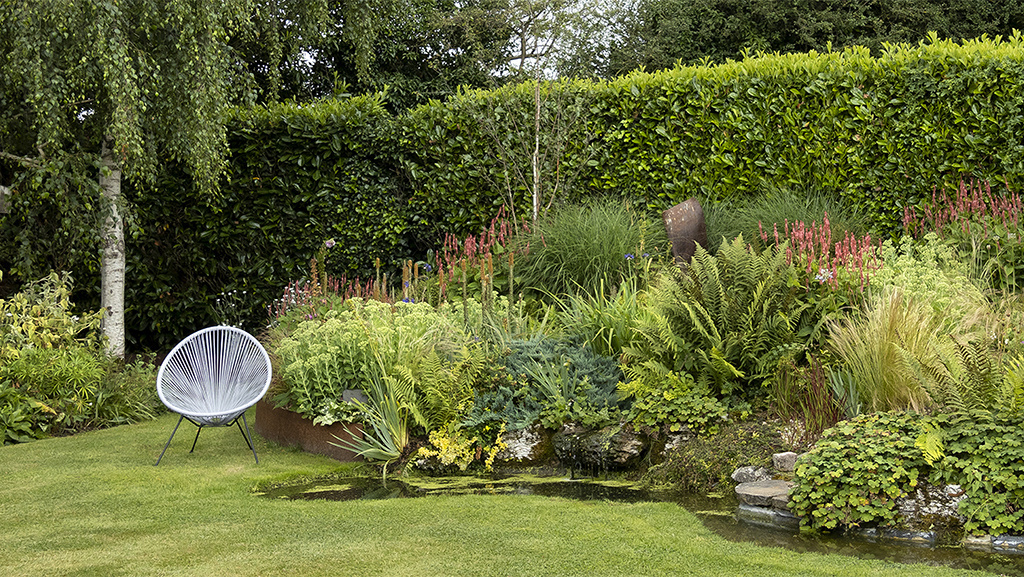
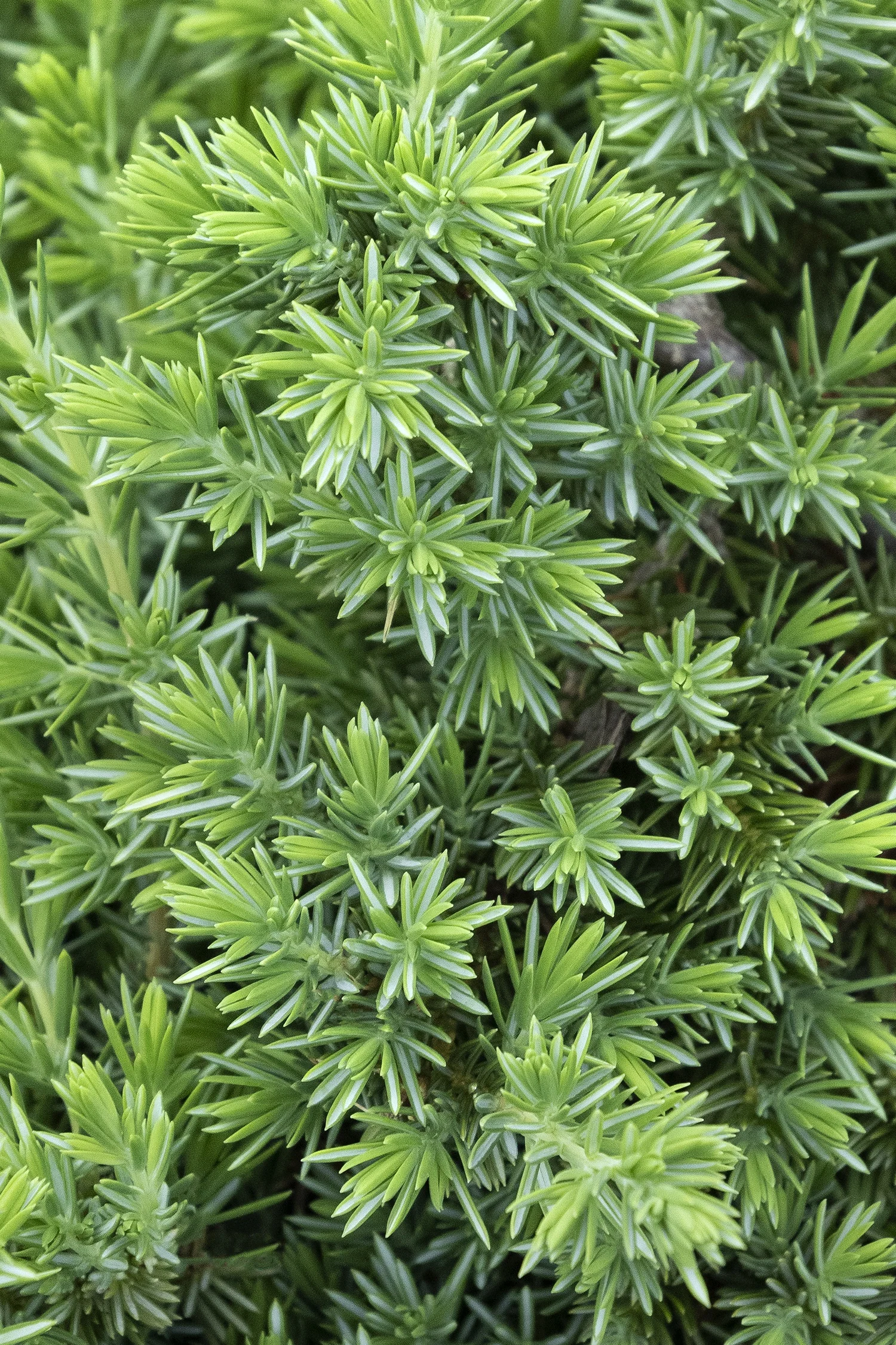
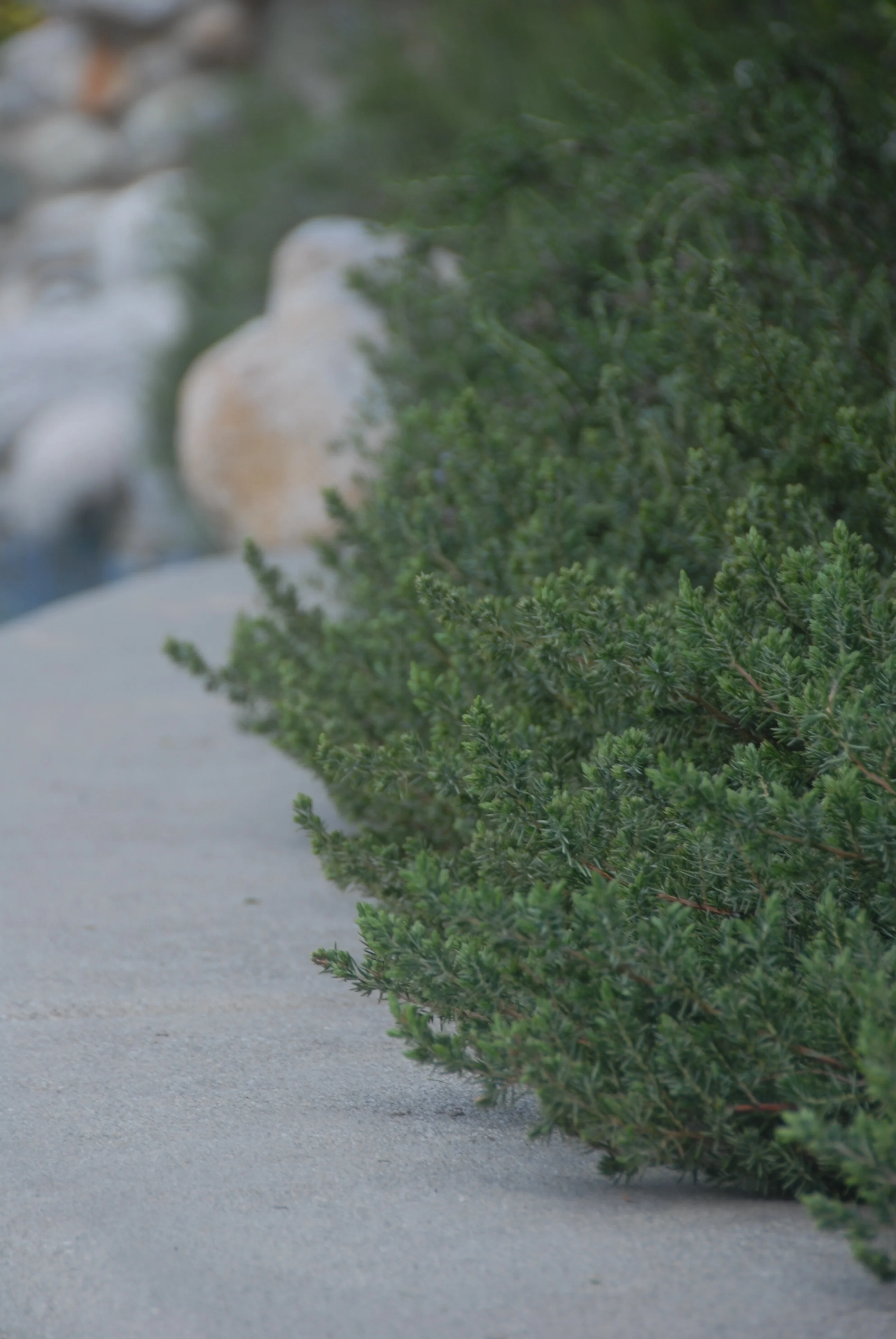
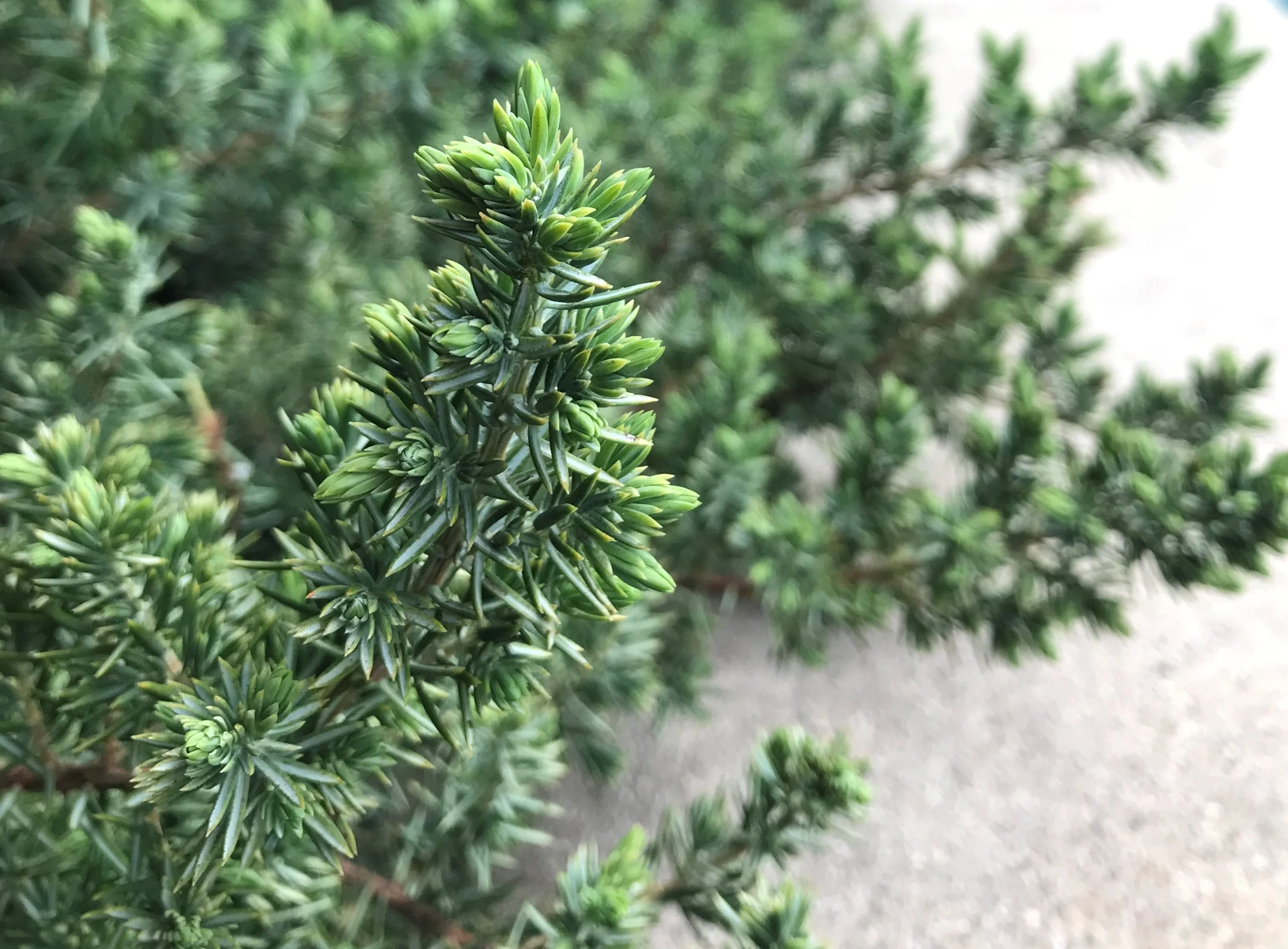
| Description | This wonderful, low, spreading form makes a superb groundcover, group planting or single specimen. Dense blue-green foliage gives this selection a handsome appearance and is best when not pruned, but rather left in its natural form. A notably heat tolerant variety. Evergreen. |
|---|---|
| Bloom Time | Conifer; prized for foliage. |
| Deciduous/Evergreen | Evergreen |
| Special Features | Dramatic Foliage Color, Easy Care, Ornamental Berries, Waterwise, Heat Loving, Benefits Birds |
| Problems/Solutions | Coastal Exposure, Deer Resistant, Erosion Control, Rabbit Resistant |
| Growth Rate | Slow |
| Growth Habit | Spreading |
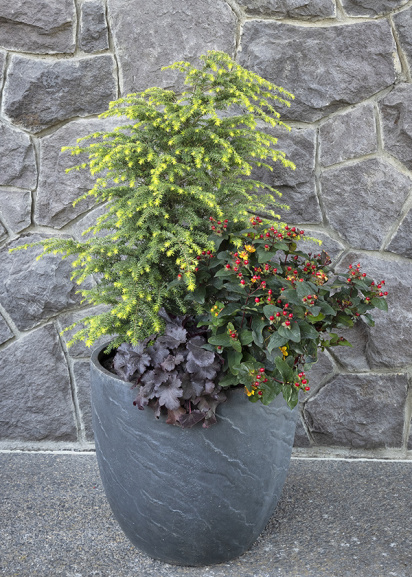
| Landscape Use | Border, Container, Ground Cover, Hillside |
| Design Ideas | Blue tinted Juniper are the most reliable plants for the excessive heat and drought of Southwestern low desert communities. Thrives in seacoast conditions or wherever the soil is thin. Use on slopes for coverage or erosion control, allow it to drape off retaining walls or cover unsightly transition zones at the edges of paving. A good source for dune stabilization. This plant's tolerance of extreme reflected heat makes it a good choice for near walkways and drives. Deer tend to avoid this plant. |
| Foliage Color | Blue-green |
| Companion Plants | Rose (Rosa); Clematis (Clematis); Russian Sage (Perovskia); Catmint (Nepeta); Barberry (Berberis); Maiden Grass (Miscanthus) |
| Care Instructions | Highly adaptable and easy to grow in most well-drained soils; avoid overly wet conditions. Water deeply, regularly in first growing season to establish root system; reduce frequency, once established. Space 5 ft. apart as groundcover; closer for faster coverage. Control weeds with mulch until plants fill in. |
| History | J. conferta is native to the coastal areas on the north Japanese island of Sakhalin. Conferta is often thought to be a subspecies or variety of J. rigida, or Temple Juniper, which is native to China, Korea, Japan and southeast Russia.The common name of Temple Juniper was adopted from its use as a landscape plant around temples in Japan. The berries are a food source to birds. |
Details
| Description | This wonderful, low, spreading form makes a superb groundcover, group planting or single specimen. Dense blue-green foliage gives this selection a handsome appearance and is best when not pruned, but rather left in its natural form. A notably heat tolerant variety. Evergreen. |
|---|---|
| Bloom Time | Conifer; prized for foliage. |
| Deciduous/Evergreen | Evergreen |
| Special Features | Dramatic Foliage Color, Easy Care, Ornamental Berries, Waterwise, Heat Loving, Benefits Birds |
| Problems/Solutions | Coastal Exposure, Deer Resistant, Erosion Control, Rabbit Resistant |
| Growth Rate | Slow |
| Growth Habit | Spreading |
Style
| Landscape Use | Border, Container, Ground Cover, Hillside |
|---|---|
| Design Ideas | Blue tinted Juniper are the most reliable plants for the excessive heat and drought of Southwestern low desert communities. Thrives in seacoast conditions or wherever the soil is thin. Use on slopes for coverage or erosion control, allow it to drape off retaining walls or cover unsightly transition zones at the edges of paving. A good source for dune stabilization. This plant's tolerance of extreme reflected heat makes it a good choice for near walkways and drives. Deer tend to avoid this plant. |
| Foliage Color | Blue-green |
| Companion Plants | Rose (Rosa); Clematis (Clematis); Russian Sage (Perovskia); Catmint (Nepeta); Barberry (Berberis); Maiden Grass (Miscanthus) |
Care
| Care Instructions | Highly adaptable and easy to grow in most well-drained soils; avoid overly wet conditions. Water deeply, regularly in first growing season to establish root system; reduce frequency, once established. Space 5 ft. apart as groundcover; closer for faster coverage. Control weeds with mulch until plants fill in. |
|---|
History
| History | J. conferta is native to the coastal areas on the north Japanese island of Sakhalin. Conferta is often thought to be a subspecies or variety of J. rigida, or Temple Juniper, which is native to China, Korea, Japan and southeast Russia.The common name of Temple Juniper was adopted from its use as a landscape plant around temples in Japan. The berries are a food source to birds. |
|---|
Retailers Near You
About Us
We have been pioneers and craftsmen in the art of growing plants for 100 years. Since our founding in Southern California by Harry E. Rosedale, Sr. in 1926, we have been absolutely dedicated and obsessed with quality.
We have been pioneers and craftsmen in the art of growing plants for nearly 100 years. Since our founding in Southern California by Harry E. Rosedale, Sr. in 1926, we have been absolutely dedicated and obsessed with quality.