
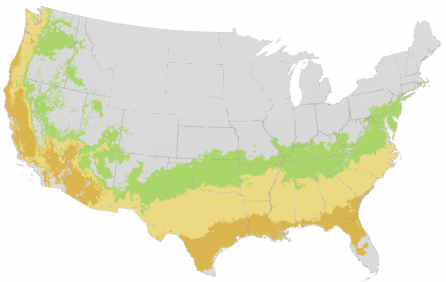
You're growing in this Zip Code:
Change LocationDiscover Plants for Your Area
Dwarf English Laurel
Prunus laurocerasus 'Nana'
Pronunciation: PROO-nus lar-oh-ser-AY-sus
SKU #06707
LIGHT:
Full sun, Partial sun
WATER:
Water when top 2 inches of soil is dry.
SIZE:
Slow growing; reaches 6 to 8 ft. tall and wide.

Retailers Near You
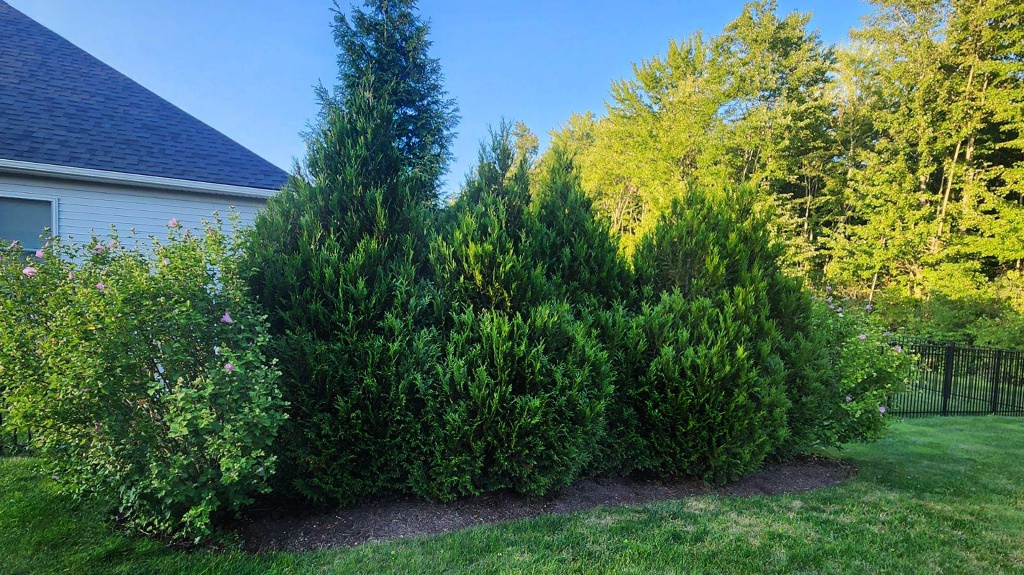

| Description | A versatile and handsome evergreen shrub, very useful as a landscape accent or low informal hedging. The large, glossy dark green leaves cloak the very compact, broadly spreading form. Lovely when in full bloom, with clusters of tiny yet highly fragrant white flowers perfuming the garden. |
|---|---|
| Bloom Time | Spring |
| Deciduous/Evergreen | Evergreen |
| Special Features | Easy Care, Ornamental Berries, Attracts Pollinators, Compact Form, Benefits Birds |
| Problems/Solutions | Coastal Exposure, Dry Shade, Tolerates Urban Pollution, Road Salt Tolerant |
| Growth Rate | Slow |
| Growth Habit | Spreading |
| Flower Attributes | Fragrant, Showy Flowers |
| Landscape Use | Border, Hedge, Privacy Screen, Windbreak, Accent |
| Design Ideas | This large broadleaf foliage shrub is the ideal background plant with a dozen uses. It's primary value is as an informal hedge for spatial definition and to divide front yards. Creates minimal enclosure to outdoor living spaces. Its dark color makes a perfect foundation plant against brick walls to cloak crawl spaces, footings and utilities. Blends beautifully into woodland understory and into back of the flowering shrub border. |
| Flower Color | White |
| Foliage Color | Dark Green |
| Companion Plants | Japanese Maple (Acer palmatum); Heavenly Bamboo (Nandina); Holly (Ilex); Lilyturf (Liriope); Euonymus (Euonymus) |
| Care Instructions | Thrives in slightly deep, fertile, moist, humusy, well-drained soil; tolerates poor, sandy, or clay soils. Prefers more sun in cool climates, more shade in warmer areas. Water deeply, regularly in first growing season to establish root system. Once established, reduce frequency; tolerates dry shade. Feed in early spring. Prune after flowering to shape. |
| History | This is a 20th century dwarf form of the old fashioned cherry laurel, a broadleaf evergreen native to Europe and parts of Asia Minor. It was called English laurel due to the extensive plantings of it in manor houses of southern Britain where it substituted for the frost tender sweet bay laurel of the Mediterranean. It was brought into cultivation early on around 1576. The original species was Laurocerausus officinalis, classified by Johann Roemer, 1763-1819 of Switzerland. It was simultaneously classified by Linnaeus into genus Prunus utilizing the former inaccurate genus name of Roemer. It was imported into the U.S. in colonial times and this is one of the many varietal forms. |
| Lore | The leaves and fruits of this plant are considered to be toxic and at one time used to extract cyanide. |
Details
| Description | A versatile and handsome evergreen shrub, very useful as a landscape accent or low informal hedging. The large, glossy dark green leaves cloak the very compact, broadly spreading form. Lovely when in full bloom, with clusters of tiny yet highly fragrant white flowers perfuming the garden. |
|---|---|
| Bloom Time | Spring |
| Deciduous/Evergreen | Evergreen |
| Special Features | Easy Care, Ornamental Berries, Attracts Pollinators, Compact Form, Benefits Birds |
| Problems/Solutions | Coastal Exposure, Dry Shade, Tolerates Urban Pollution, Road Salt Tolerant |
| Growth Rate | Slow |
| Growth Habit | Spreading |
| Flower Attributes | Fragrant, Showy Flowers |
Style
| Landscape Use | Border, Hedge, Privacy Screen, Windbreak, Accent |
|---|---|
| Design Ideas | This large broadleaf foliage shrub is the ideal background plant with a dozen uses. It's primary value is as an informal hedge for spatial definition and to divide front yards. Creates minimal enclosure to outdoor living spaces. Its dark color makes a perfect foundation plant against brick walls to cloak crawl spaces, footings and utilities. Blends beautifully into woodland understory and into back of the flowering shrub border. |
| Flower Color | White |
| Foliage Color | Dark Green |
| Companion Plants | Japanese Maple (Acer palmatum); Heavenly Bamboo (Nandina); Holly (Ilex); Lilyturf (Liriope); Euonymus (Euonymus) |
Care
| Care Instructions | Thrives in slightly deep, fertile, moist, humusy, well-drained soil; tolerates poor, sandy, or clay soils. Prefers more sun in cool climates, more shade in warmer areas. Water deeply, regularly in first growing season to establish root system. Once established, reduce frequency; tolerates dry shade. Feed in early spring. Prune after flowering to shape. |
|---|
History
| History | This is a 20th century dwarf form of the old fashioned cherry laurel, a broadleaf evergreen native to Europe and parts of Asia Minor. It was called English laurel due to the extensive plantings of it in manor houses of southern Britain where it substituted for the frost tender sweet bay laurel of the Mediterranean. It was brought into cultivation early on around 1576. The original species was Laurocerausus officinalis, classified by Johann Roemer, 1763-1819 of Switzerland. It was simultaneously classified by Linnaeus into genus Prunus utilizing the former inaccurate genus name of Roemer. It was imported into the U.S. in colonial times and this is one of the many varietal forms. |
|---|---|
| Lore | The leaves and fruits of this plant are considered to be toxic and at one time used to extract cyanide. |
Retailers Near You
About Us
We have been pioneers and craftsmen in the art of growing plants for 100 years. Since our founding in Southern California by Harry E. Rosedale, Sr. in 1926, we have been absolutely dedicated and obsessed with quality.
We have been pioneers and craftsmen in the art of growing plants for nearly 100 years. Since our founding in Southern California by Harry E. Rosedale, Sr. in 1926, we have been absolutely dedicated and obsessed with quality.