
You're growing in this Zip Code:
Discover Plants for Your Area


Exclusive
Emerald Colonnade® Holly
Ilex x 'RutHol1' PP #23,905
Pronunciation: I-leks
SKU #09265
LIGHT:
Full sun
WATER:
Water when top 2 inches of soil is dry.
SIZE:
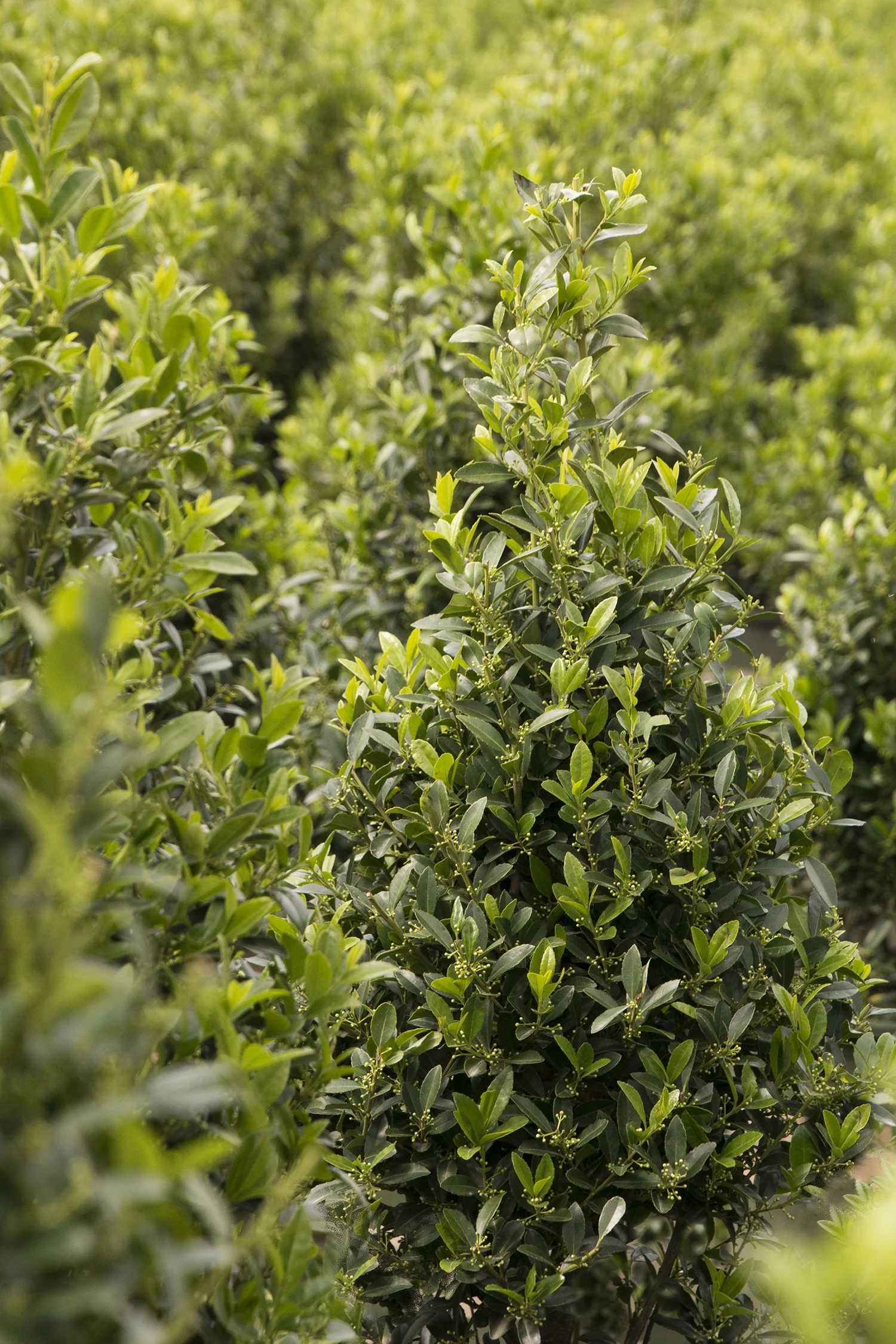
Grows 12 ft. tall, 8 ft. wide in natural form.

Home Delivery Price
?
- Arrives in 3 to 7 days
- Free shipping on orders over $149
- Perfect Start Promise
Select Quantity
Retailers Near You
This Plant's Growing Zones: 7-9
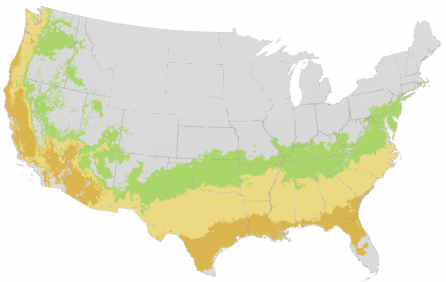
Your USDA Cold Hardiness Zone:
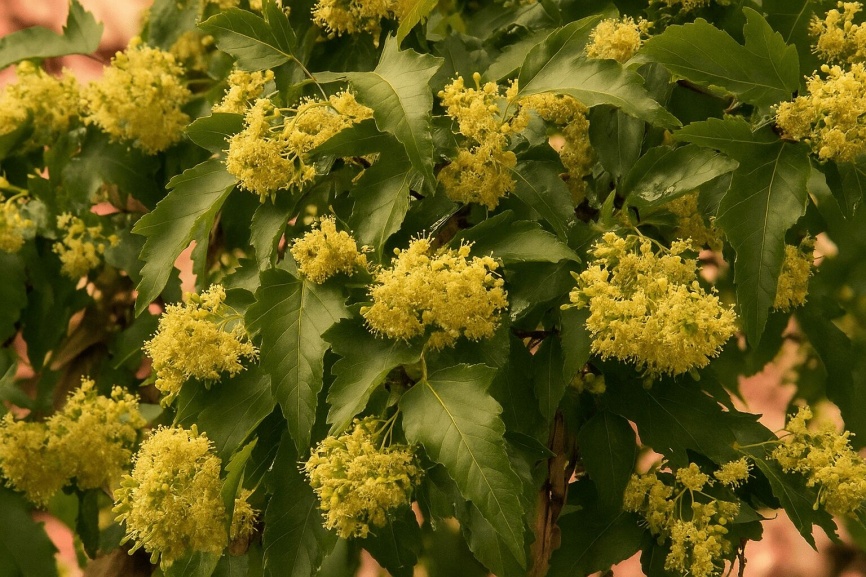



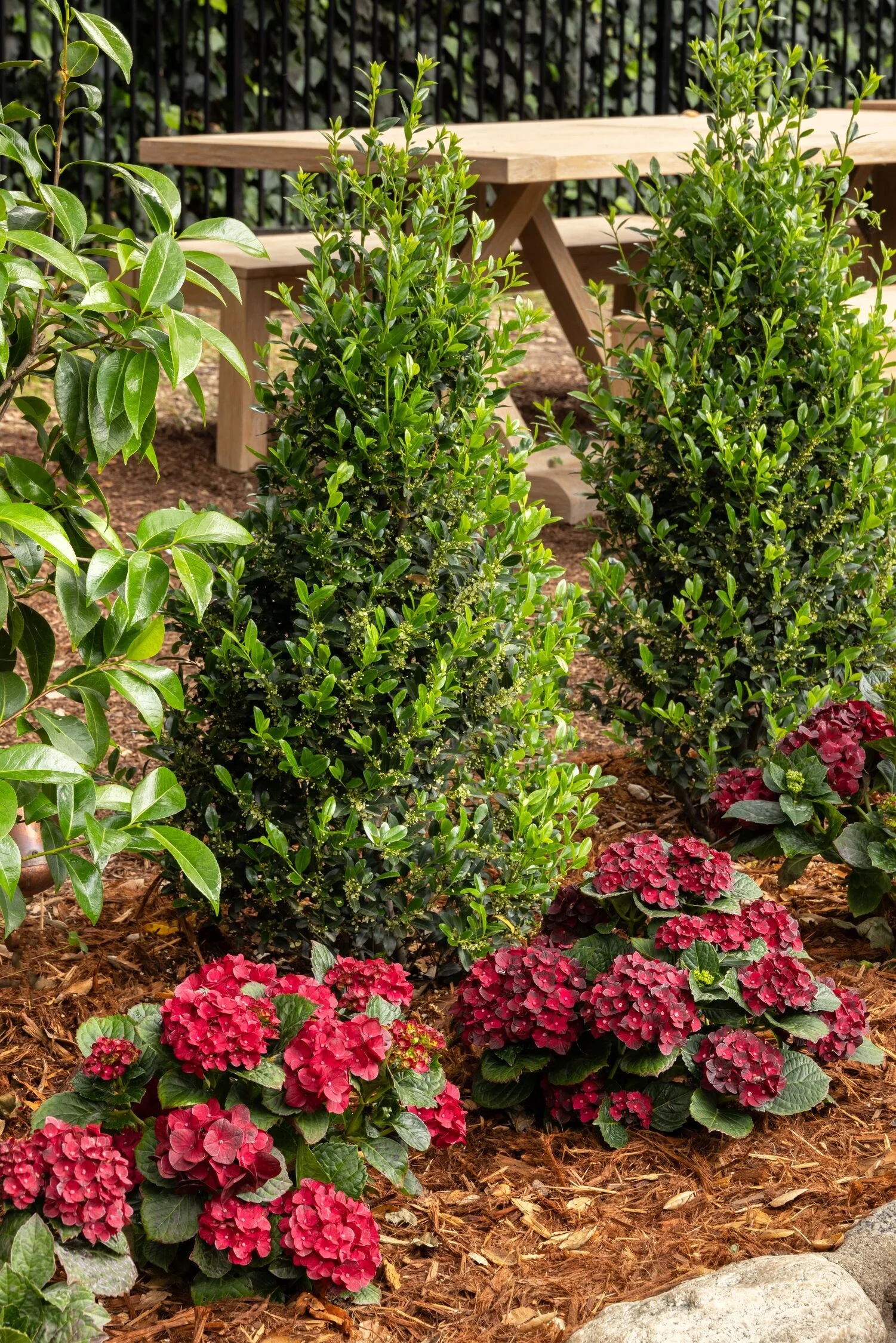
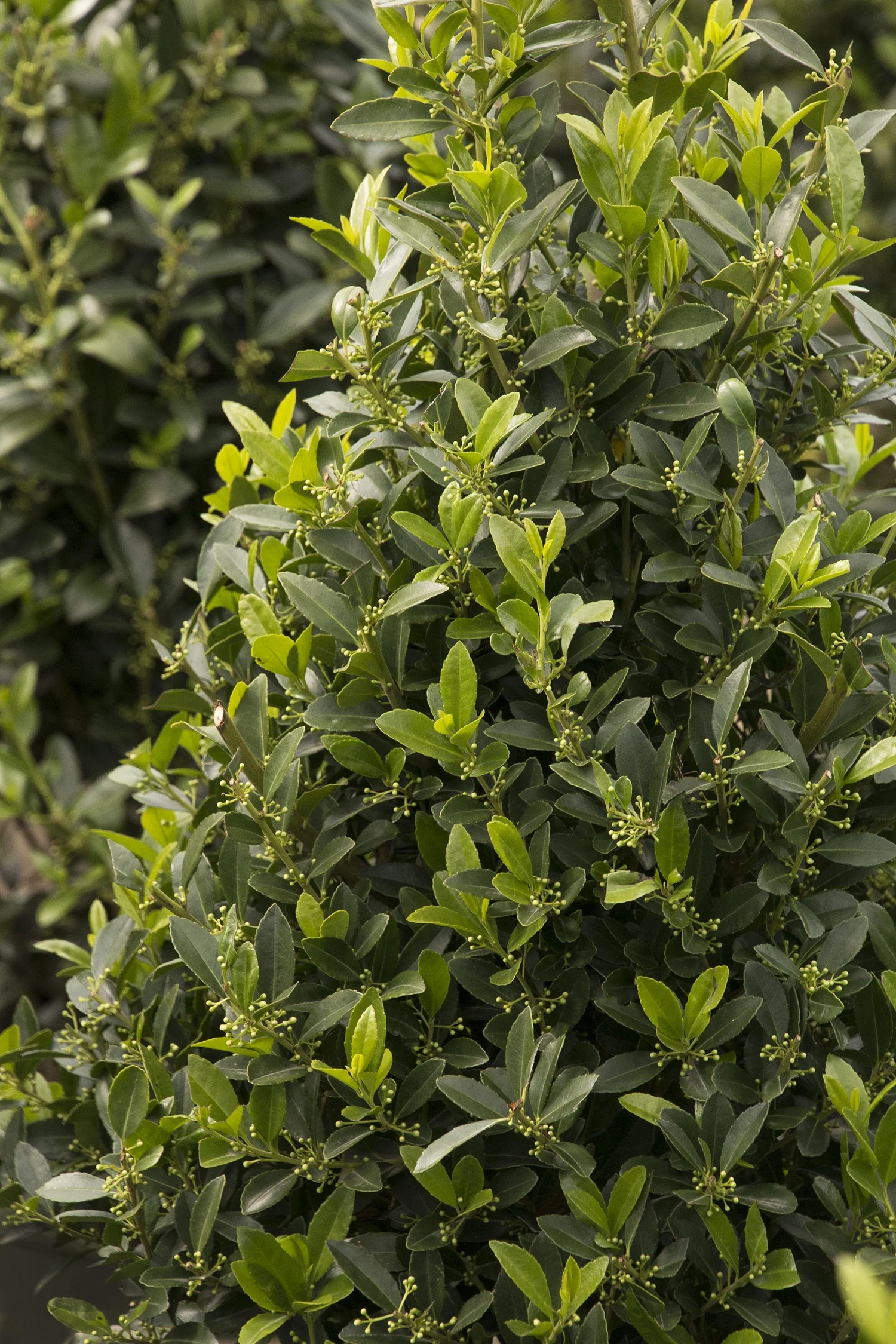
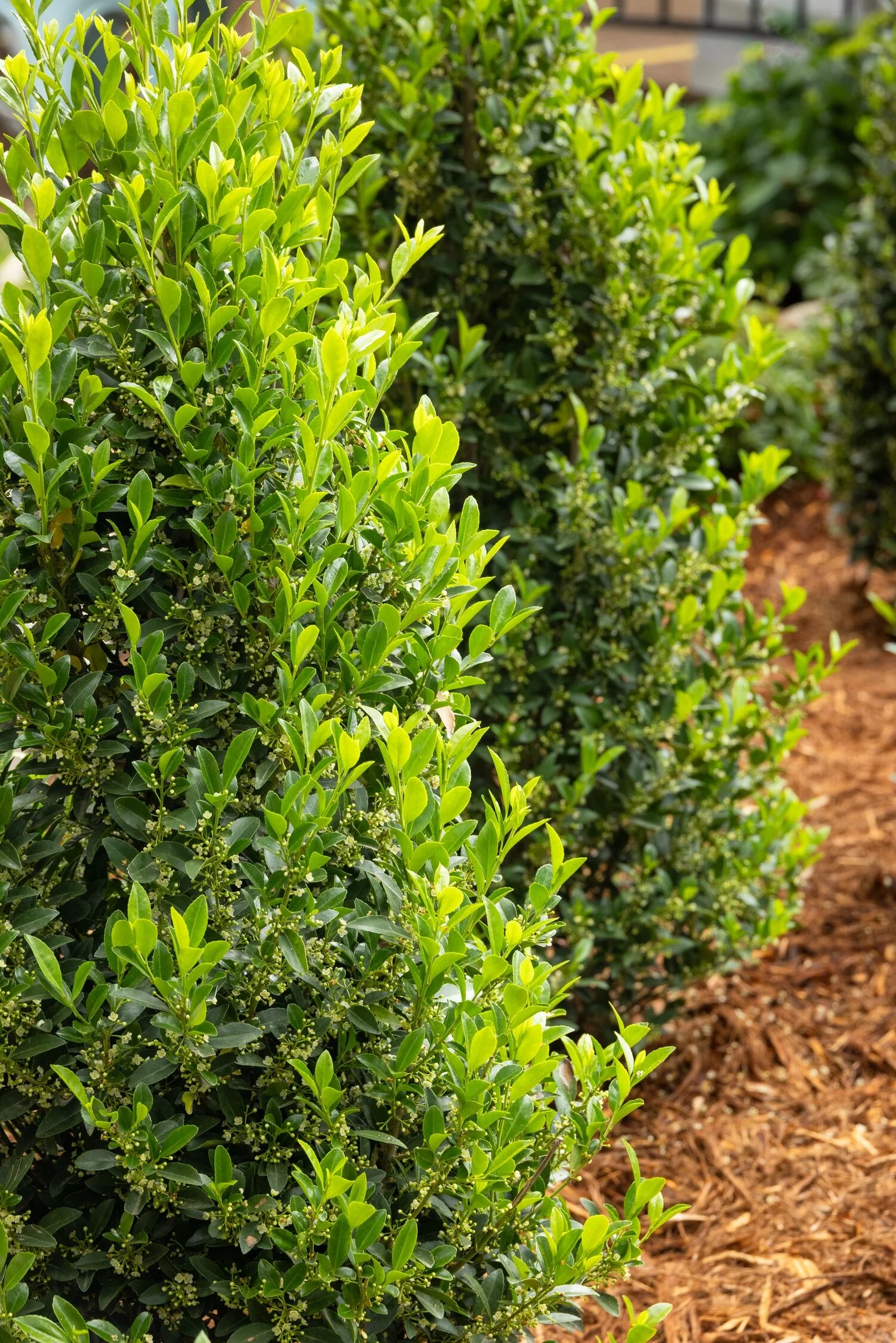
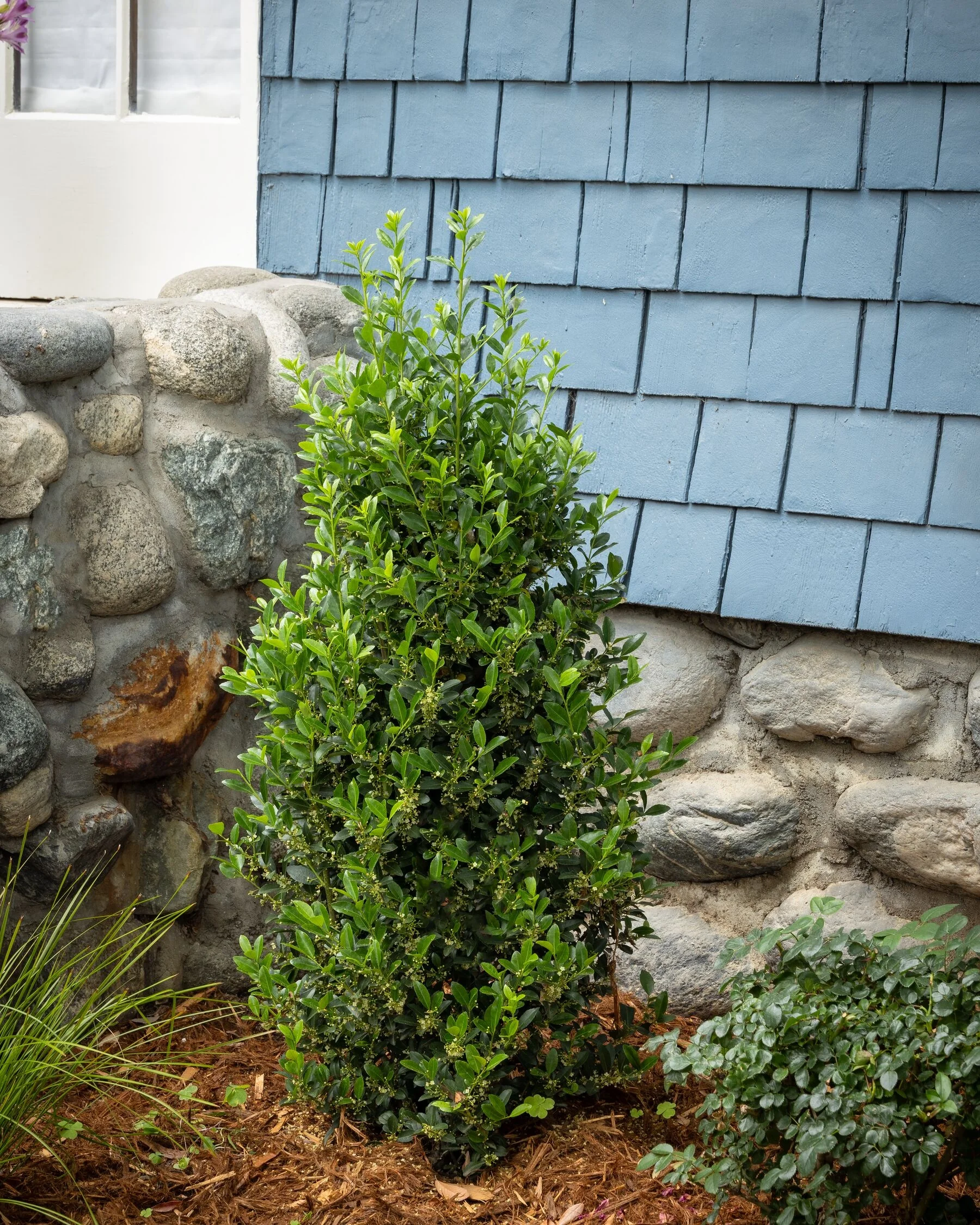
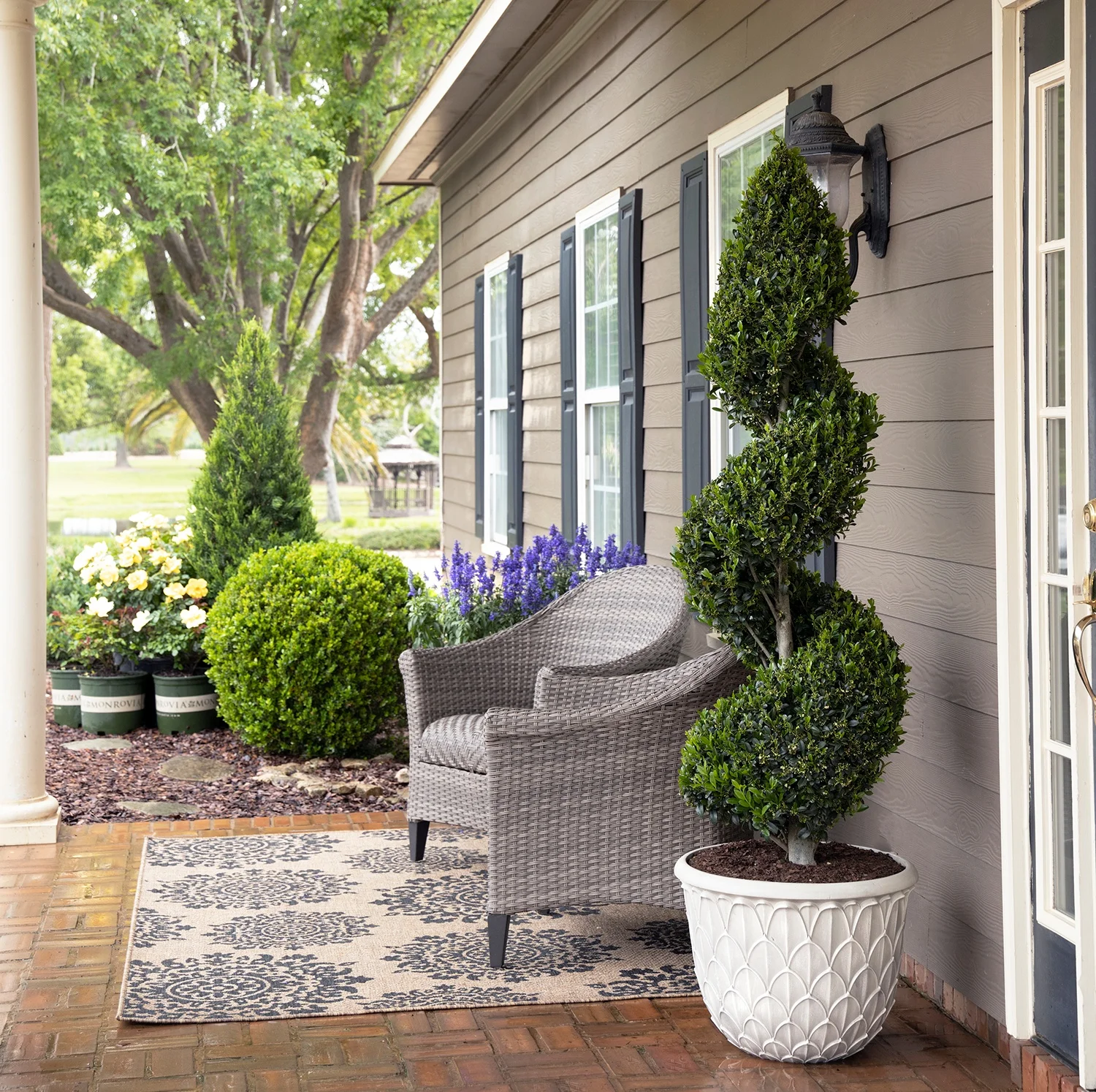
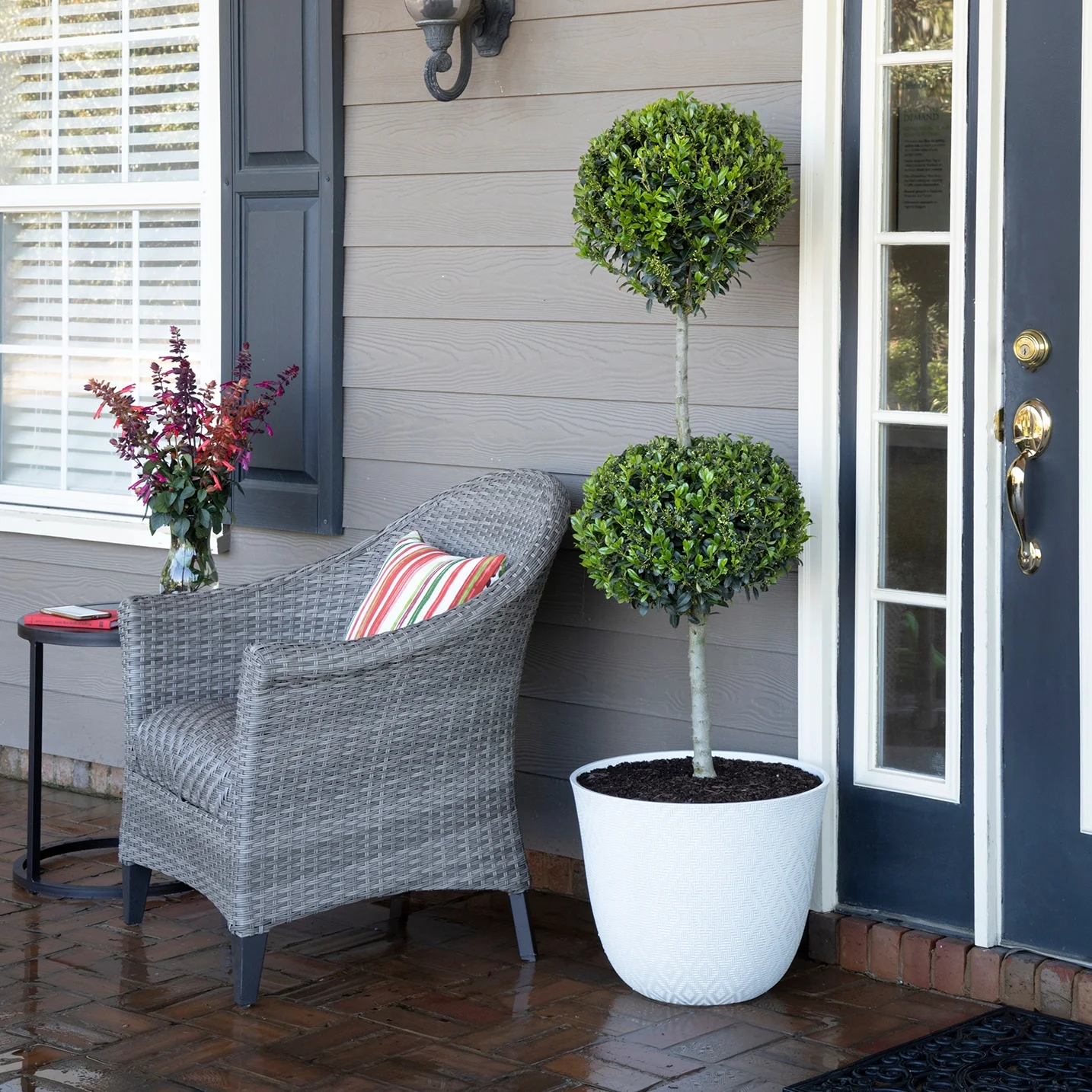
| Description | This handsome and versatile male evergreen holly with a natural pyramidal form creates a superb hedge, screen, or windbreak. Dense, glossy, bright green foliage is tolerant of shearing, making it an excellent topiary specimen or formal accent to entryways or gardens. Small cream-colored flowers do not produce berries. |
|---|---|
| Bloom Time | Spring |
| Deciduous/Evergreen | Evergreen |
| Special Features | Easy Care, Waterwise |
| Problems/Solutions | Rabbit Resistant |
| Growth Rate | Moderate |
| Patent Act | Asexual reproduction of plants protected by the Plant Patent Act is prohibited during the life of the patent. |
| Landscape Use | Container, Hedge, Privacy Screen, Suitable for Topiary |
| Flower Color | Yellow |
| Foliage Color | Green |
| Companion Plants | Rhododendron (Rhododendron); Astilbe (Astilbe); Coral Bells (Heuchera); Japanese Forest Grass (Hakonechloa); Camellia (Camellia) |
| Care Instructions | Adapts to a range of soil types; thrives in light, well-drained, acidic soils with consistent moisture. Water deeply, regularly during first growing season to establish an extensive root system. Once established, reduce frequency; tolerates mild drought. Fertilize in early spring. For a tidy appearance, prune to shape in winter. |
| History | This improved hybrid holly, 'RutHol 1', was developed by Dr. John M. Ruter, renowned plant breeder and researcher at the University of Georgia. Open pollinated seed was collected from the seed (female) parent, Ilex crenata 'Sky Pencil' (unpatented). Two distinctly different male hollies were growing in the vicinity of the female plant: I. crenata 'Glass' (unpatented) and an unnamed plant of I. maximowicziana (unpatented), both of which have an overlapping period of anthesis with 'Sky Pencil'. The collected seed was cultivated and 'RutHol1' was subsequently selected from this cultivated area. Ilex 'RutHol1' appears to be intermediate to I. crenata and I. maximowicziana, confirming that an unnamed plant of I. maximowicziana is the pollen (male) parent. The original 'RutHol1' plant is growing in Tifton, Georgia. |
Details
| Description | This handsome and versatile male evergreen holly with a natural pyramidal form creates a superb hedge, screen, or windbreak. Dense, glossy, bright green foliage is tolerant of shearing, making it an excellent topiary specimen or formal accent to entryways or gardens. Small cream-colored flowers do not produce berries. |
|---|---|
| Bloom Time | Spring |
| Deciduous/Evergreen | Evergreen |
| Special Features | Easy Care, Waterwise |
| Problems/Solutions | Rabbit Resistant |
| Growth Rate | Moderate |
| Patent Act | Asexual reproduction of plants protected by the Plant Patent Act is prohibited during the life of the patent. |
Style
| Landscape Use | Container, Hedge, Privacy Screen, Suitable for Topiary |
|---|---|
| Flower Color | Yellow |
| Foliage Color | Green |
| Companion Plants | Rhododendron (Rhododendron); Astilbe (Astilbe); Coral Bells (Heuchera); Japanese Forest Grass (Hakonechloa); Camellia (Camellia) |
Care
| Care Instructions | Adapts to a range of soil types; thrives in light, well-drained, acidic soils with consistent moisture. Water deeply, regularly during first growing season to establish an extensive root system. Once established, reduce frequency; tolerates mild drought. Fertilize in early spring. For a tidy appearance, prune to shape in winter. |
|---|
History
| History | This improved hybrid holly, 'RutHol 1', was developed by Dr. John M. Ruter, renowned plant breeder and researcher at the University of Georgia. Open pollinated seed was collected from the seed (female) parent, Ilex crenata 'Sky Pencil' (unpatented). Two distinctly different male hollies were growing in the vicinity of the female plant: I. crenata 'Glass' (unpatented) and an unnamed plant of I. maximowicziana (unpatented), both of which have an overlapping period of anthesis with 'Sky Pencil'. The collected seed was cultivated and 'RutHol1' was subsequently selected from this cultivated area. Ilex 'RutHol1' appears to be intermediate to I. crenata and I. maximowicziana, confirming that an unnamed plant of I. maximowicziana is the pollen (male) parent. The original 'RutHol1' plant is growing in Tifton, Georgia. |
|---|
Retailers Near You
About Us
We have been pioneers and craftsmen in the art of growing plants for 100 years. Since our founding in Southern California by Harry E. Rosedale, Sr. in 1926, we have been absolutely dedicated and obsessed with quality.
We have been pioneers and craftsmen in the art of growing plants for nearly 100 years. Since our founding in Southern California by Harry E. Rosedale, Sr. in 1926, we have been absolutely dedicated and obsessed with quality.