
You're growing in this Zip Code:
Discover Plants for Your Area
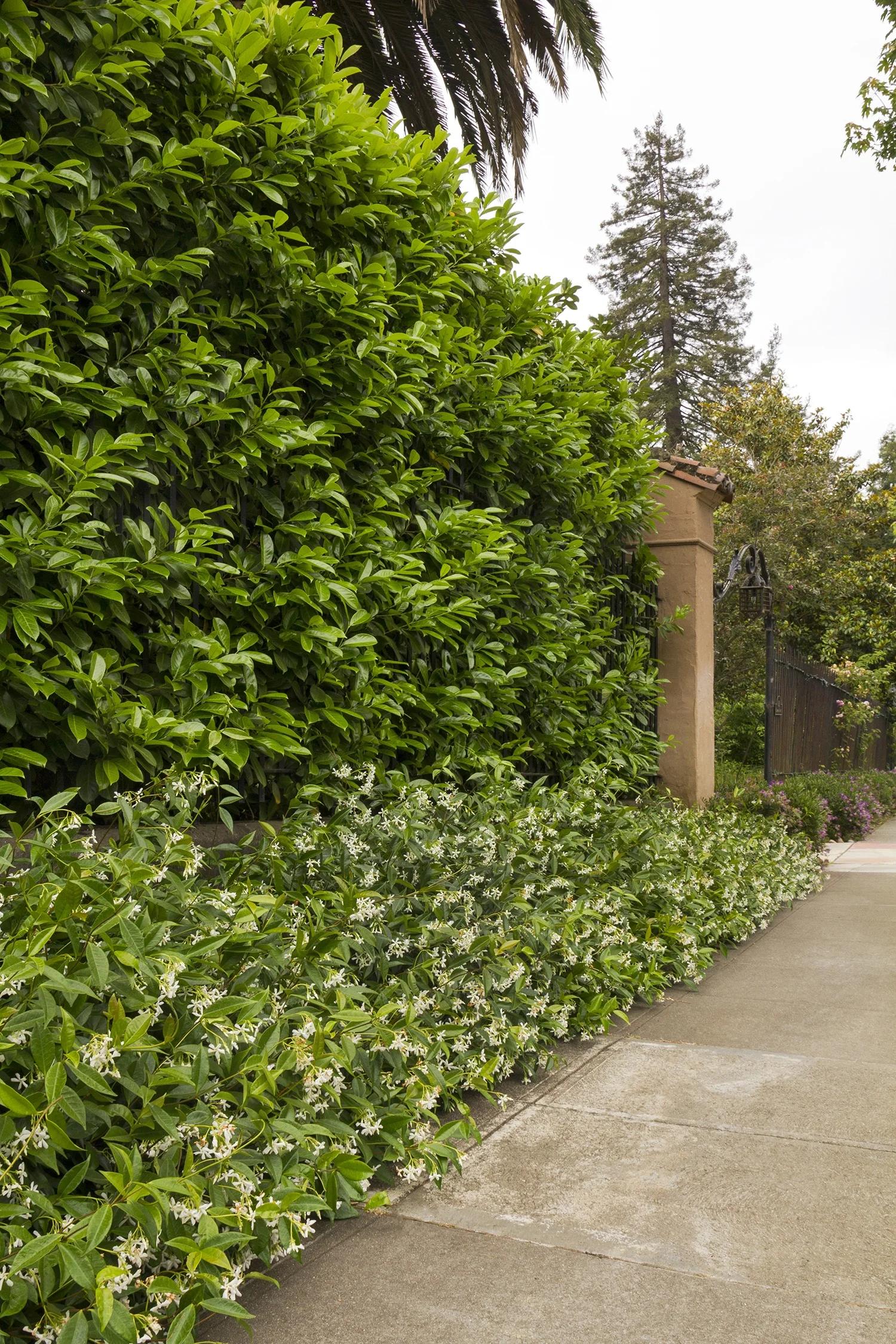
English Laurel
Prunus laurocerasus
Pronunciation: PROO-nus lar-oh-ser-AY-sus
SKU #06705
LIGHT:
Full sun, Partial sun
WATER:
Water when top 2 inches of soil is dry.
SIZE:
Quickly reaches 12 ft. tall, 8 ft. wide; larger with age.

Retailers Near You
Ready to Grow?
Ship Monrovia plants directly to your door. Browse a curated selection available online.
Shop Now >This Plant's Growing Zones: 6-9
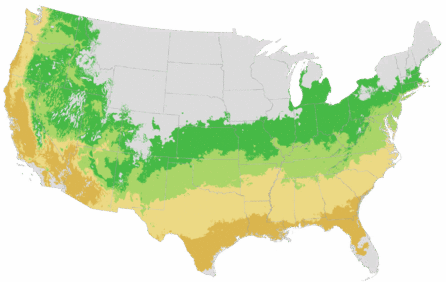
Your USDA Cold Hardiness Zone:
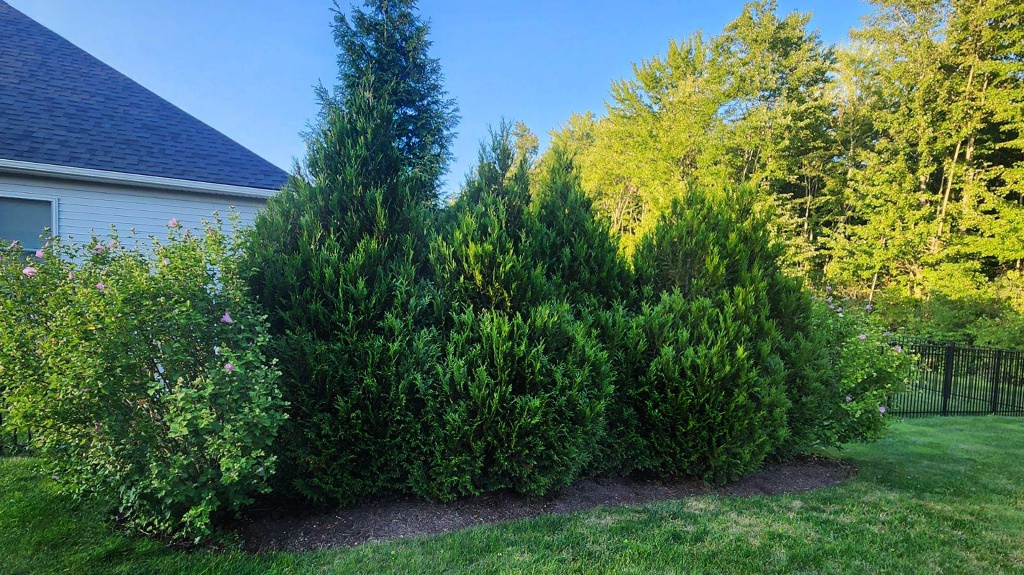
| Description | A large evergreen shrub with dense, erect branches and handsome rich green foliage. Tiny spring flowers have a sweet fragrance. A popular choice for formally pruned hedges, group plantings or privacy screens. Tolerates salt spray. |
|---|---|
| Bloom Time | Spring |
| Deciduous/Evergreen | Evergreen |
| Special Features | Ornamental Berries, Attracts Pollinators, Fast Growing, Benefits Birds |
| Problems/Solutions | Coastal Exposure, Dry Shade, Tolerates Urban Pollution, Road Salt Tolerant |
| Growth Rate | Fast |
| Growth Habit | Spreading |
| Flower Attributes | Fragrant, Showy Flowers |
| Landscape Use | Border, Hedge, Privacy Screen, Windbreak |
| Design Ideas | Even though this evergreen's leaves are large, they recover quickly from shearing, making this a fine choice for a formal, sheared hedge. Also makes an outstanding tree in the landscape with fragrant flowers and fruit that attract birds. |
| Flower Color | White |
| Foliage Color | Green |
| Companion Plants | Japanese Maple (Acer palmatum); Heavenly Bamboo (Nandina); Holly (Ilex); Lilyturf (Liriope); Euonymus (Euonymus) |
| Care Instructions | Thrives in slightly deep, fertile, moist, humusy, well-drained soil; tolerates poor, sandy, or clay soils. Prefers more sun in cool climates, more shade in warmer areas. Water deeply, regularly in first growing season to establish root system. Once established, reduce frequency; tolerates dry shade. Feed in early spring. Prune after flowering to shape. |
| History | The cherry laurel is a beautiful evergreen native to Europe and parts of Asia Minor. It was brought into cultivation early on around 1576. The original species was Laurocerausus officinalis, classified by Johann Roemer, 1763-1819 of Switzerland. It was simultaneously classified by Linnaeus into genus Prunus utilizing the former inaccurate genus name of Roemer. It was imported into the United States in colonial times and since a number of varietal forms have been developed for increased cold hardiness. It remains widely grown, particularly in the south and other mild winter regions. |
Details
| Description | A large evergreen shrub with dense, erect branches and handsome rich green foliage. Tiny spring flowers have a sweet fragrance. A popular choice for formally pruned hedges, group plantings or privacy screens. Tolerates salt spray. |
|---|---|
| Bloom Time | Spring |
| Deciduous/Evergreen | Evergreen |
| Special Features | Ornamental Berries, Attracts Pollinators, Fast Growing, Benefits Birds |
| Problems/Solutions | Coastal Exposure, Dry Shade, Tolerates Urban Pollution, Road Salt Tolerant |
| Growth Rate | Fast |
| Growth Habit | Spreading |
| Flower Attributes | Fragrant, Showy Flowers |
Style
| Landscape Use | Border, Hedge, Privacy Screen, Windbreak |
|---|---|
| Design Ideas | Even though this evergreen's leaves are large, they recover quickly from shearing, making this a fine choice for a formal, sheared hedge. Also makes an outstanding tree in the landscape with fragrant flowers and fruit that attract birds. |
| Flower Color | White |
| Foliage Color | Green |
| Companion Plants | Japanese Maple (Acer palmatum); Heavenly Bamboo (Nandina); Holly (Ilex); Lilyturf (Liriope); Euonymus (Euonymus) |
Care
| Care Instructions | Thrives in slightly deep, fertile, moist, humusy, well-drained soil; tolerates poor, sandy, or clay soils. Prefers more sun in cool climates, more shade in warmer areas. Water deeply, regularly in first growing season to establish root system. Once established, reduce frequency; tolerates dry shade. Feed in early spring. Prune after flowering to shape. |
|---|
History
| History | The cherry laurel is a beautiful evergreen native to Europe and parts of Asia Minor. It was brought into cultivation early on around 1576. The original species was Laurocerausus officinalis, classified by Johann Roemer, 1763-1819 of Switzerland. It was simultaneously classified by Linnaeus into genus Prunus utilizing the former inaccurate genus name of Roemer. It was imported into the United States in colonial times and since a number of varietal forms have been developed for increased cold hardiness. It remains widely grown, particularly in the south and other mild winter regions. |
|---|
Retailers Near You
About Us
We have been pioneers and craftsmen in the art of growing plants for 100 years. Since our founding in Southern California by Harry E. Rosedale, Sr. in 1926, we have been absolutely dedicated and obsessed with quality.
We have been pioneers and craftsmen in the art of growing plants for nearly 100 years. Since our founding in Southern California by Harry E. Rosedale, Sr. in 1926, we have been absolutely dedicated and obsessed with quality.