
You're growing in this Zip Code:
Change LocationDiscover Plants for Your Area
Evening Glow Mirror Plant
Coprosma 'Evening Glow'
Pronunciation: kop-ROS-muh
SKU #08275
LIGHT:
Full sun, Partial sun
WATER:
Water when top 2 inches of soil is dry.
SIZE:
Moderate growing; reaches 5 ft. tall, 3 to 4 ft. wide.

Retailers Near You
Ready to Grow?
Ship Monrovia plants directly to your door. Browse a curated selection available online.
Shop Now >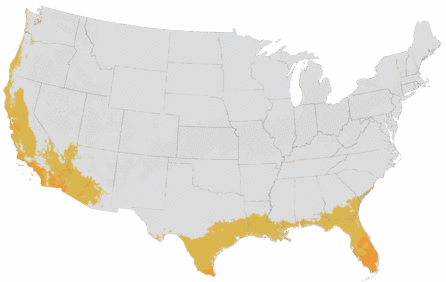

| Description | Very glossy green leaves have a bright golden variegation in spring and summer with fantastic rusty orange-red fall and winter color. An excellent landscape shrub or small clipped hedge with a naturally upright, pyramidal shape. Great for mild winter areas. Adds great color to patio containers. Evergreen. |
|---|---|
| Bloom Time | Inconspicuous; prized for foliage. |
| Deciduous/Evergreen | Evergreen |
| Special Features | Dramatic Foliage Color |
| Problems/Solutions | Coastal Exposure |
| Growth Rate | Moderate |
| Landscape Use | Border, Hedge |
| Design Ideas | Mirror plants are the stars of the new high impact foliage and tropical color gardens for their year around impact. Makes a fine foundation plant to point out entries and architectural features. Also offers multi season interest in short range compositions. Use in shrub or mixed borders to provide structure against darker backgrounds and deep green foliage. Well sized for framing art or fountains with a nest of attractive bright foliage. Plant as an informal hedge or barrier to separate spaces. |
| Foliage Color | Multicolored |
| Companion Plants | Cordyline (Cordyline); Mandevilla (Mandevilla); Mondo Grass (Ophiopogon); Fountain Grass (Pennisetum);Hibiscus (Hibiscus) |
| Care Instructions | Grows easily in average to poor, neutral to slightly acidic, well-drained soils. Water deeply, regularly during the first growing season to establish an extensive root system; once established, reduce frequency. Feed with a general purpose fertilizer before new growth begins in spring. For a tidy, neat appearance, prune annually to shape. |
| History | Across the South Pacific in Australia, New Zealand, and Borneo are about 60 species of this shiny leaf shrub. The genus was classified by the German, Johann Reinhold Forster in the late 18th century. Some species of Coprosma carry an unusual "catty"odor which led Forster to derive this genus name from the Greek for a fetid smell. One of the most famous collectors of Coprosma species was I. Bauer, who traveled New Zealand in 1804-1805. This cultivar is largely derived from robust but highly variable C. australis, a species introduced from New Zealand in 1823. Other qualities may be credited to a half dozen other species in cultivation. This variegated hybrid was introduced in New Zealand, and introduced in the U.S. by Monrovia Nursery Company, Azusa, California. |
| Lore | In the South Pacific and New Zealand, indigenous peoples use the wood and inner bark of coprosma as a yellow dye that requires no mordant. The leaves are used for an antibacterial wound poultice. Seeds are ground as a coffee substitute. |
Details
| Description | Very glossy green leaves have a bright golden variegation in spring and summer with fantastic rusty orange-red fall and winter color. An excellent landscape shrub or small clipped hedge with a naturally upright, pyramidal shape. Great for mild winter areas. Adds great color to patio containers. Evergreen. |
|---|---|
| Bloom Time | Inconspicuous; prized for foliage. |
| Deciduous/Evergreen | Evergreen |
| Special Features | Dramatic Foliage Color |
| Problems/Solutions | Coastal Exposure |
| Growth Rate | Moderate |
Style
| Landscape Use | Border, Hedge |
|---|---|
| Design Ideas | Mirror plants are the stars of the new high impact foliage and tropical color gardens for their year around impact. Makes a fine foundation plant to point out entries and architectural features. Also offers multi season interest in short range compositions. Use in shrub or mixed borders to provide structure against darker backgrounds and deep green foliage. Well sized for framing art or fountains with a nest of attractive bright foliage. Plant as an informal hedge or barrier to separate spaces. |
| Foliage Color | Multicolored |
| Companion Plants | Cordyline (Cordyline); Mandevilla (Mandevilla); Mondo Grass (Ophiopogon); Fountain Grass (Pennisetum);Hibiscus (Hibiscus) |
Care
| Care Instructions | Grows easily in average to poor, neutral to slightly acidic, well-drained soils. Water deeply, regularly during the first growing season to establish an extensive root system; once established, reduce frequency. Feed with a general purpose fertilizer before new growth begins in spring. For a tidy, neat appearance, prune annually to shape. |
|---|
History
| History | Across the South Pacific in Australia, New Zealand, and Borneo are about 60 species of this shiny leaf shrub. The genus was classified by the German, Johann Reinhold Forster in the late 18th century. Some species of Coprosma carry an unusual "catty"odor which led Forster to derive this genus name from the Greek for a fetid smell. One of the most famous collectors of Coprosma species was I. Bauer, who traveled New Zealand in 1804-1805. This cultivar is largely derived from robust but highly variable C. australis, a species introduced from New Zealand in 1823. Other qualities may be credited to a half dozen other species in cultivation. This variegated hybrid was introduced in New Zealand, and introduced in the U.S. by Monrovia Nursery Company, Azusa, California. |
|---|---|
| Lore | In the South Pacific and New Zealand, indigenous peoples use the wood and inner bark of coprosma as a yellow dye that requires no mordant. The leaves are used for an antibacterial wound poultice. Seeds are ground as a coffee substitute. |
Frequently asked questions
Does Evening Glow Mirror Plant produce flowers?
Inconspicuous; prized for foliage.
Is Evening Glow Mirror Plant evergreen or deciduous?
Evening Glow Mirror Plant is Evergreen.
What are the special features of Evening Glow Mirror Plant?
Evening Glow Mirror Plant is Dramatic Foliage Color.
Is Evening Glow Mirror Plant resistant to pests or animals?
Coastal Exposure
How fast does Evening Glow Mirror Plant grow?
Evening Glow Mirror Plant has a Moderate growth rate.
Where can I use Evening Glow Mirror Plant in my landscape?
Evening Glow Mirror Plant is suitable for: Border, Hedge.
How can I use Evening Glow Mirror Plant in my garden design?
Mirror plants are the stars of the new high impact foliage and tropical color gardens for their year around impact. Makes a fine foundation plant to point out entries and architectural features. Also offers multi season interest in short range compositions. Use in shrub or mixed borders to provide structure against darker backgrounds and deep green foliage. Well sized for framing art or fountains with a nest of attractive bright foliage. Plant as an informal hedge or barrier to separate spaces.
What color is the foliage of Evening Glow Mirror Plant?
Evening Glow Mirror Plant has Multicolored foliage.
What plants grow well with Evening Glow Mirror Plant?
Good companion plants for Evening Glow Mirror Plant include: Cordyline (Cordyline); Mandevilla (Mandevilla); Mondo Grass (Ophiopogon); Fountain Grass (Pennisetum);Hibiscus (Hibiscus).
How do I care for Evening Glow Mirror Plant?
Grows easily in average to poor, neutral to slightly acidic, well-drained soils. Water deeply, regularly during the first growing season to establish an extensive root system; once established, reduce frequency. Feed with a general purpose fertilizer before new growth begins in spring. For a tidy, neat appearance, prune annually to shape.
What is the history of Evening Glow Mirror Plant?
Across the South Pacific in Australia, New Zealand, and Borneo are about 60 species of this shiny leaf shrub. The genus was classified by the German, Johann Reinhold Forster in the late 18th century. Some species of Coprosma carry an unusual "catty"odor which led Forster to derive this genus name from the Greek for a fetid smell. One of the most famous collectors of Coprosma species was I. Bauer, who traveled New Zealand in 1804-1805. This cultivar is largely derived from robust but highly variable C. australis, a species introduced from New Zealand in 1823. Other qualities may be credited to a half dozen other species in cultivation. This variegated hybrid was introduced in New Zealand, and introduced in the U.S. by Monrovia Nursery Company, Azusa, California.
Retailers Near You
About Us
We have been pioneers and craftsmen in the art of growing plants for 100 years. Since our founding in Southern California by Harry E. Rosedale, Sr. in 1926, we have been absolutely dedicated and obsessed with quality.
We have been pioneers and craftsmen in the art of growing plants for nearly 100 years. Since our founding in Southern California by Harry E. Rosedale, Sr. in 1926, we have been absolutely dedicated and obsessed with quality.