
You're growing in this Zip Code:
Change LocationDiscover Plants for Your Area
Fruiting Pomegranate
Punica granatum 'Wonderful'
Pronunciation: PEW-ni-ka gra-NAY-tum
SKU #06745
LIGHT:
Full sun
WATER:
Water when top 2 inches of soil is dry.
SIZE:
Moderate growing; reaches 10 ft. tall and wide.

Retailers Near You
Ready to Grow?
Ship Monrovia plants directly to your door. Browse a curated selection available online.
Shop Now >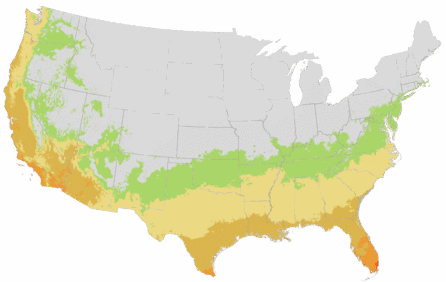
| Description | An improved variety with fount-like branches that produces large orange-red blooms in summer and large, delicious, burnished red fruit in early fall. A popular variety for making pomegranate juice. Beautiful and versatile, works well as a large shrub, small tree, or espalier. Fruits best in warm semi-arid climates. Deciduous. |
|---|---|
| Bloom Time | Summer |
| Deciduous/Evergreen | Deciduous |
| Special Features | Attracts Hummingbirds, Easy Care, Fall Color, Showy Fruit, Waterwise, Edible, Attracts Pollinators |
| Problems/Solutions | Deer Resistant, Rabbit Resistant |
| Growth Rate | Moderate |
| Growth Habit | Vase-Shaped |
| Flower Attributes | Showy Flowers |
| Landscape Use | Container, Espalier, Hedge |
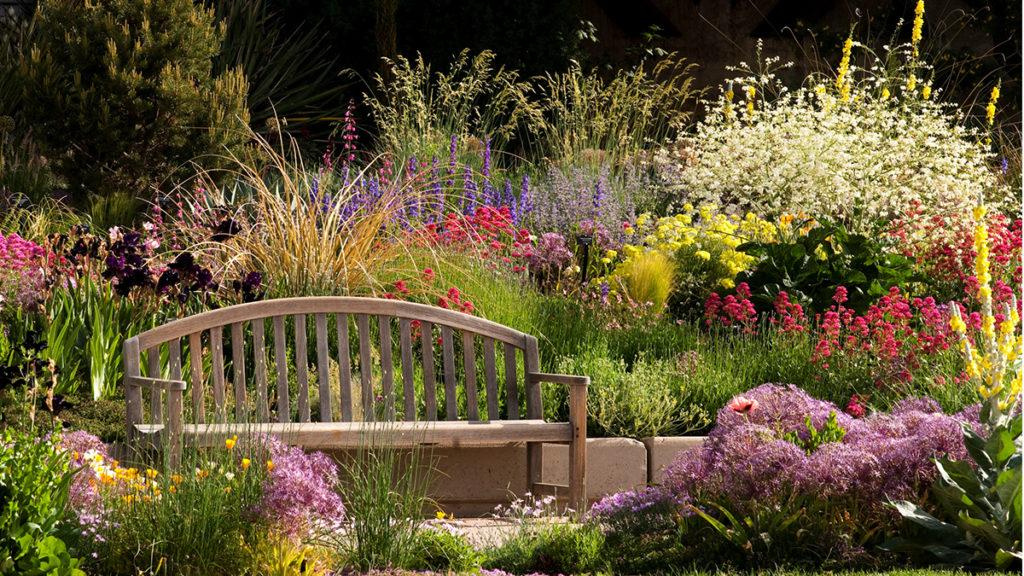
| Design Ideas | Pomegranate is exceptional for Mediterranean style gardens, low-water and even xeriscape settings, though the fruit is of highest quality with supplemental water during flowering and fruiting season. This is an excellent choice for a courtyard specimen. Grow in fruit orchard or kitchen gardens. Good fruit producer in very hot gardens with difficult soils. |
| Flower Color | Red |
| Foliage Color | Dark Green |
| Foliage Fall Color | Yellow |
| Companion Plants | Lavender (Lavandula); Sweet Bay (Laurus); Rosemary (Rosmarinus); Olive (Olea); Meyer Lemon (Citrus) |
| Care Instructions | Provide average, well-drained soil. Water deeply, regularly during the first few growing seasons to establish an extensive root system. When established, reduce frequency after fruit ripens, and increase during bloom period; tolerates moderate drought. Fertilize before new growth appears in spring. Prune annually, to shape. |
| Lore | The single genus of the family Punciaceae was classified by Linnaeus who Latinized the ancient name, Malum puncium, which translates to "apple of Carthage" which was its early common name. Pomegranate fruit came to symbolize fertility due to its abundance of seeds. A culinary staple in Spanish and Middle Eastern cuisine, the pomegranate has emerged as a popular source of Vitamins C and B5, potassium and antioxidant polyphenols. |
Details
| Description | An improved variety with fount-like branches that produces large orange-red blooms in summer and large, delicious, burnished red fruit in early fall. A popular variety for making pomegranate juice. Beautiful and versatile, works well as a large shrub, small tree, or espalier. Fruits best in warm semi-arid climates. Deciduous. |
|---|---|
| Bloom Time | Summer |
| Deciduous/Evergreen | Deciduous |
| Special Features | Attracts Hummingbirds, Easy Care, Fall Color, Showy Fruit, Waterwise, Edible, Attracts Pollinators |
| Problems/Solutions | Deer Resistant, Rabbit Resistant |
| Growth Rate | Moderate |
| Growth Habit | Vase-Shaped |
| Flower Attributes | Showy Flowers |
Style
| Landscape Use | Container, Espalier, Hedge |
|---|---|
| Design Ideas | Pomegranate is exceptional for Mediterranean style gardens, low-water and even xeriscape settings, though the fruit is of highest quality with supplemental water during flowering and fruiting season. This is an excellent choice for a courtyard specimen. Grow in fruit orchard or kitchen gardens. Good fruit producer in very hot gardens with difficult soils. |
| Flower Color | Red |
| Foliage Color | Dark Green |
| Foliage Fall Color | Yellow |
| Companion Plants | Lavender (Lavandula); Sweet Bay (Laurus); Rosemary (Rosmarinus); Olive (Olea); Meyer Lemon (Citrus) |
Care
| Care Instructions | Provide average, well-drained soil. Water deeply, regularly during the first few growing seasons to establish an extensive root system. When established, reduce frequency after fruit ripens, and increase during bloom period; tolerates moderate drought. Fertilize before new growth appears in spring. Prune annually, to shape. |
|---|
History
| Lore | The single genus of the family Punciaceae was classified by Linnaeus who Latinized the ancient name, Malum puncium, which translates to "apple of Carthage" which was its early common name. Pomegranate fruit came to symbolize fertility due to its abundance of seeds. A culinary staple in Spanish and Middle Eastern cuisine, the pomegranate has emerged as a popular source of Vitamins C and B5, potassium and antioxidant polyphenols. |
|---|
Retailers Near You
About Us
We have been pioneers and craftsmen in the art of growing plants for 100 years. Since our founding in Southern California by Harry E. Rosedale, Sr. in 1926, we have been absolutely dedicated and obsessed with quality.
We have been pioneers and craftsmen in the art of growing plants for nearly 100 years. Since our founding in Southern California by Harry E. Rosedale, Sr. in 1926, we have been absolutely dedicated and obsessed with quality.