
You're growing in this Zip Code:
Change LocationDiscover Plants for Your Area
Gold Standard Hosta
Hosta fortunei 'Gold Standard'
Pronunciation: HOSS-tuh for-TOO-nee-eye
SKU #04179
LIGHT:
Filtered sun, Full shade, Partial shade
WATER:
Keep soil consistently moist but not soggy.
SIZE:
Moderate growing; forms foliage clump 2 to 3 ft. tall, 3 ft. wide.

Retailers Near You
Ready to Grow?
Ship Monrovia plants directly to your door. Browse a curated selection available online.
Shop Now >
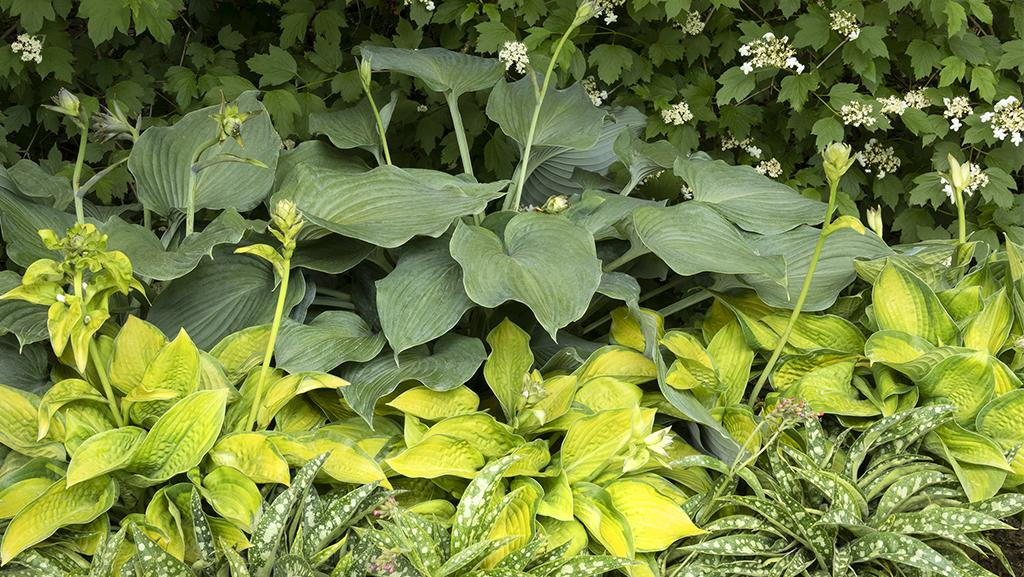
| Description | The lovely, heart-shaped foliage emerges green, then turns golden yellow with a dark green margin, creating a dynamic contrast to solid green foliage plants. Showy, pale lavender flowers emerge on tall spikes above the foliage in late spring. Adds stunning color to a shaded border or woodland garden. An herbaceous perennial. |
|---|---|
| Bloom Time | Late spring |
| Deciduous/Evergreen | Herbaceous |
| Special Features | Attracts Hummingbirds, Dramatic Foliage Color, Easy Care, Attracts Pollinators |
| Problems/Solutions | Erosion Control |
| Growth Rate | Moderate |
| Growth Habit | Clumping |
| Flower Attributes | Fragrant, Showy Flowers |
| Landscape Use | Border, Container |
| Design Ideas | This sizable golden Hosta displays green, gold and darker emerald all at the same time. These variations are perfect for massing with only one type of plant. It also has enough height to provide a background for smaller woodland perennials or to fill in between shrubs. Also sufficiently tall to use as a cover along north-facing foundations, edges of terraces, patios and low decks, and to line steps. |
| Flower Color | Purple |
| Foliage Color | Yellow |
| Companion Plants | English Laurel (Prunus laurocerasus); Ligularia (Ligularia); Azalea (Azalea); Yaupon Holly (Ilex vomitoria); Bleeding Heart (Dicentra) |
| Care Instructions | Provide slightly acidic, evenly moist, well-drained, humusy soil. Avoid harsh sun exposures. Water deeply, regularly in first growing season to establish an extensive root system; once established, reduce frequency. Remove old, faded foliage before new leaves emerge in early spring. |
| History | This genus was named for Dr. N. T. Host, a contemporary of Austrian Leopold Trattinick. The genus to this day contains about forty mostly native to China and Japan. Most modern hybrids such as this are derived from H. Plantaginea often influenced by H. undulata breeding This is among the first widely grown fragrant flowered hosta variety introduced in 1950. |
Details
| Description | The lovely, heart-shaped foliage emerges green, then turns golden yellow with a dark green margin, creating a dynamic contrast to solid green foliage plants. Showy, pale lavender flowers emerge on tall spikes above the foliage in late spring. Adds stunning color to a shaded border or woodland garden. An herbaceous perennial. |
|---|---|
| Bloom Time | Late spring |
| Deciduous/Evergreen | Herbaceous |
| Special Features | Attracts Hummingbirds, Dramatic Foliage Color, Easy Care, Attracts Pollinators |
| Problems/Solutions | Erosion Control |
| Growth Rate | Moderate |
| Growth Habit | Clumping |
| Flower Attributes | Fragrant, Showy Flowers |
Style
| Landscape Use | Border, Container |
|---|---|
| Design Ideas | This sizable golden Hosta displays green, gold and darker emerald all at the same time. These variations are perfect for massing with only one type of plant. It also has enough height to provide a background for smaller woodland perennials or to fill in between shrubs. Also sufficiently tall to use as a cover along north-facing foundations, edges of terraces, patios and low decks, and to line steps. |
| Flower Color | Purple |
| Foliage Color | Yellow |
| Companion Plants | English Laurel (Prunus laurocerasus); Ligularia (Ligularia); Azalea (Azalea); Yaupon Holly (Ilex vomitoria); Bleeding Heart (Dicentra) |
Care
| Care Instructions | Provide slightly acidic, evenly moist, well-drained, humusy soil. Avoid harsh sun exposures. Water deeply, regularly in first growing season to establish an extensive root system; once established, reduce frequency. Remove old, faded foliage before new leaves emerge in early spring. |
|---|
History
| History | This genus was named for Dr. N. T. Host, a contemporary of Austrian Leopold Trattinick. The genus to this day contains about forty mostly native to China and Japan. Most modern hybrids such as this are derived from H. Plantaginea often influenced by H. undulata breeding This is among the first widely grown fragrant flowered hosta variety introduced in 1950. |
|---|
Frequently asked questions
Does Gold Standard Hosta produce flowers?
Late spring
Is Gold Standard Hosta evergreen or deciduous?
Gold Standard Hosta is Herbaceous.
What are the special features of Gold Standard Hosta?
Gold Standard Hosta is Attracts Hummingbirds, Dramatic Foliage Color, Easy Care, Attracts Pollinators.
Is Gold Standard Hosta resistant to pests or animals?
Erosion Control
How fast does Gold Standard Hosta grow?
Gold Standard Hosta has a Moderate growth rate.
What is the growth habit of Gold Standard Hosta?
Gold Standard Hosta grows in an Clumping habit.
Where can I use Gold Standard Hosta in my landscape?
Gold Standard Hosta is suitable for: Border, Container.
How can I use Gold Standard Hosta in my garden design?
This sizable golden Hosta displays green, gold and darker emerald all at the same time. These variations are perfect for massing with only one type of plant. It also has enough height to provide a background for smaller woodland perennials or to fill in between shrubs. Also sufficiently tall to use as a cover along north-facing foundations, edges of terraces, patios and low decks, and to line steps.
What color are Gold Standard Hosta flowers?
Gold Standard Hosta produces Purple flowers.
What color is the foliage of Gold Standard Hosta?
Gold Standard Hosta has Yellow foliage.
What plants grow well with Gold Standard Hosta?
Good companion plants for Gold Standard Hosta include: English Laurel (Prunus laurocerasus); Ligularia (Ligularia); Azalea (Azalea); Yaupon Holly (Ilex vomitoria); Bleeding Heart (Dicentra).
How do I care for Gold Standard Hosta?
Provide slightly acidic, evenly moist, well-drained, humusy soil. Avoid harsh sun exposures. Water deeply, regularly in first growing season to establish an extensive root system; once established, reduce frequency. Remove old, faded foliage before new leaves emerge in early spring.
What is the history of Gold Standard Hosta?
This genus was named for Dr. N. T. Host, a contemporary of Austrian Leopold Trattinick. The genus to this day contains about forty mostly native to China and Japan. Most modern hybrids such as this are derived from H. Plantaginea often influenced by H. undulata breeding This is among the first widely grown fragrant flowered hosta variety introduced in 1950.
Retailers Near You
About Us
We have been pioneers and craftsmen in the art of growing plants for 100 years. Since our founding in Southern California by Harry E. Rosedale, Sr. in 1926, we have been absolutely dedicated and obsessed with quality.
We have been pioneers and craftsmen in the art of growing plants for nearly 100 years. Since our founding in Southern California by Harry E. Rosedale, Sr. in 1926, we have been absolutely dedicated and obsessed with quality.