
You're growing in this Zip Code:
Change LocationDiscover Plants for Your Area
Haas Improved Manzanillo Fruiting Olive
Olea europaea 'Haas Improved Manzanillo'
Pronunciation: OH-lee-a yoo-ROH-pee-ah
SKU #06008
LIGHT:
Full sun
WATER:
Once established, water if very dry.
SIZE:
Slowly reaches 15 to 20 ft. tall, 10 to 15 ft. wide.

Retailers Near You
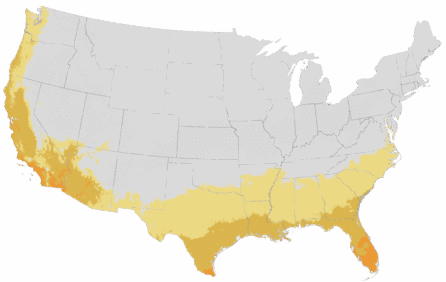

| Description | A stately small landscape specimen, distinguished by its large spherical olives with smaller pits, yielding more flesh than the popular Manzanillo. Evergreen foliage is more finely textured, with dense, arching branches on a more compact, rounded form. Blooms and matures about a week earlier. Olives are useful stuffed, salted green, black, or for oil. |
|---|---|
| Bloom Time | Late spring |
| Deciduous/Evergreen | Evergreen |
| Special Features | Dramatic Foliage Color, Easy Care, Waterwise, Edible, Compact Form |
| Problems/Solutions | Coastal Exposure, Deer Resistant |
| Growth Rate | Slow |
| Patent Act | Asexual reproduction of plants protected by the Plant Patent Act is prohibited during the life of the patent. |
| Landscape Use | Container, Suitable for Topiary |
| Flower Color | White |
| Foliage Color | Gray-green |
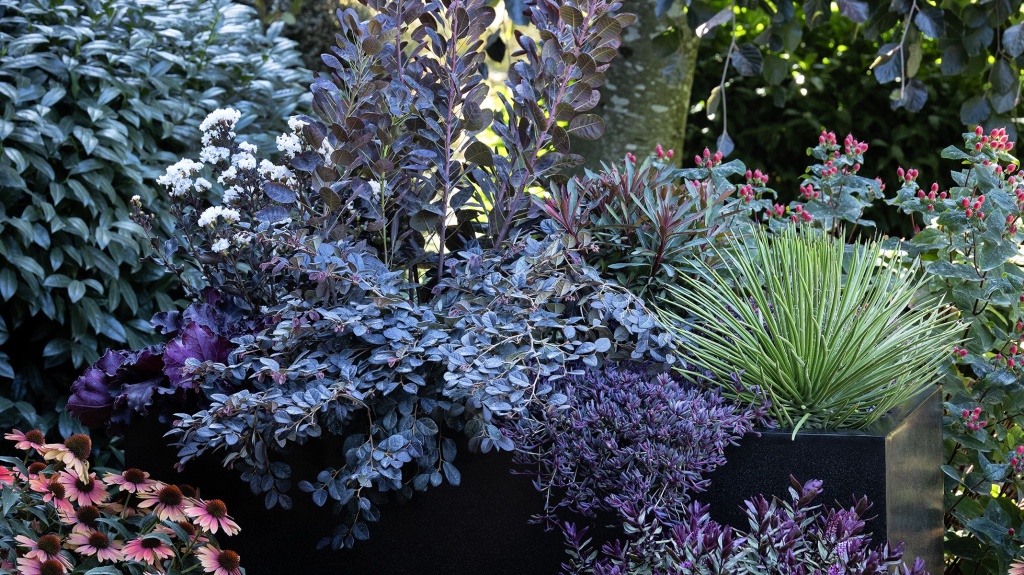
| Companion Plants | Italian Cypress (Cupressus sempervirens); Pomegranate (Punica); Lavender (Lavandula); Chaste Tree (Vitex); Sea Lavender (Limonium); Rock Rose (Cistus) |
| Care Instructions | Thrives in average to lean, well-drained soils; tolerates high pH, poor soils. Water deeply, regularly in first few growing seasons to establish extensive root system. Once established in landscape, reduce frequency; heat and drought tolerant. Older trees are often more cold tolerant, to about 15 degrees F. Avoid pruning during periods of rainfall. |
| History | This variety was discovered by Alfred Haas in 1972 as a chance seedling tree growing near an orchard of Manzanillo variety olives near Lindsay, California, U.S. In addition to the differences in fruit to pit ratio, a tighter branching structure was noted, resulting in a shorter, stockier limb structure over Manzanillo, which would potentially be an advantage in mechanical harvesting. Selected for its merits when it reached maturity in 1981, it was reproduced by leaf cuttings and grafting of hardwood scions onto various rootstock. The fruit and tree characteristics of the progeny in all cases proved identical with the new variety. |
| Lore | The name for the genus is derived from the Latin word for this plant 'oliva'. Known as the "olive of Seville", the most common variety of Spanish olive is Manzanillo, the classic small green olive often sold salted in Spanish markets. It is also ranked as the world's number one table olive. The Manzanillo variety was imported to the U.S. from Spain in the late 1800s. Fruit color ranges from absinthe green to various shades of red, to black depending on stage of harvest. The name is often misspelled as Manzanilla. |
Details
| Description | A stately small landscape specimen, distinguished by its large spherical olives with smaller pits, yielding more flesh than the popular Manzanillo. Evergreen foliage is more finely textured, with dense, arching branches on a more compact, rounded form. Blooms and matures about a week earlier. Olives are useful stuffed, salted green, black, or for oil. |
|---|---|
| Bloom Time | Late spring |
| Deciduous/Evergreen | Evergreen |
| Special Features | Dramatic Foliage Color, Easy Care, Waterwise, Edible, Compact Form |
| Problems/Solutions | Coastal Exposure, Deer Resistant |
| Growth Rate | Slow |
| Patent Act | Asexual reproduction of plants protected by the Plant Patent Act is prohibited during the life of the patent. |
Style
| Landscape Use | Container, Suitable for Topiary |
|---|---|
| Flower Color | White |
| Foliage Color | Gray-green |
| Companion Plants | Italian Cypress (Cupressus sempervirens); Pomegranate (Punica); Lavender (Lavandula); Chaste Tree (Vitex); Sea Lavender (Limonium); Rock Rose (Cistus) |
Care
| Care Instructions | Thrives in average to lean, well-drained soils; tolerates high pH, poor soils. Water deeply, regularly in first few growing seasons to establish extensive root system. Once established in landscape, reduce frequency; heat and drought tolerant. Older trees are often more cold tolerant, to about 15 degrees F. Avoid pruning during periods of rainfall. |
|---|
History
| History | This variety was discovered by Alfred Haas in 1972 as a chance seedling tree growing near an orchard of Manzanillo variety olives near Lindsay, California, U.S. In addition to the differences in fruit to pit ratio, a tighter branching structure was noted, resulting in a shorter, stockier limb structure over Manzanillo, which would potentially be an advantage in mechanical harvesting. Selected for its merits when it reached maturity in 1981, it was reproduced by leaf cuttings and grafting of hardwood scions onto various rootstock. The fruit and tree characteristics of the progeny in all cases proved identical with the new variety. |
|---|---|
| Lore | The name for the genus is derived from the Latin word for this plant 'oliva'. Known as the "olive of Seville", the most common variety of Spanish olive is Manzanillo, the classic small green olive often sold salted in Spanish markets. It is also ranked as the world's number one table olive. The Manzanillo variety was imported to the U.S. from Spain in the late 1800s. Fruit color ranges from absinthe green to various shades of red, to black depending on stage of harvest. The name is often misspelled as Manzanilla. |
Retailers Near You
About Us
We have been pioneers and craftsmen in the art of growing plants for 100 years. Since our founding in Southern California by Harry E. Rosedale, Sr. in 1926, we have been absolutely dedicated and obsessed with quality.
We have been pioneers and craftsmen in the art of growing plants for nearly 100 years. Since our founding in Southern California by Harry E. Rosedale, Sr. in 1926, we have been absolutely dedicated and obsessed with quality.