
You're growing in this Zip Code:
Discover Plants for Your Area


Hania Clematis
Clematis hybrid 'Hania'
Pronunciation: KLEM-a-tis
SKU #03349
LIGHT:
Partial sun
WATER:
Water deeply when top inch of soil is dry.
SIZE:
Moderate growing; twining stems reach 4 to 6 ft. long.

Retailers Near You
Ready to Grow?
Ship Monrovia plants directly to your door. Browse a curated selection available online.
Shop Now >This Plant's Growing Zones: 4-9
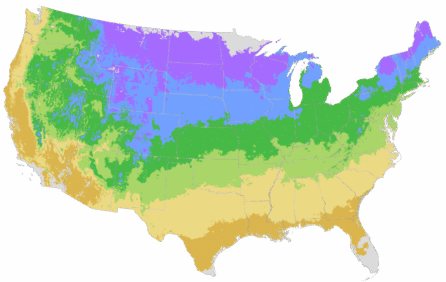
Your USDA Cold Hardiness Zone:
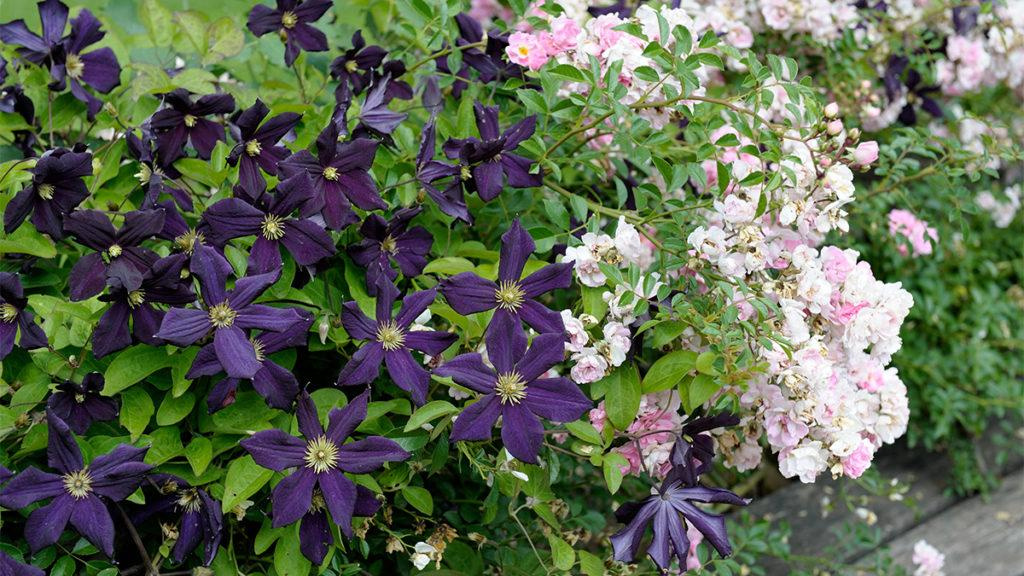
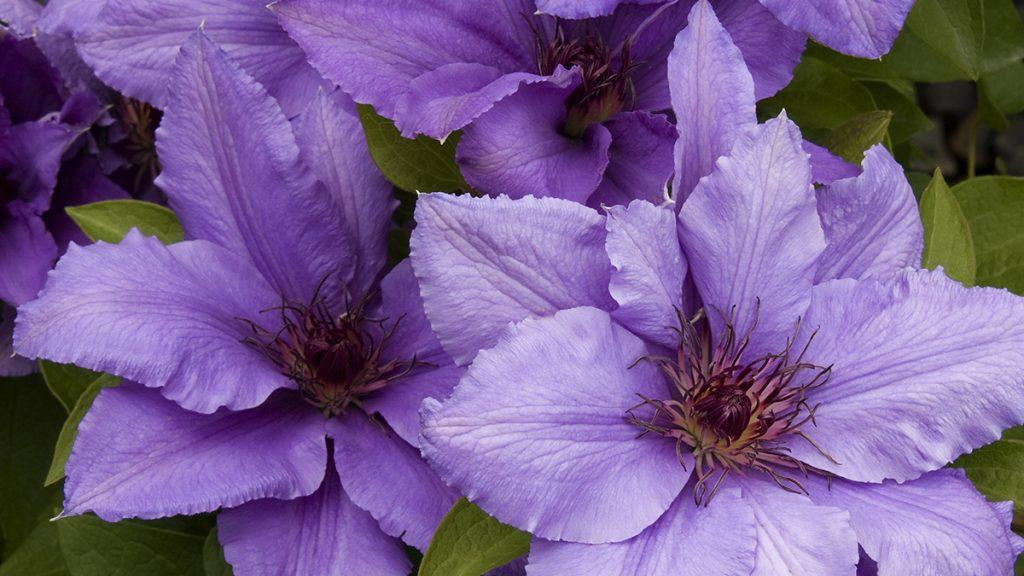
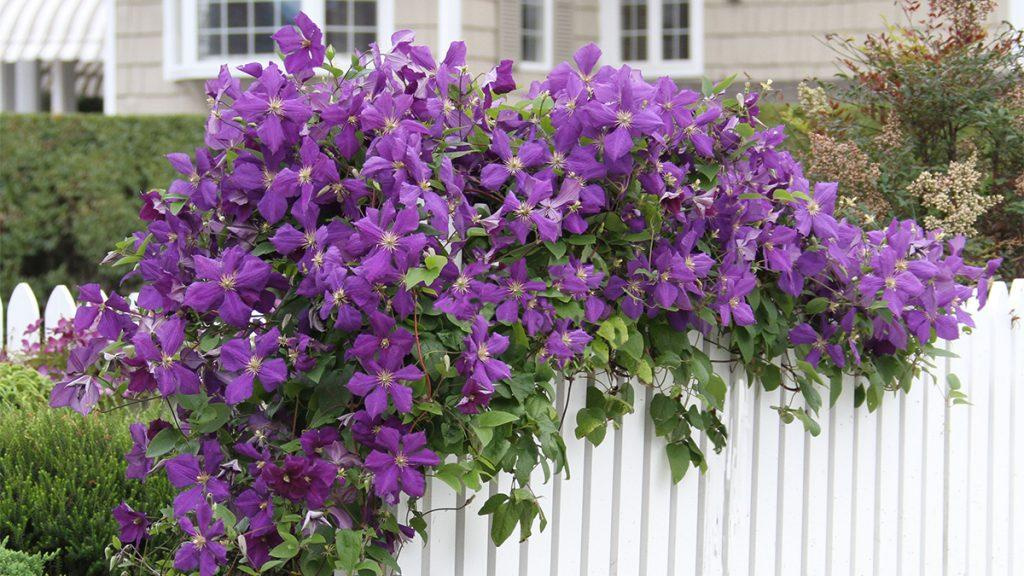
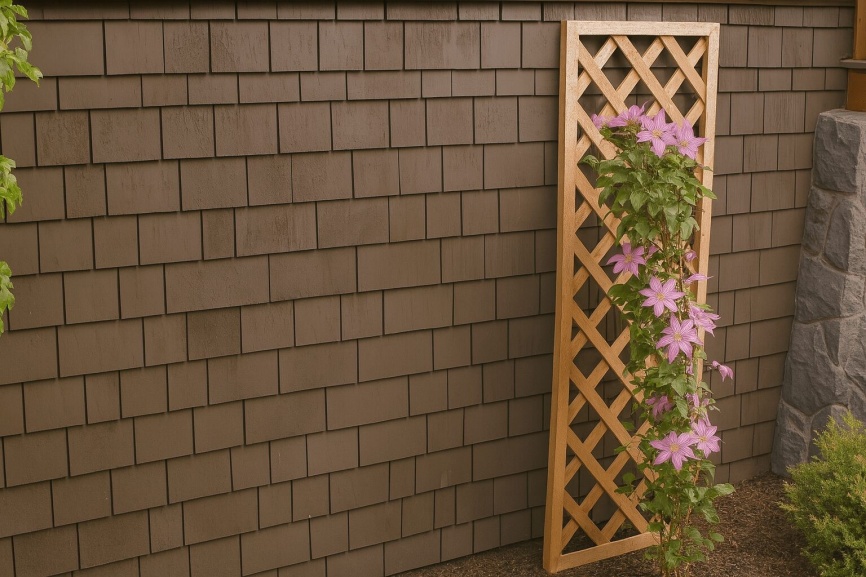
| Description | Striking large blooms with pale pink, undulating margins on velvety, red-violet petals profusely cover this more compact clematis variety. An early flowering variety that blooms in spring and again in late summer. A wonderful flowering vine for a patio container, trellis, or fence. Ideal for small spaces. Deciduous. Pruning Group: 2 |
|---|---|
| Bloom Time | Spring to midsummer; reblooms in late summer. |
| Deciduous/Evergreen | Deciduous |
| Special Features | Easy Care, Compact Form |
| Problems/Solutions | Black Walnut Tolerant |
| Growth Rate | Moderate |
| Growth Habit | Climbing |
| Flower Attributes | Flowers for Cutting, Long Bloom Season, Repeat Flowering, Showy Flowers |
| Landscape Use | Border, Container, Ground Cover |
| Design Ideas | Clematis is perhaps the most beautiful of all vines for training onto vertical treillage. This ruby colored beauty belongs in courtyards and around outdoor living spaces where the blossoms can be enjoyed close up. They are gorgeous spiraled up wood posts and classical Greek style columns. These plants are also draped over walls and fences in a mass of color. In the Old World they can be found trained into the branches of long dead trees for natural arbor. They are also used as groundcovers to cascade down banks and slopes, and to dangle off retaining wall edges. |
| Flower Color | Purplish-pink |
| Foliage Color | Green |
| Companion Plants | Japanese Maple (Acer); Climbing Rose (Rosa); Daylily (Hemerocallis); Hydrangea (Hydrangea); Butterfly Bush (Buddleja) |
| Care Instructions | Thrives in well-drained, lightly alkaline soil, with roots sheltered and top growth in the sun. Mulch to conserve moisture. Water deeply, regularly in first growing season to establish root system; reduce frequency once established. Feed regularly beginning in spring. Prune spent flowers to promote repeat bloom. Provide trellis or arbor support. Pruning Group: 2 |
| History | This cultivar is the result of the long tradition of clematis breeding in Poland where that nation's native species have played a large part in its evolution. This variety received a medal of honor in the 2002 Arboriculture Trade Fair. |
| Lore | This selection of clematis comes from the famed Clematis breeder Szcepan Marczynski from Poland and is named after his mother |
Details
| Description | Striking large blooms with pale pink, undulating margins on velvety, red-violet petals profusely cover this more compact clematis variety. An early flowering variety that blooms in spring and again in late summer. A wonderful flowering vine for a patio container, trellis, or fence. Ideal for small spaces. Deciduous. Pruning Group: 2 |
|---|---|
| Bloom Time | Spring to midsummer; reblooms in late summer. |
| Deciduous/Evergreen | Deciduous |
| Special Features | Easy Care, Compact Form |
| Problems/Solutions | Black Walnut Tolerant |
| Growth Rate | Moderate |
| Growth Habit | Climbing |
| Flower Attributes | Flowers for Cutting, Long Bloom Season, Repeat Flowering, Showy Flowers |
Style
| Landscape Use | Border, Container, Ground Cover |
|---|---|
| Design Ideas | Clematis is perhaps the most beautiful of all vines for training onto vertical treillage. This ruby colored beauty belongs in courtyards and around outdoor living spaces where the blossoms can be enjoyed close up. They are gorgeous spiraled up wood posts and classical Greek style columns. These plants are also draped over walls and fences in a mass of color. In the Old World they can be found trained into the branches of long dead trees for natural arbor. They are also used as groundcovers to cascade down banks and slopes, and to dangle off retaining wall edges. |
| Flower Color | Purplish-pink |
| Foliage Color | Green |
| Companion Plants | Japanese Maple (Acer); Climbing Rose (Rosa); Daylily (Hemerocallis); Hydrangea (Hydrangea); Butterfly Bush (Buddleja) |
Care
| Care Instructions | Thrives in well-drained, lightly alkaline soil, with roots sheltered and top growth in the sun. Mulch to conserve moisture. Water deeply, regularly in first growing season to establish root system; reduce frequency once established. Feed regularly beginning in spring. Prune spent flowers to promote repeat bloom. Provide trellis or arbor support. Pruning Group: 2 |
|---|
History
| History | This cultivar is the result of the long tradition of clematis breeding in Poland where that nation's native species have played a large part in its evolution. This variety received a medal of honor in the 2002 Arboriculture Trade Fair. |
|---|---|
| Lore | This selection of clematis comes from the famed Clematis breeder Szcepan Marczynski from Poland and is named after his mother |
Retailers Near You
About Us
We have been pioneers and craftsmen in the art of growing plants for 100 years. Since our founding in Southern California by Harry E. Rosedale, Sr. in 1926, we have been absolutely dedicated and obsessed with quality.
We have been pioneers and craftsmen in the art of growing plants for nearly 100 years. Since our founding in Southern California by Harry E. Rosedale, Sr. in 1926, we have been absolutely dedicated and obsessed with quality.