
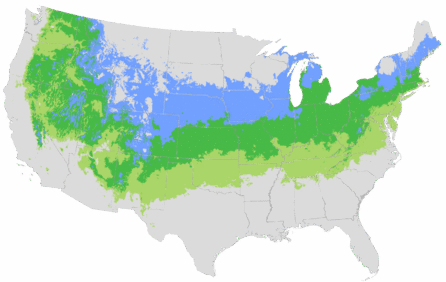
You're growing in this Zip Code:
Change LocationDiscover Plants for Your Area
Persian Ironwood
Parrotia persica
Pronunciation: par-ROH-ti-a PER-si-ka
SKU #06397
LIGHT:
Full sun, Partial sun
WATER:
Water when top 2 inches of soil is dry.
SIZE:
Moderate growing; reaches 20 to 40 ft. tall, 15 to 30 ft. wide.

Retailers Near You

| Description | An excellent small-scale shade tree with a colorful, spreading canopy of thick foliage that emerges reddish purple to bronze in spring and matures to glossy dark green in summer before turning vibrant shades of yellow, orange, and red in the fall. Attractive exfoliating bark boasts small red-anthered flowers on bare branches in late winter. Deciduous. |
|---|---|
| Bloom Time | Late winter to early spring |
| Deciduous/Evergreen | Deciduous |
| Special Features | Attractive Bark, Dramatic Foliage Color, Fall Color |
| Problems/Solutions | Tolerates Urban Pollution |
| Growth Rate | Moderate |
| Growth Habit | Rounded |
| Landscape Use | Shade Tree |
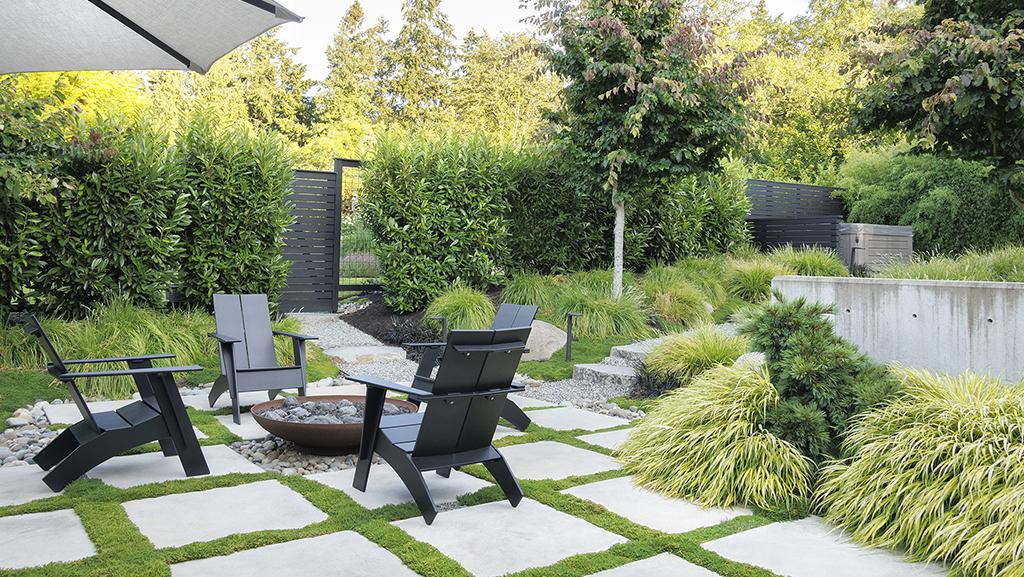
| Design Ideas | This great little tree should be used more often because of its most unique display of fall color. Excellent street tree or single front-yard tree for city gardens. Makes a powerful contrast against a background of dark evergreens. A lovely accent for water gardens or woodland settings. Large enough for shade in the backyard near a patio or terrace. Ideal counterbalance for spring color beside a gazebo shrouded in a flowering vine. Romantic color you can count on to give a cottage or country garden carefree autumn glory. |
| Flower Color | Red |
| Foliage Color | Dark Green |
| Foliage Fall Color | Red |
| Companion Plants | Hornbeam (Carpinus betulus); Pine (Pinus); Fothergilla (Fothergilla) |
| Care Instructions | Prefers slightly acidic, well-drained soils with consistent moisture in cooler climates, but adapts to a range of soil conditions and tolerates light shade in warmer regions. Water deeply, regularly during first growing season to establish an extensive root system; once established, reduce frequency. Fertilize in early spring. |
| History | Parrotia persica was introduced to Britain and North Americas circa 1840. |
| Lore | This tree is classified in the witch hazel family, Hammamelidaceae. While some sources report the genus Parrotia was inspired by colorful tropical birds, others indicate it was an homage to early 19th century German naturalist F.W. Parrot. This species originates in Iran and Iraq, formerly the Persian Empire, hence the species name. |
Details
| Description | An excellent small-scale shade tree with a colorful, spreading canopy of thick foliage that emerges reddish purple to bronze in spring and matures to glossy dark green in summer before turning vibrant shades of yellow, orange, and red in the fall. Attractive exfoliating bark boasts small red-anthered flowers on bare branches in late winter. Deciduous. |
|---|---|
| Bloom Time | Late winter to early spring |
| Deciduous/Evergreen | Deciduous |
| Special Features | Attractive Bark, Dramatic Foliage Color, Fall Color |
| Problems/Solutions | Tolerates Urban Pollution |
| Growth Rate | Moderate |
| Growth Habit | Rounded |
Style
| Landscape Use | Shade Tree |
|---|---|
| Design Ideas | This great little tree should be used more often because of its most unique display of fall color. Excellent street tree or single front-yard tree for city gardens. Makes a powerful contrast against a background of dark evergreens. A lovely accent for water gardens or woodland settings. Large enough for shade in the backyard near a patio or terrace. Ideal counterbalance for spring color beside a gazebo shrouded in a flowering vine. Romantic color you can count on to give a cottage or country garden carefree autumn glory. |
| Flower Color | Red |
| Foliage Color | Dark Green |
| Foliage Fall Color | Red |
| Companion Plants | Hornbeam (Carpinus betulus); Pine (Pinus); Fothergilla (Fothergilla) |
Care
| Care Instructions | Prefers slightly acidic, well-drained soils with consistent moisture in cooler climates, but adapts to a range of soil conditions and tolerates light shade in warmer regions. Water deeply, regularly during first growing season to establish an extensive root system; once established, reduce frequency. Fertilize in early spring. |
|---|
History
| History | Parrotia persica was introduced to Britain and North Americas circa 1840. |
|---|---|
| Lore | This tree is classified in the witch hazel family, Hammamelidaceae. While some sources report the genus Parrotia was inspired by colorful tropical birds, others indicate it was an homage to early 19th century German naturalist F.W. Parrot. This species originates in Iran and Iraq, formerly the Persian Empire, hence the species name. |
Retailers Near You
About Us
We have been pioneers and craftsmen in the art of growing plants for 100 years. Since our founding in Southern California by Harry E. Rosedale, Sr. in 1926, we have been absolutely dedicated and obsessed with quality.
We have been pioneers and craftsmen in the art of growing plants for nearly 100 years. Since our founding in Southern California by Harry E. Rosedale, Sr. in 1926, we have been absolutely dedicated and obsessed with quality.