
You're growing in this Zip Code:
Change LocationDiscover Plants for Your Area
Petite Butterflies Sweet Pea Shrub
Polygala fruticosa 'Petite Butterflies'
Pronunciation: pol-ee-GAH-luh froo-tih-KOH-suh
SKU #03013
LIGHT:
Full sun, Partial sun
WATER:
Water when top 2 inches of soil is dry.
SIZE:
Moderate growing; reaches 3 ft. tall and wide.

Retailers Near You
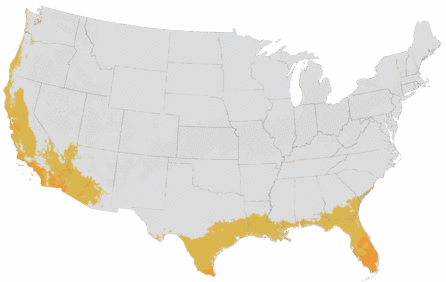

| Description | Masses of vibrant, purple-magenta, pea-like flowers will adorn the compact mound of gray-green foliage for much of the year. A wonderful patio container plant and useful for mass plantings or mixed into a flowering perennial garden. Evergreen. |
|---|---|
| Bloom Time | Spring through summer. |
| Deciduous/Evergreen | Evergreen |
| Special Features | Attracts Pollinators, Compact Form |
| Problems/Solutions | Coastal Exposure |
| Growth Rate | Moderate |
| Flower Attributes | Flowers for Cutting, Long Bloom Season, Repeat Flowering, Showy Flowers |
| Landscape Use | Container |
| Design Ideas | Superior shrub for foundation planting under windows or at entry and porch. Blooming plants are bright enough to provide a more long range focal point. Essential to the shrub border but also works well in the back of perennial borders for mass. Makes a good accent for softening corners and framing art and other focal points. Great choice for romantic cottage garden compositions and causal country gardens along picket fences or rails. |
| Flower Color | Purplish-pink |
| Foliage Color | Gray-green |
| Companion Plants | Butterfly Bush (Buddleja); Penstemon (Penstemon); Catmint (Nepeta); Salvia (Salvia); Canna (Canna) |
| Care Instructions | Provide organically rich, well-drained soil. Water deeply and regularly during the first growing season to establish an extensive root system. Once established, reduce frequency; tolerates mild drought in temperate coastal regions. Feed with a general purpose fertilizer before new growth begins in spring. |
| History | This is a unique genus that falls into the milkwort family contains a whopping 600 species world wide. It was classified by Linnaeus in the 18th century, the name derived from the plant's copious milk-like white fluid. This plant was originally classified as the hybrid P. x dalmaiana, originating in South Africa. One of its parents is the European P. chamaebuxus grandiflora and it may also derive some of its reliance from the South African P. myrtifolia. This cultivar was introduced in 2005 by Monrovia Nursery Co. |
Details
| Description | Masses of vibrant, purple-magenta, pea-like flowers will adorn the compact mound of gray-green foliage for much of the year. A wonderful patio container plant and useful for mass plantings or mixed into a flowering perennial garden. Evergreen. |
|---|---|
| Bloom Time | Spring through summer. |
| Deciduous/Evergreen | Evergreen |
| Special Features | Attracts Pollinators, Compact Form |
| Problems/Solutions | Coastal Exposure |
| Growth Rate | Moderate |
| Flower Attributes | Flowers for Cutting, Long Bloom Season, Repeat Flowering, Showy Flowers |
Style
| Landscape Use | Container |
|---|---|
| Design Ideas | Superior shrub for foundation planting under windows or at entry and porch. Blooming plants are bright enough to provide a more long range focal point. Essential to the shrub border but also works well in the back of perennial borders for mass. Makes a good accent for softening corners and framing art and other focal points. Great choice for romantic cottage garden compositions and causal country gardens along picket fences or rails. |
| Flower Color | Purplish-pink |
| Foliage Color | Gray-green |
| Companion Plants | Butterfly Bush (Buddleja); Penstemon (Penstemon); Catmint (Nepeta); Salvia (Salvia); Canna (Canna) |
Care
| Care Instructions | Provide organically rich, well-drained soil. Water deeply and regularly during the first growing season to establish an extensive root system. Once established, reduce frequency; tolerates mild drought in temperate coastal regions. Feed with a general purpose fertilizer before new growth begins in spring. |
|---|
History
| History | This is a unique genus that falls into the milkwort family contains a whopping 600 species world wide. It was classified by Linnaeus in the 18th century, the name derived from the plant's copious milk-like white fluid. This plant was originally classified as the hybrid P. x dalmaiana, originating in South Africa. One of its parents is the European P. chamaebuxus grandiflora and it may also derive some of its reliance from the South African P. myrtifolia. This cultivar was introduced in 2005 by Monrovia Nursery Co. |
|---|
Retailers Near You
About Us
We have been pioneers and craftsmen in the art of growing plants for 100 years. Since our founding in Southern California by Harry E. Rosedale, Sr. in 1926, we have been absolutely dedicated and obsessed with quality.
We have been pioneers and craftsmen in the art of growing plants for nearly 100 years. Since our founding in Southern California by Harry E. Rosedale, Sr. in 1926, we have been absolutely dedicated and obsessed with quality.