
You're growing in this Zip Code:
Change LocationDiscover Plants for Your Area
Dwarf Brush Cherry
Eugenia myrtifolia 'Globulus'
Pronunciation: yew-JEEN-ia mer-tif-FOL-ee-a GLOH-bew-lus
SKU #03330
LIGHT:
Full sun, Partial sun
WATER:
Water when top 3 inches of soil is dry.
SIZE:
Slow growing to 4 to 6 ft. tall and wide.

Retailers Near You
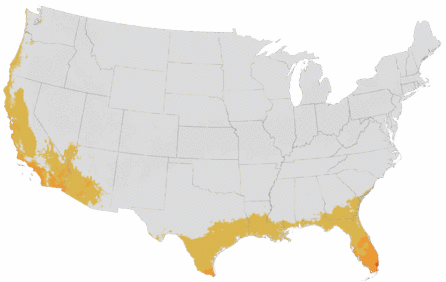
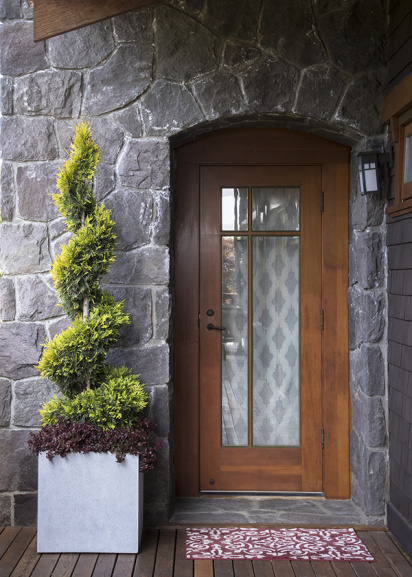

| Description | This attractive, compact evergreen develops vivid bronze-red new foliage throughout the year. Sporadic tiny, creamy white flowers are followed by edible purple-tinged fruit. In its natural form, it makes a tidy hedge or low border. Trained topiary forms are perfect for border accents or gracing an entry way in containers. |
|---|---|
| Bloom Time | Spring |
| Deciduous/Evergreen | Evergreen |
| Special Features | Easy Care, Showy Fruit, Compact Form, Benefits Birds |
| Problems/Solutions | Tolerates Urban Pollution |
| Growth Rate | Slow |
| Growth Habit | Rounded |
| Flower Attributes | Fragrant |
| Landscape Use | Border, Container, Hedge, Suitable for Topiary |
| Design Ideas | In tropical and sub-tropical climates, the bronze sheen of these shrubs is most welcome. They are generally used as a medium hedge between front yards or along fence and property lines. Makes a good partition inside a landscape to separate play or sports areas. May be allowed to grow into a natural screen. |
| Flower Color | White |
| Foliage Color | Green |
| Companion Plants | Lantana (Lantana); African Daisy (Osteospermum); New Zealand Flax (Phormium); Loropetalum (Loropetalum); Hopseed Bush (Dodonaea) |
| Care Instructions | Prefers slightly acidic, well-drained soils, rich in organic matter. Water deeply, regularly in first growing season to establish an extensive root system; reduce frequency once established. Fertilize before new growth begins in spring. Prune only as needed to maintain desired shape; as a topiary, prune regularly to maintain form. |
| History | Syzygium is the commonly used botanical name for this plant belonging to the Myrtle family. They are comprised of over 1000 species found from Africa, Madagascar and down through Southern Asia into the Pacific. S. australe is native to the rainforest of Eastern Australia. The fruit is sour but typically eaten fresh or cooked into jams and jellies. |
Details
| Description | This attractive, compact evergreen develops vivid bronze-red new foliage throughout the year. Sporadic tiny, creamy white flowers are followed by edible purple-tinged fruit. In its natural form, it makes a tidy hedge or low border. Trained topiary forms are perfect for border accents or gracing an entry way in containers. |
|---|---|
| Bloom Time | Spring |
| Deciduous/Evergreen | Evergreen |
| Special Features | Easy Care, Showy Fruit, Compact Form, Benefits Birds |
| Problems/Solutions | Tolerates Urban Pollution |
| Growth Rate | Slow |
| Growth Habit | Rounded |
| Flower Attributes | Fragrant |
Style
| Landscape Use | Border, Container, Hedge, Suitable for Topiary |
|---|---|
| Design Ideas | In tropical and sub-tropical climates, the bronze sheen of these shrubs is most welcome. They are generally used as a medium hedge between front yards or along fence and property lines. Makes a good partition inside a landscape to separate play or sports areas. May be allowed to grow into a natural screen. |
| Flower Color | White |
| Foliage Color | Green |
| Companion Plants | Lantana (Lantana); African Daisy (Osteospermum); New Zealand Flax (Phormium); Loropetalum (Loropetalum); Hopseed Bush (Dodonaea) |
Care
| Care Instructions | Prefers slightly acidic, well-drained soils, rich in organic matter. Water deeply, regularly in first growing season to establish an extensive root system; reduce frequency once established. Fertilize before new growth begins in spring. Prune only as needed to maintain desired shape; as a topiary, prune regularly to maintain form. |
|---|
History
| History | Syzygium is the commonly used botanical name for this plant belonging to the Myrtle family. They are comprised of over 1000 species found from Africa, Madagascar and down through Southern Asia into the Pacific. S. australe is native to the rainforest of Eastern Australia. The fruit is sour but typically eaten fresh or cooked into jams and jellies. |
|---|
Retailers Near You
About Us
We have been pioneers and craftsmen in the art of growing plants for 100 years. Since our founding in Southern California by Harry E. Rosedale, Sr. in 1926, we have been absolutely dedicated and obsessed with quality.
We have been pioneers and craftsmen in the art of growing plants for nearly 100 years. Since our founding in Southern California by Harry E. Rosedale, Sr. in 1926, we have been absolutely dedicated and obsessed with quality.