
You're growing in this Zip Code:
Change LocationDiscover Plants for Your Area
Fanal Astilbe
Astilbe x arendsii 'Fanal'
Pronunciation: a-STIL-bee ar-END-see-eye
SKU #00350
LIGHT:
Filtered sun, Full shade, Partial shade
WATER:
Keep soil consistently moist.
SIZE:
Moderate growing; reaches 1 to 2 ft. tall, 1 ft. wide.

Retailers Near You
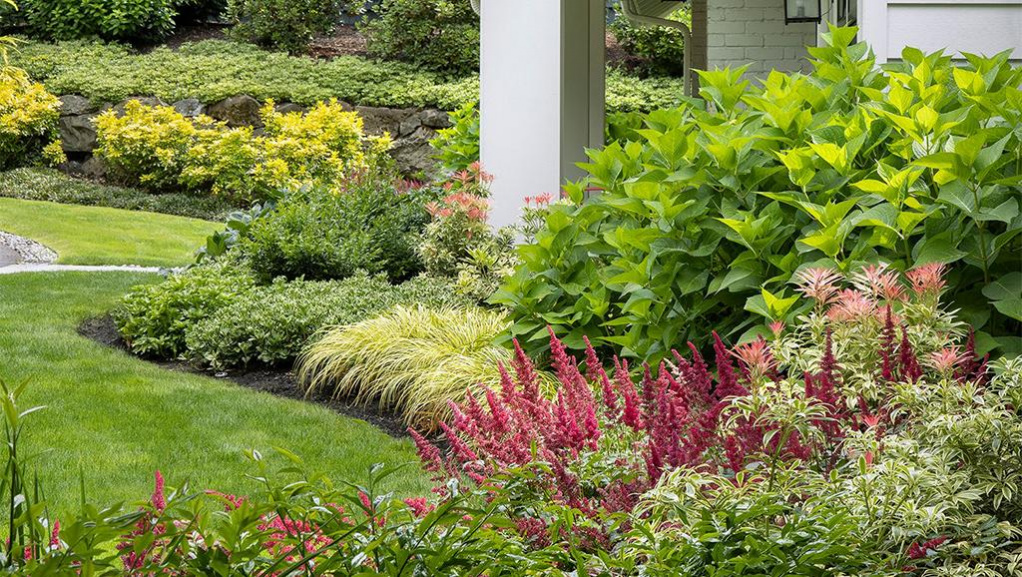

| Description | A showy bloomer for beautiful summer color in shaded areas. Tall, feathery blooms of deep garnet-red valued for their light, airy quality rise above graceful mounds of bronze-green foliage. Thrives in dappled or full shade borders. Gorgeous in mass plantings. An herbaceous perennial. |
|---|---|
| Bloom Time | Mid-spring to summer |
| Deciduous/Evergreen | Herbaceous |
| Special Features | Easy Care, Attracts Pollinators |
| Problems/Solutions | Deer Resistant, Erosion Control, Rabbit Resistant, Very Wet Areas, Black Walnut Tolerant |
| Growth Rate | Moderate |
| Flower Attributes | Flowers for Cutting, Showy Flowers |
| Landscape Use | Border, Container |
| Design Ideas | Looks beautiful displaying its ruby red blooms in the middle to back row of a shade garden. Especially showy in a large grouping surrounded by smaller, white-flowering plants. |
| Flower Color | Red |
| Foliage Color | Green |
| Companion Plants | Azalea (Azalea); Columbine (Aquilegia); Hosta (Hosta); Bleeding Heart (Dicentra); Brunnera (Brunnera) |
| Care Instructions | Thrives in organically rich, evenly moist, acidic, well-drained soil, sited in bright shade or filtered sun; does not tolerate dry conditions. Mulch to keep roots cool and moist, avoiding the crown. Clip spent blooms for a tidy appearance. Remove old foliage and stems in early spring. Feed in early spring, and again after bloom. |
| Lore | This well known group falls into the Saxifrage family. The genus was named from the Greek for without sheen or non-shining to describe the foliage. Of the 14 or so species, most are from Asia, with a couple of North Americans. The earliest astilbes arrived from China to Paris via Jesuit missionaries, leading to early hybridization in that region and Germany rather than Britain. |
Details
| Description | A showy bloomer for beautiful summer color in shaded areas. Tall, feathery blooms of deep garnet-red valued for their light, airy quality rise above graceful mounds of bronze-green foliage. Thrives in dappled or full shade borders. Gorgeous in mass plantings. An herbaceous perennial. |
|---|---|
| Bloom Time | Mid-spring to summer |
| Deciduous/Evergreen | Herbaceous |
| Special Features | Easy Care, Attracts Pollinators |
| Problems/Solutions | Deer Resistant, Erosion Control, Rabbit Resistant, Very Wet Areas, Black Walnut Tolerant |
| Growth Rate | Moderate |
| Flower Attributes | Flowers for Cutting, Showy Flowers |
Style
| Landscape Use | Border, Container |
|---|---|
| Design Ideas | Looks beautiful displaying its ruby red blooms in the middle to back row of a shade garden. Especially showy in a large grouping surrounded by smaller, white-flowering plants. |
| Flower Color | Red |
| Foliage Color | Green |
| Companion Plants | Azalea (Azalea); Columbine (Aquilegia); Hosta (Hosta); Bleeding Heart (Dicentra); Brunnera (Brunnera) |
Care
| Care Instructions | Thrives in organically rich, evenly moist, acidic, well-drained soil, sited in bright shade or filtered sun; does not tolerate dry conditions. Mulch to keep roots cool and moist, avoiding the crown. Clip spent blooms for a tidy appearance. Remove old foliage and stems in early spring. Feed in early spring, and again after bloom. |
|---|
History
| Lore | This well known group falls into the Saxifrage family. The genus was named from the Greek for without sheen or non-shining to describe the foliage. Of the 14 or so species, most are from Asia, with a couple of North Americans. The earliest astilbes arrived from China to Paris via Jesuit missionaries, leading to early hybridization in that region and Germany rather than Britain. |
|---|
Retailers Near You
About Us
We have been pioneers and craftsmen in the art of growing plants for 100 years. Since our founding in Southern California by Harry E. Rosedale, Sr. in 1926, we have been absolutely dedicated and obsessed with quality.
We have been pioneers and craftsmen in the art of growing plants for nearly 100 years. Since our founding in Southern California by Harry E. Rosedale, Sr. in 1926, we have been absolutely dedicated and obsessed with quality.