
You're growing in this Zip Code:
Change LocationDiscover Plants for Your Area
Blue Mirror Delphinium
Delphinium grandiflorum 'Blue Mirror'
Pronunciation: del-FIN-ee-um gran-dih-FLOR-um
SKU #00459
LIGHT:
Full sun, Partial sun
WATER:
Keep soil consistently moist but not soggy.
SIZE:
Foliage reaches 12 to 18 in. tall, 18 in wide, with blooms to 24 in. tall.

Retailers Near You

| Description | Tall spires of brilliant violet-blue flowers rise above a tuft of large, deeply cut foliage. Its slightly shorter stature reduces the need for staking. An essential of the perennial border and of cottage gardens. A reliable bloomer for areas with short growing seasons. Bloom often continues through late summer into fall. An herbaceous perennial. |
|---|---|
| Bloom Time | Late spring through summer |
| Deciduous/Evergreen | Herbaceous |
| Special Features | Easy Care, Attracts Pollinators |
| Problems/Solutions | Deer Resistant, Rabbit Resistant |
| Growth Rate | Moderate |
| Growth Habit | Upright |
| Flower Attributes | Flowers for Cutting, Showy Flowers |
| Landscape Use | Border, Container |
| Design Ideas | Delphinium is an essential of all perennial borders as well as mixed beds. Plant into foundation compositions to add highbrow beauty. Mass to create a stunning focal point or to bring out distant garden art. Add into cottage gardens to provide strong blue shades and gang along white picket fences for charm. May be inserted just about anywhere the soil is rich enough to provide elegance and color in the late spring. |
| Flower Color | Blue |
| Foliage Color | Green |
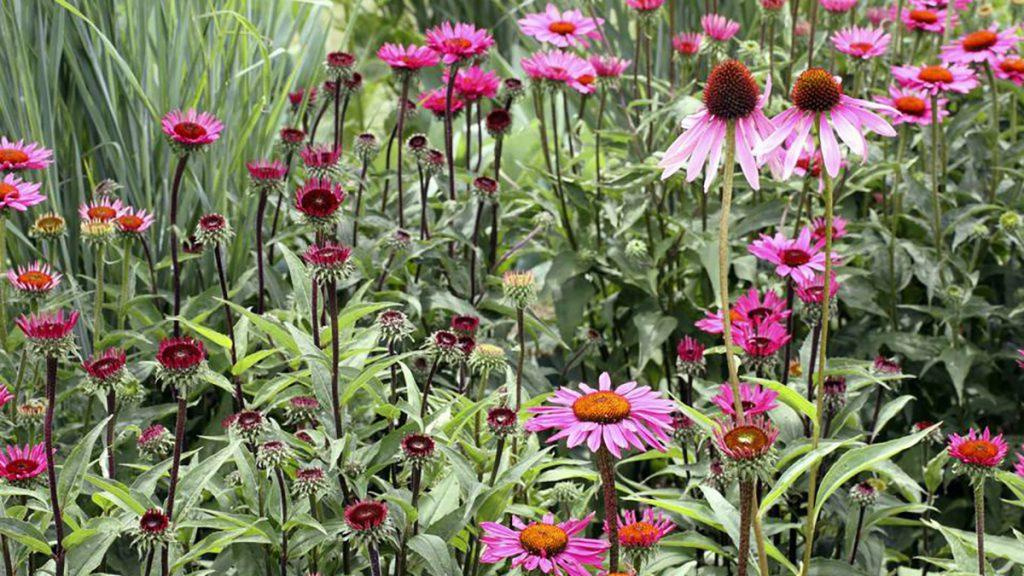
| Companion Plants | Blanket Flower (Gaillardia); Black-Eyed Susan (Rudbeckia); Coneflower (Echinacea); Phlox (Phlox); Shasta Daisy (Chrysanthemum) |
| Care Instructions | Thrives in enriched, neutral to alkaline soils; amend soil with lime if needed. Water deeply and regularly during the first growing season to establish an extensive root system. Feed with an all-purpose fertilizer in spring; repeat after first bloom flush. Prune spent blooms to prolong flowering. Cut back to the ground at the end of the season. |
| History | This popular genus of the Ranunculaceae includes over 300 species of annual and perennial herbs. This speciescame into cultivation in 1578. It is a wildflower of damp meadows found on the Russian steppes as well as China and Mongolia. Plants are adapted to short growing seasons in these climates producing a remarkably fast growing form compared to other hybrids that originated with early French breeding. |
Details
| Description | Tall spires of brilliant violet-blue flowers rise above a tuft of large, deeply cut foliage. Its slightly shorter stature reduces the need for staking. An essential of the perennial border and of cottage gardens. A reliable bloomer for areas with short growing seasons. Bloom often continues through late summer into fall. An herbaceous perennial. |
|---|---|
| Bloom Time | Late spring through summer |
| Deciduous/Evergreen | Herbaceous |
| Special Features | Easy Care, Attracts Pollinators |
| Problems/Solutions | Deer Resistant, Rabbit Resistant |
| Growth Rate | Moderate |
| Growth Habit | Upright |
| Flower Attributes | Flowers for Cutting, Showy Flowers |
Style
| Landscape Use | Border, Container |
|---|---|
| Design Ideas | Delphinium is an essential of all perennial borders as well as mixed beds. Plant into foundation compositions to add highbrow beauty. Mass to create a stunning focal point or to bring out distant garden art. Add into cottage gardens to provide strong blue shades and gang along white picket fences for charm. May be inserted just about anywhere the soil is rich enough to provide elegance and color in the late spring. |
| Flower Color | Blue |
| Foliage Color | Green |
| Companion Plants | Blanket Flower (Gaillardia); Black-Eyed Susan (Rudbeckia); Coneflower (Echinacea); Phlox (Phlox); Shasta Daisy (Chrysanthemum) |
Care
| Care Instructions | Thrives in enriched, neutral to alkaline soils; amend soil with lime if needed. Water deeply and regularly during the first growing season to establish an extensive root system. Feed with an all-purpose fertilizer in spring; repeat after first bloom flush. Prune spent blooms to prolong flowering. Cut back to the ground at the end of the season. |
|---|
History
| History | This popular genus of the Ranunculaceae includes over 300 species of annual and perennial herbs. This speciescame into cultivation in 1578. It is a wildflower of damp meadows found on the Russian steppes as well as China and Mongolia. Plants are adapted to short growing seasons in these climates producing a remarkably fast growing form compared to other hybrids that originated with early French breeding. |
|---|
Retailers Near You
About Us
We have been pioneers and craftsmen in the art of growing plants for 100 years. Since our founding in Southern California by Harry E. Rosedale, Sr. in 1926, we have been absolutely dedicated and obsessed with quality.
We have been pioneers and craftsmen in the art of growing plants for nearly 100 years. Since our founding in Southern California by Harry E. Rosedale, Sr. in 1926, we have been absolutely dedicated and obsessed with quality.