
You're growing in this Zip Code:
Change LocationDiscover Plants for Your Area
Malepartus Maiden Grass
Miscanthus sinensis 'Malepartus'
Pronunciation: mis-KAN-thus sin-EN-sis
SKU #00557
LIGHT:
Full sun
WATER:
Water when top 2 inches of soil is dry.
SIZE:
Foliage reaches 5 ft. tall and wide; plumes reach 7 ft. tall.

Retailers Near You

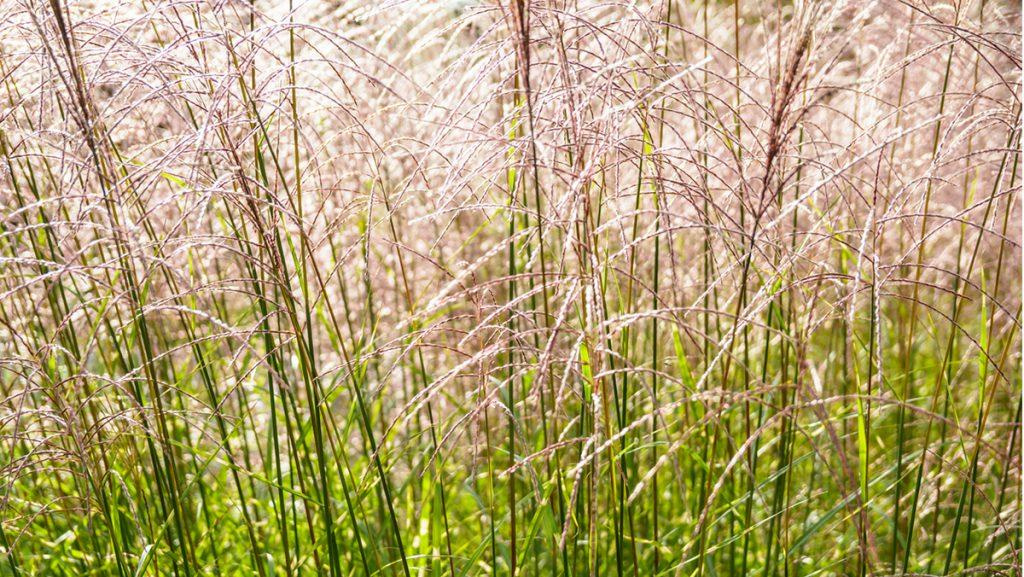

| Description | Unlike most that bloom in fall, 'Malepartus' blooms in midsummer, allowing cool climate gardens to be graced with the full beauty of this ornamental grass. Plumes are held high above broad foliage with a superb erect habit; they open pink, turn coppery red in fall, then turn silvery white in winter. Bronze-red fall foliage adds striking contrast. |
|---|---|
| Bloom Time | Summer, persisting through fall. |
| Deciduous/Evergreen | Herbaceous |
| Special Features | Easy Care, Fall Color, Waterwise, Benefits Birds |
| Problems/Solutions | Coastal Exposure, Deer Resistant, Erosion Control |
| Growth Rate | Moderate |
| Flower Attributes | Long Bloom Season |
| Landscape Use | Border, Privacy Screen |
| Flower Color | Pink |
| Foliage Color | Green |
| Foliage Fall Color | Red |
| Companion Plants | Coneflower (Echinacea); Tickseed (Coreopsis); Aster (Aster); Barberry (Berberis); Elderberry (Sambucus) |
| Care Instructions | Easily grown in average, evenly moist, well-drained, loamy soils. Water deeply and regularly during the first growing season to establish an extensive root system; once established, tolerates moderate dry spells. Cut foliage clumps back to 3 inches above the ground and apply fertilizer in late winter to early spring. |
| History | A breakthrough in early-blooming cultivars, "Malepartus' was introduced by the German plant breeder and nurseryman, Ernst Pagels. This cultivar is the product of a breeding program to develop Miscanthus cultivars that produce blooms early, therefore suited for climates with shorter growing seasons. |
Details
| Description | Unlike most that bloom in fall, 'Malepartus' blooms in midsummer, allowing cool climate gardens to be graced with the full beauty of this ornamental grass. Plumes are held high above broad foliage with a superb erect habit; they open pink, turn coppery red in fall, then turn silvery white in winter. Bronze-red fall foliage adds striking contrast. |
|---|---|
| Bloom Time | Summer, persisting through fall. |
| Deciduous/Evergreen | Herbaceous |
| Special Features | Easy Care, Fall Color, Waterwise, Benefits Birds |
| Problems/Solutions | Coastal Exposure, Deer Resistant, Erosion Control |
| Growth Rate | Moderate |
| Flower Attributes | Long Bloom Season |
Style
| Landscape Use | Border, Privacy Screen |
|---|---|
| Flower Color | Pink |
| Foliage Color | Green |
| Foliage Fall Color | Red |
| Companion Plants | Coneflower (Echinacea); Tickseed (Coreopsis); Aster (Aster); Barberry (Berberis); Elderberry (Sambucus) |
Care
| Care Instructions | Easily grown in average, evenly moist, well-drained, loamy soils. Water deeply and regularly during the first growing season to establish an extensive root system; once established, tolerates moderate dry spells. Cut foliage clumps back to 3 inches above the ground and apply fertilizer in late winter to early spring. |
|---|
History
| History | A breakthrough in early-blooming cultivars, "Malepartus' was introduced by the German plant breeder and nurseryman, Ernst Pagels. This cultivar is the product of a breeding program to develop Miscanthus cultivars that produce blooms early, therefore suited for climates with shorter growing seasons. |
|---|
Retailers Near You
About Us
We have been pioneers and craftsmen in the art of growing plants for 100 years. Since our founding in Southern California by Harry E. Rosedale, Sr. in 1926, we have been absolutely dedicated and obsessed with quality.
We have been pioneers and craftsmen in the art of growing plants for nearly 100 years. Since our founding in Southern California by Harry E. Rosedale, Sr. in 1926, we have been absolutely dedicated and obsessed with quality.