
You're growing in this Zip Code:
Discover Plants for Your Area
Queen Anne Agapanthus
Agapanthus africanus 'Queen Anne'
Pronunciation: ag-uh-PANTH-us af-ri-KAH-nus
SKU #00180
LIGHT:
Full sun, Partial sun
WATER:
Water when top 3 inches of soil is dry.
SIZE:
Foliage reaches 12 to 15 in. tall and wide; flower stalks to 24 in. tall.

Retailers Near You
Ready to Grow?
Ship Monrovia plants directly to your door. Browse a curated selection available online.
Shop Now >This Plant's Growing Zones: 8-11
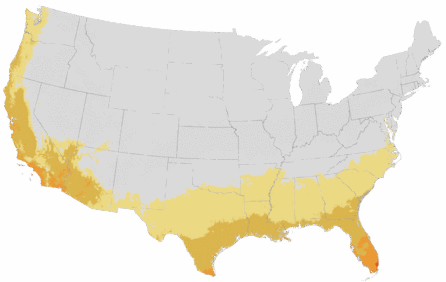
Your USDA Cold Hardiness Zone:
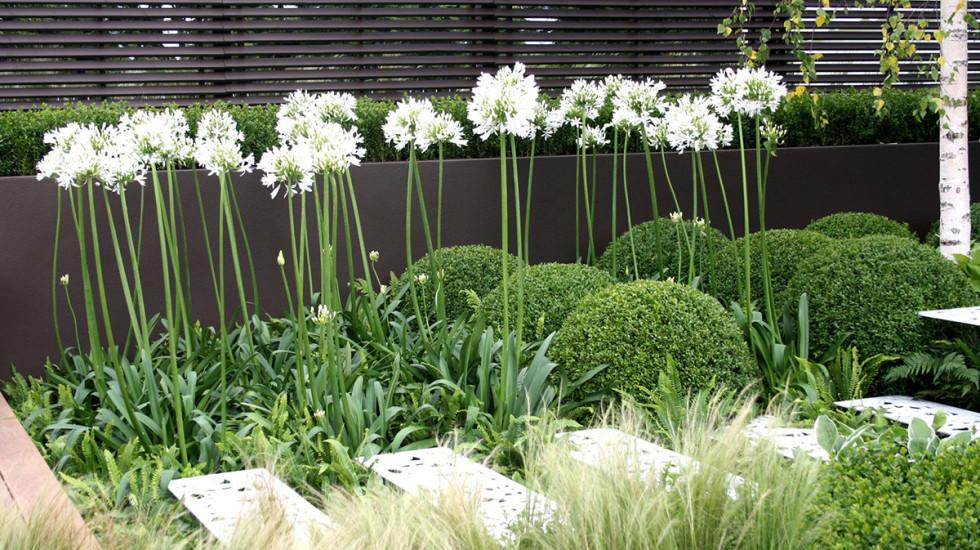
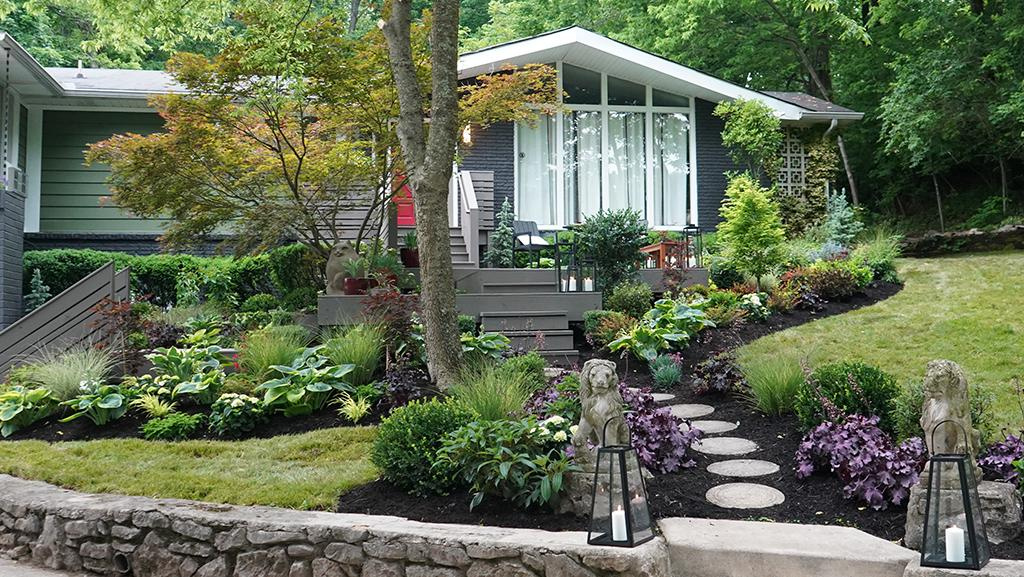
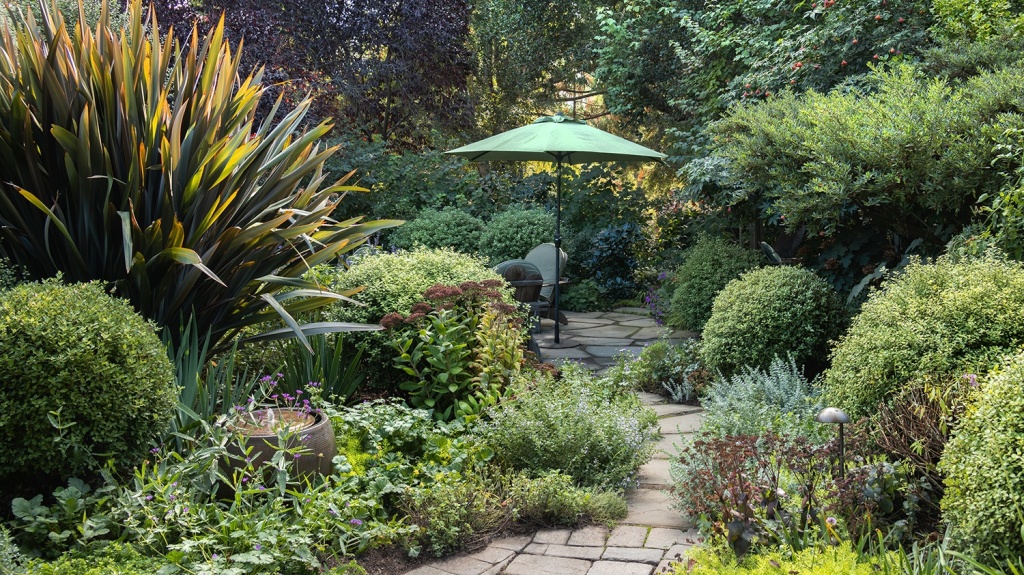
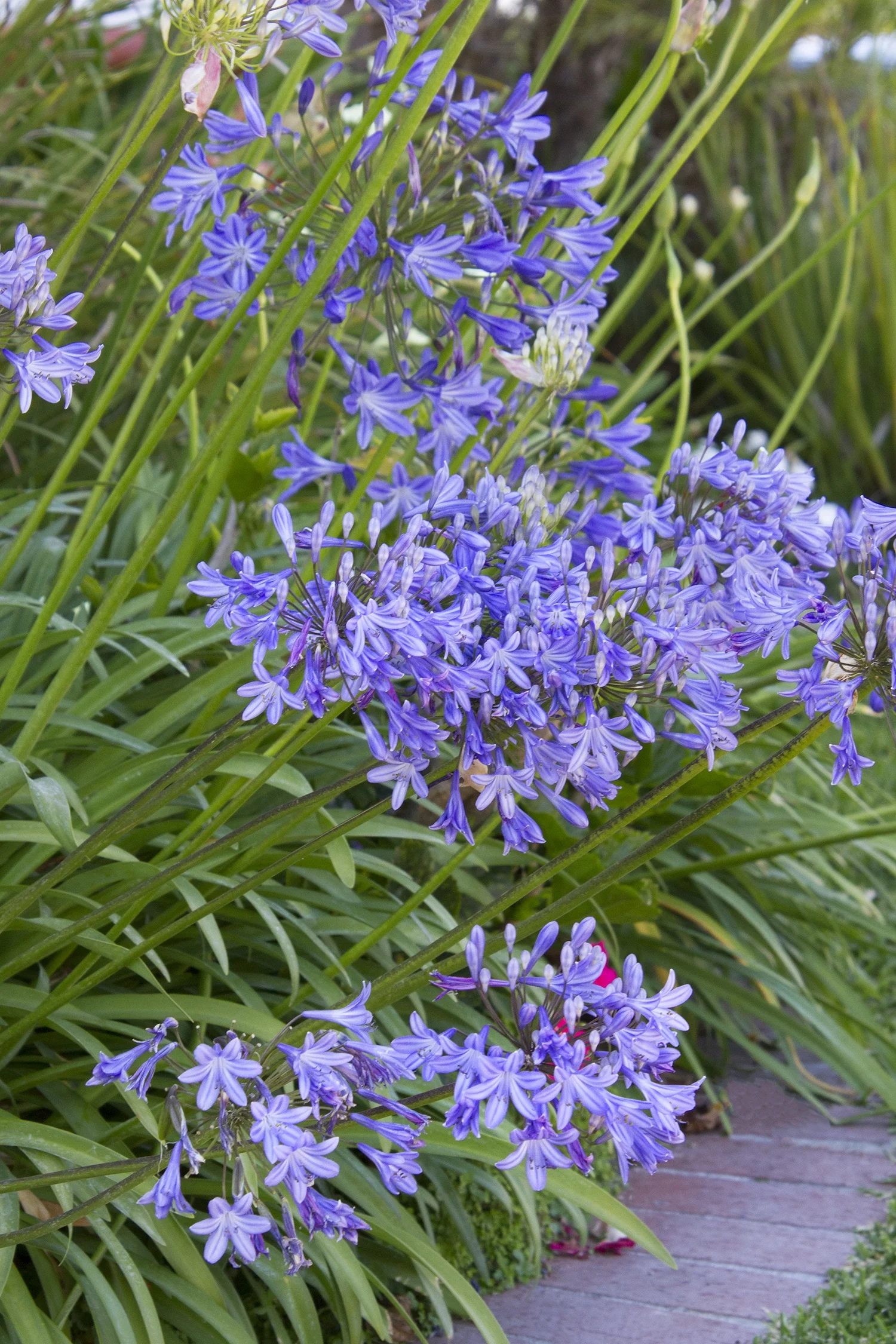
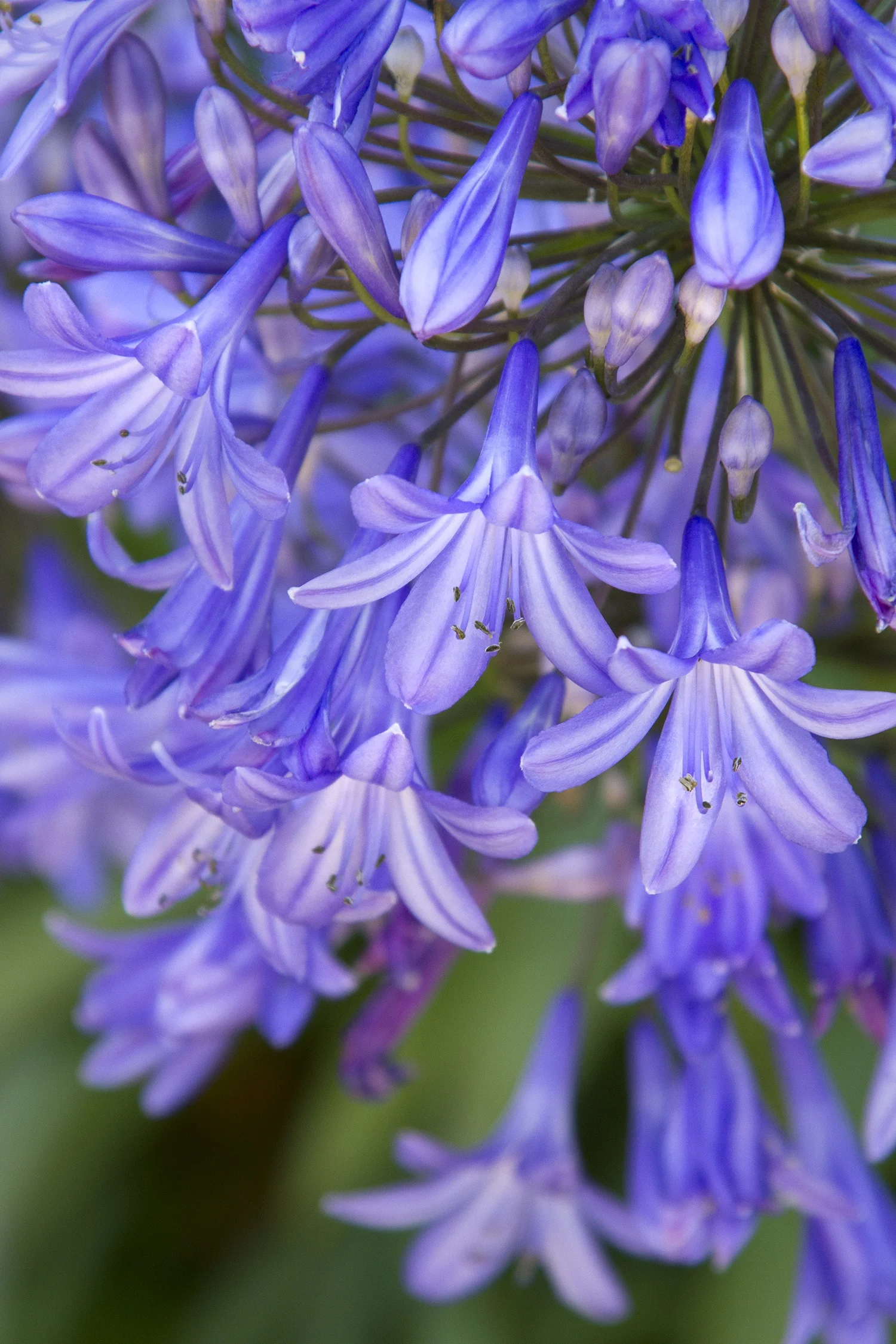
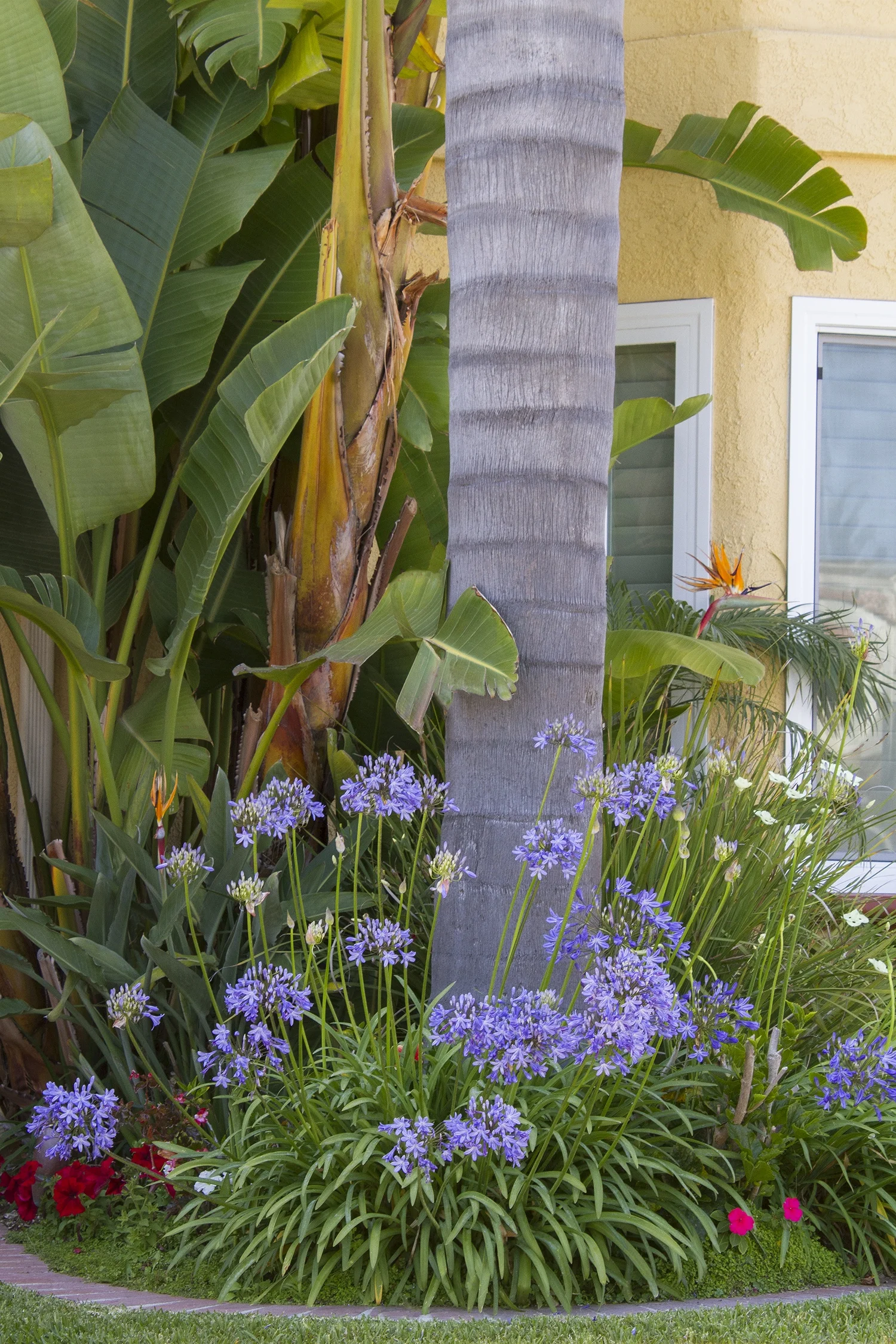
| Description | Beautiful clumps of green, narrow, strap-like foliage and dense, blue-violet flower clusters on tall, upright stalks. Grown by division to assure uniformity in habit of growth, flower form and color. Occasionally reblooms, if spent flower stems are promptly removed. Excellent for use in containers and perennial borders. Evergreen. |
|---|---|
| Bloom Time | Summer |
| Deciduous/Evergreen | Evergreen |
| Special Features | Attracts Hummingbirds, Easy Care, Waterwise, Attracts Pollinators |
| Problems/Solutions | Coastal Exposure, Erosion Control |
| Growth Rate | Moderate |
| Growth Habit | Clumping |
| Flower Attributes | Flowers for Cutting, Showy Flowers |
| Landscape Use | Border, Poolside, Edging |
| Flower Color | Blue |
| Foliage Color | Green |
| Companion Plants | Coneflower (Echinacea); Coral Bells (Heuchera); Iris (Iris); Shasta Daisy (Chrysanthemum); Pinks (Dianthus) |
| Care Instructions | Easily grown in average, well-drained soils. Water deeply, regularly in first growing season to establish an extensive root system. Once established, reduce frequency; tolerates mild drought. Apply fertilizer before new growth begins in spring; repeat after flowering. Blooms best when undisturbed, but may be divided when overcrowded. |
Details
| Description | Beautiful clumps of green, narrow, strap-like foliage and dense, blue-violet flower clusters on tall, upright stalks. Grown by division to assure uniformity in habit of growth, flower form and color. Occasionally reblooms, if spent flower stems are promptly removed. Excellent for use in containers and perennial borders. Evergreen. |
|---|---|
| Bloom Time | Summer |
| Deciduous/Evergreen | Evergreen |
| Special Features | Attracts Hummingbirds, Easy Care, Waterwise, Attracts Pollinators |
| Problems/Solutions | Coastal Exposure, Erosion Control |
| Growth Rate | Moderate |
| Growth Habit | Clumping |
| Flower Attributes | Flowers for Cutting, Showy Flowers |
Style
| Landscape Use | Border, Poolside, Edging |
|---|---|
| Flower Color | Blue |
| Foliage Color | Green |
| Companion Plants | Coneflower (Echinacea); Coral Bells (Heuchera); Iris (Iris); Shasta Daisy (Chrysanthemum); Pinks (Dianthus) |
Care
| Care Instructions | Easily grown in average, well-drained soils. Water deeply, regularly in first growing season to establish an extensive root system. Once established, reduce frequency; tolerates mild drought. Apply fertilizer before new growth begins in spring; repeat after flowering. Blooms best when undisturbed, but may be divided when overcrowded. |
|---|
Retailers Near You
About Us
We have been pioneers and craftsmen in the art of growing plants for 100 years. Since our founding in Southern California by Harry E. Rosedale, Sr. in 1926, we have been absolutely dedicated and obsessed with quality.
We have been pioneers and craftsmen in the art of growing plants for nearly 100 years. Since our founding in Southern California by Harry E. Rosedale, Sr. in 1926, we have been absolutely dedicated and obsessed with quality.